
Quick Answer
A wet blasting cabinet is usually the best fit when a production line needs precise deburring, controlled edge preparation, low airborne dust, and a more even technical finish than dry blasting typically delivers. By propelling a water-abrasive slurry with compressed air inside a sealed enclosure, the process supports repeatable cleaning, texturing, descaling, and cosmetic finishing across metal, carbide, glass, and additive-manufactured parts. For many precision applications, cabinet-based wet blasting offers a practical balance of process control, operator safety, and stable surface quality.
| Core factor | Typical conclusion |
|---|---|
| Process type | Enclosed wet abrasive blasting with recirculating slurry |
| Pressure profile | Typically low-to-medium, adjusted to material and finish target |
| Finish behavior | Fine, even matte or satin surface with controlled micro-erosion |
| Dust condition | Very low free airborne dust compared with dry blasting |
| Common applications | Edge honing, deburring, coating pretreatment, AM finishing, glass frosting |
| Delivery pattern | Typical lead time is shorter for standard cabinets and longer for custom automation |
What Is wet blasting cabinet
A wet blasting cabinet is a sealed industrial enclosure designed to direct a slurry of water and abrasive media onto a workpiece under controlled conditions. Within the broader surface-treatment field, it sits inside the wet abrasive blasting family, which is also described in industry language as slurry blasting, wet sandblasting, vapor blasting, or liquid honing. The cabinet format distinguishes it from open blasting systems and from large, highly integrated in-line installations by combining enclosure, operator access, slurry circulation, and recovery inside one process cell.
The term refers to more than a metal box with a blast gun. A true wet blasting cabinet integrates a slurry tank, pumping circuit, nozzle system, chamber drainage, recovery loop, mist extraction, and controls that keep the blasting condition stable from part to part. That integrated design is why cabinet systems are widely used for precision finishing tasks where the target is not simply rapid material removal, but a controlled surface outcome.
From a process perspective, the cabinet uses fine abrasive suspended in water rather than relying on dry media alone. The water phase changes how particles strike the surface. It suppresses much of the free dust associated with conventional dry blasting, cushions the impact, and helps flush spent fines and removed contamination away from the blasting zone. In many applications, that leads to a uniform surface finish with less tendency toward harsh texturing or random local overcut.
This matters in industries where geometry, edge condition, and appearance all affect value. Carbide cutting tools need controlled edge honing before coating. Precision-machined metal parts often need burr removal without collateral damage to sealing faces or cosmetic zones. Forged parts may need scale removed before inspection or downstream finishing. AM components frequently require surface refinement and loose-particle removal. Glass and 3C products may require a consistent matte effect that cannot tolerate erratic blasting intensity.
A wet blasting cabinet also offers practical plant-level benefits. Because the process happens inside an enclosure, splash, abrasive, and sludge are easier to manage than in improvised blasting arrangements. Water reduces free dust, which improves housekeeping and often makes the process easier to place within a broader manufacturing environment. The cabinet format also supports stable fixturing and repeatable nozzle positioning, both of which matter when the goal is controlled technical finishing rather than hand-guided rough cleaning.
Another reason buyers choose cabinet systems is repeatability. Once abrasive type, slurry concentration, pressure, nozzle angle, stand-off distance, and cycle time are validated, the same settings can be recalled and reused. That makes a wet blasting cabinet especially suitable for part families that repeat every shift and need the same measurable surface result across operators and production batches.
For procurement teams, the key distinction is this: a wet blasting cabinet is both equipment and process architecture. Its value depends on how well its slurry stability, recovery logic, visibility, control system, and workholding concept align with the part family being processed. The best cabinet is not always the largest or most automated one; it is the one whose process window matches the manufacturing task with the least variation and waste.
How Does wet blasting cabinet Work
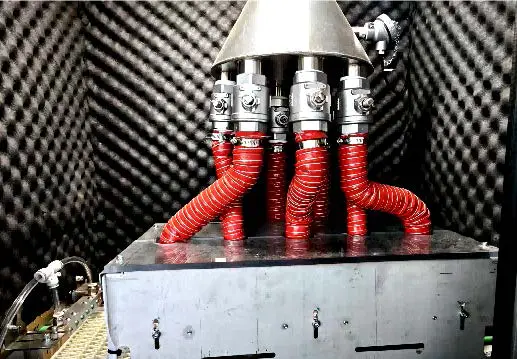
A wet blasting cabinet works by circulating a slurry mixture through a closed blasting circuit and accelerating that mixture toward the workpiece with compressed air. While the operating principle is straightforward, consistent industrial results depend on how reliably the cabinet manages slurry condition, pressure stability, nozzle motion, recovery, and internal visibility.
Slurry mixing and conditioning
The process begins in the slurry tank, where water and abrasive media are mixed to a defined concentration band. That concentration is not arbitrary. If it is too low, blasting efficiency drops and the finish may become patchy. If it is too high, slurry flow can become unstable, pump load can rise, and the surface may receive a different cut than the one validated during process trials.
Agitation or recirculation keeps the abrasive in suspension. Without that step, heavier particles settle, the blasting stream changes over time, and the first workpiece in a run may not look like the tenth. Media grade also matters: finer abrasive supports delicate edge honing and cosmetic finishing, while coarser or harder media is more suitable for scale removal, stronger deburring, or more assertive surface texturing.
Compressed-air acceleration inside the cabinet
At the nozzle, compressed air accelerates the slurry stream toward the target. Surface effect is governed by pressure, nozzle size, impact angle, traverse speed, stand-off distance, and particle-size distribution. These variables work together; a modest change in one may alter removal rate, roughness, or edge-rounding behavior more than expected.
Because the abrasive is carried in water, the strike is less harsh than in a purely dry stream. The abrasive still removes material, but the water phase moderates the impact and can produce a more controlled texture. That is one reason wet blasting cabinets are widely used on precision parts and visible surfaces where aggressive dry roughening would be undesirable.
Recovery, sedimentation, and reuse
After impact, used slurry drains through the cabinet floor back into the recovery section. Reusable water and abrasive are returned to circulation, while removed contaminants, broken fines, and sludge are separated from the working mix. This closed-loop slurry recovery structure is central to process consistency because contaminated slurry behaves differently from fresh, qualified slurry.
Sedimentation and waste discharge are not merely maintenance conveniences. They are quality functions. If fine debris and broken abrasive accumulate too long, the cabinet may continue to run, but finish uniformity, cut rate, and visual appearance can begin to drift. Stable cabinet design therefore requires regular contaminant removal as part of the process itself.
Mist extraction and chamber visibility
Wet blasting suppresses dust, but it creates moisture and atomized mist inside the enclosure. If visibility drops, operators cannot verify coverage, check fixture position, or monitor nozzle condition effectively. Cabinet systems therefore use extraction and airflow management to reduce suspended moisture and maintain a workable chamber environment.
Control logic and pressure stability
Peak pressure is less important than stable pressure over an entire run. For edge prep, technical deburring, and cosmetic finishing, the difference between acceptable and unacceptable results often comes from consistency rather than maximum intensity. That is why many industrial buyers prioritize closed-loop pressure control and recipe-based HMI operation over simple manual adjustment.
Stable wet blasting is not defined by one pressure reading; it is defined by stable slurry, stable pressure, and stable recovery across the entire cycle.
| Parameter | Typical industrial practice | Why it matters |
|---|---|---|
| Working pressure | Typically set in low-to-medium bands according to substrate and finish target | Controls impact energy and removal intensity |
| Slurry concentration | Usually maintained within a validated weight or volume range | Affects cut rate, finish uniformity, and repeatability |
| Abrasive particle size | Fine to medium PSD ranges are common for precision work | Influences roughness, edge prep, and visual texture |
| Air flow demand | Depends on nozzle diameter, pressure, and number of blasting stations | Determines compressor capacity and stream stability |
| Media consumption rate | Varies by abrasive durability, contamination load, and cycle severity | Drives consumable cost and frequency of replenishment |
| Stand-off distance | Typically fixed by operator practice, fixture, or motion program | Changes coverage density and local process intensity |
| Control system | Manual regulation or PLC/HMI recipe management | Reduces setup variation and speeds product changeover |
| Recovery method | Closed-loop circulation with sedimentation and mist extraction | Supports consistent slurry condition over longer runs |
wet blasting cabinet vs Dry Blasting vs Other Methods
A wet blasting cabinet is often compared first with a dry blasting cabinet because both are enclosed abrasive processes. The difference is that dry blasting propels media without the water phase, which usually increases aggressiveness and airborne dust while changing the surface profile and housekeeping burden. Wet blasting, by contrast, is typically selected when finish consistency, dust suppression, and gentler impact behavior matter as much as raw stripping speed.
The comparison also becomes clearer when neighboring finishing methods are included. The broader abrasive blasting process overview helps frame wet and dry blasting as part of one family, while shot peening terminology reminds buyers that not every media-impact process is intended for the same purpose. Vibratory finishing, for example, may be effective for smoothing many small parts in bulk, but it cannot always match the local control available from a nozzle-guided wet blasting cabinet.
| Evaluation factor | Wet blasting cabinet | Dry blasting | Shot peening | Vibratory finishing |
|---|---|---|---|---|
| Main objective | Controlled cleaning, deburring, edge prep, texturing, cosmetic finishing | Fast stripping, rust removal, roughening, general cleaning | Functional surface conditioning and residual-stress-related treatment | Batch smoothing and bulk finishing |
| Airborne dust | Low free dust because water suppresses fines | High unless strongly extracted | Process-dependent and secondary to peening control | Low airborne dust, though compounds still require management |
| Surface character | Even matte or satin finish with moderated impact | Rougher, more aggressive profile is common | Functional peened texture rather than general finish refinement | Broad smoothing over longer cycle times |
| Media embedding risk | Lower on many sensitive or softer substrates | Higher on some soft or coated surfaces | Depends on media and process specification | Generally low projected-impact embedding risk |
| Local process control | High with nozzle angle, stand-off, and fixturing control | High, but with more dust-management burden | Moderate to high in dedicated peening cells | Lower, because action occurs throughout the mass load |
| Repeatability | High when slurry and pressure are controlled | Good, but manual drift is common in simpler setups | High when intensity and coverage are qualified | Good for lots, less precise on specific surface zones |
| Environmental handling | Wet sludge, mist management, and water maintenance | Dust collection, dry media recovery, and housekeeping | Specification-heavy verification | Media wear and liquid-compound disposal management |
For plants evaluating coating preparation, a wet blasting cabinet can also fit within broader coatings surface preparation practices where cleanliness and consistency are important but excessive dust is undesirable. It is not a universal replacement for dry blasting or for mass-finishing methods, yet it often occupies the most useful middle ground for precision parts and value-added surfaces.
Key Specifications to Evaluate Before Buying
Pressure range and pressure stability
The first question is not how high the pressure can go, but how accurately the cabinet can hold a useful operating range. Many real production applications run below the machine’s maximum capability and depend on that lower band remaining stable through a full shift. A cabinet with drifting pressure may appear productive in short trials but produce variable deburring or inconsistent texture during routine use.
Slurry circuit design and abrasive compatibility
The slurry loop deserves as much scrutiny as the blast nozzle. Buyers should evaluate how the cabinet mixes the slurry, prevents settling, handles contamination, and supports routine replenishment of water and abrasive. If the circuit does not maintain the working mix reliably, no amount of chamber size or control-panel sophistication will protect finish consistency.
Nozzle path, fixturing, and motion precision
For some parts, hand-guided blasting is sufficient. For others, especially carbide tools, complex geometry parts, and visible consumer components, nozzle path repeatability is essential. The difference between acceptable and excessive edge rounding can come from fixture position, stand-off distance, and traverse repeatability rather than from nominal pressure alone.
Throughput and true cycle time
Quoted blasting time rarely tells the whole story. Actual throughput depends on part loading, drainage, handling, changeover, recipe recall, unloading, and inspection. Buyers should calculate accepted parts per shift instead of looking only at seconds of nozzle-on time, particularly when comparing manual cabinets with semi-automatic or automated versions.
Chamber size and plant footprint
Internal workspace must suit the largest workpiece plus fixture, nozzle swing, and operator access if the cabinet is manual. External footprint must allow for compressor connection, water management, mist extraction, electrical service, maintenance access, and safe movement around the machine. Oversizing increases cost and utilities, but undersizing forces awkward loading and inconsistent nozzle access.
HMI, recipes, and operator permissions
A production cabinet that handles multiple part families should store validated recipes. HMI-based recipe management reduces operator dependence, shortens setup time, and improves traceability across shifts. Hierarchical permission control is also useful because it limits unplanned process drift caused by unauthorized parameter changes.
Waste-sand handling and mist control
Wet blasting does not eliminate cleanup; it changes the cleanup problem. Instead of dry dust accumulation, the plant manages sludge, broken abrasive, and suspended mist. Cabinet selection should therefore include practical review of sediment removal, discharge convenience, cleanout access, visibility retention, and the amount of daily intervention required to keep the process stable.
Utilities and safety features
Compressed air, electrical load, and water management should be assessed before procurement rather than after delivery. Interlocks, emergency stops, door sealing, lighting, drainage logic, and maintenance isolation are not optional details. In a cabinet environment, safe routine operation is inseparable from efficient operation.
Applications Across Industries
Wet blasting cabinets are used in industries where the surface result must be controlled rather than merely altered. The same enclosure-based process can prepare a carbide edge before coating, remove burrs from machined components, descale forged stock, refine the outer skin of a metal AM part, or create a uniform frosted appearance on glass. The cabinet format is especially useful when the part family is valuable enough that repeatability matters more than maximum removal speed.
Tooling is one of the clearest examples. In carbide manufacturing, cutting-tool edge preparation benefits from a process that can develop a repeatable K-factor while maintaining surface consistency ahead of coating. The same process logic appears in metalworking supply chains where precision deburring applications require burr removal without introducing excessive roughness or edge damage.
Wet blasting cabinets also bridge functional and cosmetic processing. In coating pretreatment they can create a uniformly cleaned substrate; in AM finishing they can remove loosely adhered particles and soften the visual harshness of as-built surfaces; in glass and 3C work they can generate a controlled matte appearance. The flexibility comes from changing abrasive, concentration, pressure, nozzle path, and cycle time rather than from changing the core machine principle.
| Application type | Target industry | Typical workpiece | Process benefit delivered |
|---|---|---|---|
| Edge honing of cutting tools | Carbide tooling and metalcutting supply | Inserts, drills, end mills | Controlled edge preparation and coating-readiness improvement |
| Burr removing of metal parts | Automotive, precision machining, general metalworking | Housings, brackets, valve bodies | Selective deburring with stable surface quality |
| Scale removal from forgings | Forging and steel processing | Rods, shafts, forged blanks | Cleaner surfaces for inspection and downstream finishing |
| Pretreatment before coating | Fabrication, appliance, and industrial coating lines | Steel and aluminum components | More consistent substrate cleanliness before finishing |
| Post-processing of AM parts | Additive manufacturing | Metal 3D-printed functional parts | Removal of adhered particles and improved appearance |
| Peening of metal parts | Automotive and industrial mechanical components | Loaded metallic parts | Functional outer-surface conditioning |
| Glass frosting | Glass processing and display products | Covers, panels, decorative sheets | Even matte visual effect |
| 3C device finishing | Consumer electronics | Frames, shells, housings, covers | Controlled cosmetic smoothness and tactile feel |
Equipment Selection Guide
Selecting a wet blasting cabinet is mostly a matter of matching configuration to production mode. A high-mix development lab needs flexibility, easy recipe adjustment, and quick changeover. A stable batch process needs disciplined fixturing and repeatable chamber performance. A product family with demanding geometry may need servo motion and dedicated nozzle paths, while a large flat part may need a wider workspace more than it needs maximum automation.
The cabinet concept therefore spans more than one machine type. Small R&D cells, standard single-chamber cabinets, single-piece dedicated machines, double-chamber production cabinets, and application-specific variants can all belong to the same wet blasting equipment family while serving very different manufacturing needs.
| Configuration or model tier | Target production scale | Workpiece size range | Precision level | Recommended applications |
|---|---|---|---|---|
| R&D lab-scale flexible cell | Feasibility studies and sample development | Small to medium mixed parts | High | Process validation, trials, short-run precision work |
| Standard manual wet cabinet | Low-volume production and technical jobbing | Small parts | Medium | Repair work, pilot batches, flexible custom processing |
| Single-chamber production cabinet | Routine batch manufacturing | Small to medium parts | Medium to high | Repetitive deburring, edge prep, cosmetic finishing |
| Single-piece dedicated cabinet | Stable one-part flow | Small to medium individual parts | High | Fixed part families needing consistent treatment |
| Double-chamber production cabinet | Higher-throughput repetitive work | Small to medium parts | Medium | Alternating load-and-blast sequences |
| Servo multi-axis cabinet | Geometry-sensitive production | Complex 3D parts | High | Targeted local treatment and multi-face coverage |
| Large-workspace plate cabinet | Broad-surface processing | Flat or plate-shaped parts | Medium | Uniform treatment of plates, panels, and wide faces |
| Continuous rod or shaft system | Long-product processing | Rods, bars, shafts | Medium | Descaling and conditioning of cylindrical products |
For early-stage qualification and mixed-part testing, the RB-6 R&D wet blasting unit aligns with flexible sample work where recipes may change frequently. For routine batch production, a standard single-chamber production cabinet is generally a better match because it supports repeatable loading, stable chamber organization, and more predictable production rhythm.
The key is to rank four variables together: part size, geometry complexity, throughput demand, and finish tolerance. If one of these dominates the purchasing decision while the others are ignored, the selected wet blasting cabinet may either underperform or carry unnecessary cost. In practice, the best-fit configuration is the one that matches the real production pattern with the smallest amount of compromise.
Cost, Lead Time and ROI Considerations
What drives wet blasting cabinet cost
The price of a wet blasting cabinet depends less on the label “wet blasting” than on the engineering depth behind the cabinet. Chamber dimensions, slurry-tank design, pump quality, nozzle count, wear protection, motion control, HMI features, mist extraction, and fixturing all affect cost. A basic manually operated cabinet and a recipe-driven servo cabinet may use the same process family but have very different capital profiles.
Customization is another major driver. A cabinet adapted to one geometry family may require special nozzles, dedicated fixtures, controlled indexing, or additional automation even if the enclosure itself looks simple. Buyers should also account for utilities, abrasive consumption, spare parts, and routine cleanout labor rather than focusing only on purchase price.
Typical lead-time logic
Lead time is best discussed in bands rather than promises. Standard cabinet builds are typically faster because engineering is already mature and fewer custom validation steps are needed. Application-specific systems, especially those involving servo paths, custom fixtures, or integrated handling, usually require more process development, acceptance testing, and trial adjustment before shipment.
How ROI is usually justified
Return on investment is rarely driven by a single benefit. In many factories, the case for a wet blasting cabinet is built from reduced manual deburring labor, lower rework, more stable finish quality, fewer cosmetic rejects, better edge preparation before coating, and less operator-to-operator variability. That multi-factor logic is consistent with broader manufacturing process control guidance, where repeatability and validated operating windows are treated as economic assets rather than as abstract quality ideals.
In carbide and precision tooling, ROI may also be linked to controlled edge condition before coating and more consistent downstream tool behavior. In coating pretreatment, it may come from substrate consistency and lower scrap in subsequent finishing operations. In cosmetic parts, it may come from improved yield on visible surfaces.
Where buyers often miscalculate
The most common mistake is to compare a cabinet only against a manual operator’s wage. That ignores scrap, inspection hold time, inconsistent appearance, secondary touch-up, and schedule disruption caused by variation. Another mistake is to buy an over-specified cabinet for a low-volume process that does not need the added automation.
A better ROI model compares total process cost before and after the cabinet is installed. That means including labor, consumables, utilities, rejected parts, rework, floor-space use, and the value of having a stable, documented finishing process rather than a skill-dependent manual one.
Why Choose DassiAuto — Our Company
DassiAuto Intelligent Equipment Co., Ltd is a Chinese manufacturer established in 2012 and focused on wet blasting technology for industrial surface treatment. According to the supplied company context and the company background page, it is a national high-tech enterprise operating under the ISO 9001 quality management standard, with invention patents, utility model patents, and software copyrights related to blasting equipment and control systems. The company context describes a product range of eight wet blasting equipment configurations covering R&D, batch production, and application-specific processing, with engineering features including PID closed-loop slurry pressure control, servo-driven X/Y/Z linkage with 0.02 mm accuracy, HMI recipe management with hierarchical permission control, automatic waste-sand sedimentation with one-click discharge, and dust collection that reduces water mist. The supplied customer references include Wecan Cutting Tools, Ruian Carbide Tools, Huareal, Metcera, OKE, YG, Kelite, and XTC. The described operating model is a full-cycle service model that runs from sample testing and process development through design, manufacturing, installation, commissioning, training, after-sales support, spare parts, abrasive resupply, and process optimization.
FAQ
Q1. Is there a minimum order quantity for a wet blasting cabinet?
For industrial equipment, ordering is usually project-based rather than MOQ-based in the consumables sense. In practice, the minimum is typically one cabinet, with the final scope defined by part type, throughput target, automation level, and required finish stability.
Q2. Should sample parts be tested before buying a wet blasting cabinet?
Yes, sample testing is one of the most useful steps in procurement. It helps confirm whether the cabinet can achieve the required deburring level, edge condition, surface appearance, and cycle-time target on the actual substrate and geometry rather than on a generic benchmark part.
Q3. Can a wet blasting cabinet be customized for my parts?
Yes. Customization commonly covers nozzle arrangement, fixture design, chamber size, automation level, slurry settings, and recipe logic. The more geometry-sensitive the application is, the more important those custom elements become.
Q4. What is normally included in installation and commissioning?
Typical scope includes utility verification, machine placement guidance, startup checks, parameter setting, functional testing, and trial operation on representative parts. More advanced systems may also require motion validation, HMI setup, alarm testing, and acceptance confirmation against defined process criteria.
Q5. How much training does an operator need to run a wet blasting cabinet well?
Basic training usually covers slurry preparation, abrasive replenishment, nozzle inspection, recipe selection, cleaning routines, and routine maintenance. Where the cabinet includes automation or stored programs, operators also need instruction on control logic, alarm response, and how to avoid drifting away from the qualified process window.
Q6. What after-sales support matters most after the cabinet is installed?
The most important support areas are spare-parts availability, matched abrasive supply, troubleshooting response, and help with restoring process stability if surface results begin to drift. Long-term cabinet performance depends on consistent consumables, disciplined maintenance, and technical support that can reconnect the machine to its validated operating condition quickly.