
Quick Answer
Wet blasting surface treatment is usually the better choice for precision parts when the goal is controlled deburring, edge honing, coating pretreatment, or cosmetic finishing with lower airborne dust than dry blasting. By suspending abrasive media in water and accelerating the slurry with compressed air, the process softens impact intensity, improves finish uniformity, and supports stable repeatability when pressure, slurry concentration, nozzle motion, and recovery conditions are kept inside a validated operating window.
| Core factor | Typical conclusion |
|---|---|
| Process type | Slurry-based abrasive blasting using water, media, and compressed air |
| Surface effect | Fine, even matte or satin finish with moderated micro-erosion |
| Dust profile | Very low free airborne dust compared with dry blasting |
| Precision suitability | Well suited to selective deburring, edge honing, and appearance-critical parts |
| Common workpieces | Cutting tools, machined metal parts, forgings, AM parts, glass, 3C housings |
| Supply profile | Standard cabinets are typically quicker to supply than custom automated cells |
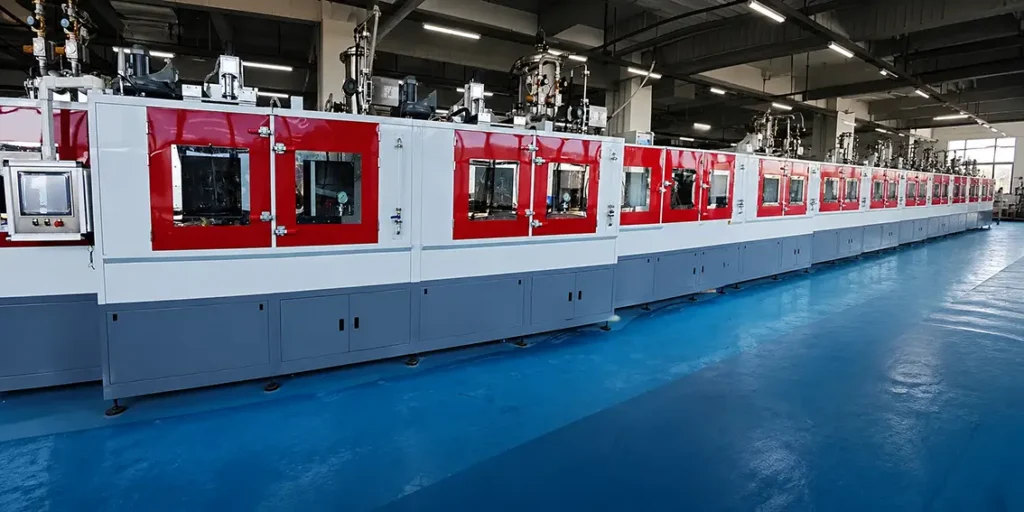
What Is wet blasting surface treatment
Wet blasting surface treatment is an industrial process that uses abrasive particles suspended in water to clean, texture, descale, deburr, peen, or refine a workpiece surface. It belongs to the broader abrasive-blasting family, but differs from dry blasting because the media is carried in a liquid phase rather than as a dry particle stream. In day-to-day manufacturing language, it is also described as wet sandblasting, slurry blasting, vapor blasting, or liquid honing, depending on region and application focus.
In engineering terms, the process combines three functional elements: a water phase that transports and cushions the abrasive, a blasting system that accelerates the slurry toward the part, and a recovery loop that recirculates usable media while separating fines and waste. That combination changes both the way the surface is attacked and the way the shop environment is managed. Compared with dry blasting, the process tends to generate far less loose dust and often produces a finer visual texture.
The process family covers a wide range of surface-treatment objectives. At one end, wet blasting can remove forging scale, residual oxides, burrs, and contaminants left by machining or heat treatment. At the other end, it can create controlled cosmetic finishes, prepare carbide tool edges before coating, smooth additive-manufactured surfaces, or frost glass uniformly without the harsher appearance associated with coarse dry blasting.
A useful distinction is that wet blasting surface treatment is not simply “blasting with water added.” A production-grade system includes a slurry tank, agitation or recirculation, pressure regulation, enclosed blasting chamber, nozzle control, workholding, drainage, sedimentation, mist reduction, and waste-sand handling. The effectiveness of the process depends on all of those elements working together.
Why manufacturers specify wet blasting
The primary reason manufacturers adopt the process is control. Water suppresses most free dust, helps keep visibility more stable in the chamber, and changes the impact behavior of the abrasive stream. That typically leads to a more even texture and a lower risk of overly harsh cutting on sensitive features.
Another reason is surface cleanliness after treatment. On many soft, coated, or appearance-sensitive substrates, the water film can reduce the tendency for abrasive particles to become trapped in the surface. That matters in pre-coating preparation, cosmetic finishing, and any downstream process where embedded residue can become a defect source.
Position within the surface-treatment process family
Wet blasting sits between highly aggressive dry blasting and bulk finishing methods such as vibratory processing. It is more targeted than mass finishing because the blast stream can be directed to specific surfaces, edges, or internal features. At the same time, it is typically gentler and more controllable than dry blasting when the application calls for precise edge conditioning or consistent visual texture.
For that reason, it appears in tooling, automotive components, valve parts, forged products, additive manufacturing, glass processing, and consumer electronics. Many factories treat it less as a cleaning method and more as a precision surface treatment step that influences adhesion, appearance, assembly quality, and tool performance.
How Does wet blasting surface treatment Work
Wet blasting surface treatment works through a controlled loop of slurry preparation, compressed-air acceleration, surface impact, slurry recovery, contaminant separation, and mist handling. The process is simple in principle, but the details of concentration control, pressure stability, and media management determine whether the result is truly production capable.
Slurry preparation and media suspension
The process begins in the slurry tank, where water and abrasive are mixed into a stable suspension. Agitation, circulation, or both are used so that the media does not settle too quickly during operation. If the slurry concentration drifts over time, the part may see a different removal rate and finish even when the pressure setting on the panel appears unchanged.
Media type is selected according to hardness, shape, particle size distribution, and desired surface response. Finer grades are typically used for cosmetic finishing, edge honing, and light deburring. Coarser or harder media are more suitable when faster scale removal, stronger texturing, or more pronounced cleaning action is required.
Compressed-air acceleration path
Once prepared, the slurry is delivered to the blast gun or nozzle assembly. Compressed air accelerates the abrasive-water mixture and directs it onto the workpiece at a set angle and stand-off distance. The blasting energy is therefore controlled not only by pressure, but also by nozzle geometry, line condition, slurry concentration, target distance, and nozzle travel speed.
Because the abrasive is cushioned by water, the contact event is usually less sharp than in dry blasting. The process still removes material and changes the surface, but it often does so with a finer, more even action. This is one reason the method is widely used for controlled edge preparation and uniform decorative finishes.
Closed-loop recovery and sedimentation
After impact, the used slurry drains back into the machine’s recovery path. Reusable water and viable media are recirculated, while broken abrasive, removed base-material fines, and other contaminants are separated progressively through settling or sedimentation. In advanced systems, waste sand can be discharged automatically so the blasting loop stays closer to its target condition over longer runs.
This recovery architecture is one of the defining features of industrial slurry blasting. A simple blast-and-rinse arrangement may look similar at first glance, but it cannot usually hold the same degree of process stability because contamination accumulates faster and media condition becomes less predictable. A closed-loop system supports more consistent finishing, lower rework, and better qualification for production use.
Mist management and chamber environment
Wet blasting produces much less free dust than dry blasting, but it still creates water mist and suspended residue inside the enclosure. That is why industrial equipment uses window flushing, chamber extraction, and mist-control measures to preserve visibility and reduce condensation. Good visibility is not just an ergonomic issue; it also affects nozzle positioning, inspection confidence, and cycle consistency.
Pressure control and recipe repeatability
A key difference between basic and advanced equipment is how pressure is controlled during actual blasting. In many precision applications, the absolute highest pressure is not the priority. What matters more is maintaining the same pressure and slurry condition from the first part to the last.
In precision slurry blasting, stable pressure and stable concentration usually matter more than maximum blasting force.
That is where PID closed-loop pressure control and recipe-based HMI logic become important. They allow operators or process engineers to store validated settings, reduce setup drift, and change over between part families without relying entirely on operator memory.
| Process parameter | Typical industrial practice | Why it matters |
|---|---|---|
| Working pressure | Typically set in low-to-medium blasting bands according to substrate and finish goal | Governs impact intensity and removal behavior |
| Slurry concentration | Maintained within a validated wt% or volume range | Affects cut rate, finish consistency, and media stability |
| Abrasive particle size | Fine to medium PSD selections are common depending on application | Influences roughness, deburring action, and edge condition |
| Air flow demand | Depends on nozzle diameter, pressure, and number of stations | Determines compressor sizing and stream stability |
| Media consumption rate | Varies with media durability, contamination load, and cycle severity | Affects operating cost and replenishment frequency |
| Stand-off distance | Usually fixed by operator method, fixturing, or motion program | Changes coverage density and local impact force |
| Control mode | Manual setpoint control or PLC/HMI recipe management | Reduces variation during setup and changeover |
| Recovery loop | Closed-loop recirculation with sedimentation and waste discharge | Helps keep the process window stable over long runs |
Why process interaction matters
No single setting determines the final result. Lower pressure with a harder abrasive can sometimes cut more effectively than higher pressure with a finer, softer medium. Likewise, fixture orientation and nozzle angle may influence selective deburring more than nominal chamber size.
For that reason, wet blasting surface treatment should be treated as a process-engineering discipline rather than a simple machine operation. The most reliable results come from validating the relationship among media, pressure, nozzle path, dwell time, and recovery conditions before the process is released to production.
wet blasting surface treatment vs Dry Blasting vs Other Methods
The most common comparison is between wet blasting and dry blasting because both rely on abrasive impact, yet the carrier phase changes the process dramatically. The general abrasive blasting definition helps frame the overlap, but in practice the addition of water alters dust behavior, finish character, media transport, and housekeeping requirements. For precision parts, these differences can affect not only appearance but also downstream coating, inspection, and assembly quality.
Dry blasting still has a clear place in industry. It is often preferred for aggressive stripping, corrosion removal, heavy roughening, and large-scale cleaning where speed matters more than fine finish control. Wet blasting surface treatment becomes more attractive when the factory needs a finer surface, less airborne dust, and more restrained material removal on localized features.
Shot peening and vibratory finishing overlap only partially with these methods. Shot peening is primarily a functional impact process rather than a general-purpose cleaning or deburring method, and ASTM B851 shot peening specification reflects that specialized role. Vibratory finishing is efficient for bulk smoothing, but it is less selective when parts have critical localized surfaces, fragile edges, or internal features that need controlled treatment.
| Evaluation factor | Wet blasting surface treatment | Dry blasting | Shot peening | Vibratory finishing |
|---|---|---|---|---|
| Main purpose | Controlled cleaning, deburring, edge prep, texturing, cosmetic finishing | Fast stripping, rust removal, roughening, general cleaning | Functional impact treatment of metallic surfaces | Bulk smoothing, edge softening, and mass finishing |
| Free airborne dust | Low because water suppresses most dust | High unless strong dust collection is used | Moderate and process-dependent | Low airborne dust, though compounds and slurry still need handling |
| Surface finish character | Fine, even matte or satin finish | Rougher and often more aggressive | Functional peened texture rather than cosmetic finish | Broad smoothing over time across all exposed surfaces |
| Media embedding risk | Lower on many soft or appearance-sensitive surfaces | Higher on some substrates and coatings | Depends on media and specification | Generally low projected-impact embedding risk |
| Localized treatment control | High with nozzle path, angle, and fixturing | High, but with greater dust-management burden | Moderate to high in dedicated peening systems | Lower because batches are processed together |
| Repeatability | High when slurry and pressure are controlled | Good, but manual variation is often greater | High when intensity and coverage are qualified | Good for batch averages, weaker on targeted features |
| Environmental handling | Wet sludge and mist management required | Dry dust and spent-media control required | Dry media and controlled residue handling | Media wear and compound management required |
One of the most important decision points is pretreatment before coating. Surface-preparation quality influences coating adhesion, appearance, and durability, which is why many engineers review AMPP surface preparation standards when selecting a pretreatment route. In that context, wet blasting is often chosen for its balance of cleaning effectiveness, low airborne dust, and consistent surface condition, even though it requires disciplined sludge and water management.
Key Specifications to Evaluate Before Buying
Pressure range versus pressure stability
Buyers often focus first on maximum pressure, but that is rarely the most important criterion. In a production wet blasting line, the ability to maintain a stable process band under real operating load matters more than headline pressure figures. Precision deburring and edge preparation usually benefit from consistency rather than brute force.
When reviewing specifications, ask how the machine holds pressure during continuous circulation and whether the control logic compensates for changing load conditions. A pressure display alone does not guarantee process stability if the slurry state is drifting in the background.
Slurry circuit and concentration control
The slurry system deserves as much scrutiny as the blast chamber. Tank design, agitation method, recirculation layout, hose routing, and cleanout access all influence whether the abrasive stays evenly distributed and whether broken media is removed before it degrades finish quality. Factories that ignore the slurry circuit often discover later that the machine is mechanically sound but process stability is weak.
Concentration control is especially important in multi-shift production. If the system cannot maintain a repeatable working mix, removal rate and surface texture may drift enough to create hidden quality problems long before operators notice obvious defects.
Motion capability and workholding
Manual nozzle handling may be acceptable for general cleaning or flexible low-volume work, but geometry-sensitive parts often need indexed fixtures, servo motion, or programmable paths. This is particularly true for carbide tools, additive-manufactured components, and complex machined parts with localized burrs or appearance-critical zones.
A supplier should be able to explain how motion repeatability translates into surface repeatability. In many applications, the quality result depends as much on nozzle path control as on the abrasive itself.
Throughput, changeover, and real cycle time
A quoted cycle time is only useful if it includes loading, draining, fixture exchange, recipe recall, inspection pauses, and maintenance interruptions. Good-parts-per-hour is usually a more realistic capacity measure than pure blast time. This matters when comparing manual cabinets with automated or alternating-chamber systems.
High-mix plants should also evaluate changeover time between part families. A machine that is fast on paper can still become a bottleneck if fixturing, recipe changes, or slurry adjustments are slow and operator dependent.
Footprint, utilities, and maintenance access
Floor footprint is more than cabinet width and depth. Buyers should account for operator access, service clearance, compressor capacity, electrical connection, drainage strategy, waste collection, and safe movement of parts and pallets around the machine. Mist extraction and viewing-window maintenance should also be reviewed early, not after installation.
Maintenance access matters because nozzles, seals, hoses, and sediment zones are wear or service items. If routine cleaning is awkward, uptime usually suffers. A practical procurement review should therefore include the machine’s serviceability as well as its technical output.
HMI, traceability, and safety logic
Modern HMI functions are valuable when a process must stay validated across operators and shifts. Recipe management, user permissions, alarm history, and maintenance reminders reduce variation during changeover and help preserve a documented surface-treatment routine. Safety features such as door interlocks, emergency-stop logic, guarded loading areas, and fail-safe shutdown behavior should be examined at the same time.
Applications Across Industries
Wet blasting surface treatment is used across industries because it can influence function, appearance, adhesion, and downstream manufacturability at the same time. The basic mechanism stays the same, but the process window changes according to the substrate, geometry, and surface objective. That flexibility is why the method appears in tooling, automotive, metal fabrication, additive manufacturing, glass processing, and consumer electronics.
Cutting-tool manufacturing is one of the clearest examples. In edge honing of cutting tools, the objective is controlled K-factor preparation before coating, which means the process must hold tight control over pressure, media size, nozzle angle, and dwell time. Small differences in edge preparation can influence coating support and, in many cases, cutting performance.
Machined parts create a different challenge. In burr removing of metal parts, the process has to remove burrs while preserving corners, sealing faces, cosmetic areas, and dimensional intent. Wet blasting is often selected because it offers more targeted action than bulk finishing and a cleaner shop environment than open dry blasting.
Pretreatment before coating is another major application group. Surface cleanliness and texture strongly affect coating adhesion, and coating pretreatment wet blasting can be integrated with downstream finishing steps where controlled substrate preparation is required. In some lines, the blasting stage is also paired with a blasting phosphating line so the part moves through sequential pretreatment rather than separate disconnected operations.
| Application type | Target industry | Typical workpiece example | Process benefit delivered |
|---|---|---|---|
| Edge honing of cutting tools | Carbide tooling and cutting-tool manufacturing | Inserts, drills, end mills | Controlled edge preparation and better readiness for coating |
| Burr removing of metal parts | Automotive, machining, valve, and hardware sectors | Housings, brackets, valve bodies | Selective deburring with stable surface condition |
| Scale removal from forgings | Forging, bar stock, and steel processing | Forged blanks, shafts, bars | Cleaner surfaces before machining or inspection |
| Pretreatment before coating | Fabrication, appliance, and industrial finishing | Steel and aluminum components | More uniform substrate condition before downstream coating |
| Post-processing of AM parts | Additive manufacturing | Metal 3D-printed brackets and structures | Powder residue removal and improved visual texture |
| Peening of metal parts | Mechanical and automotive components | Stress-bearing metallic parts | Functional outer-surface conditioning |
| Glass frosting | Architectural and electronics glass processing | Panels, covers, decorative glass | Even matte appearance without coarse dry-blast marks |
| 3C device finishing | Consumer electronics and digital-device production | Frames, shells, and housings | Controlled smoothness and consistent appearance |
The cross-industry pattern is consistent: wet blasting is chosen when a manufacturer needs more than simple cleaning. It is especially useful when the same process step must reduce burrs, control texture, improve coating readiness, and maintain a repeatable result across large batches or frequent part changeovers.
Equipment Selection Guide
Selecting equipment for wet blasting surface treatment starts with four questions: part size, geometry complexity, required throughput, and finish tolerance. Those inputs determine whether a flexible lab unit, a manual batch cabinet, a single-piece production machine, or a more automated multi-axis system is appropriate. The wrong choice usually comes from overemphasizing one factor, such as chamber size, while underestimating changeover, fixturing, or motion requirements.
A second consideration is production flow. Some factories process many part families in short runs and need rapid recipe changes with flexible loading. Others run stable, repetitive geometries and gain more value from dedicated handling, alternating chambers, or programmed nozzle movement.
| Configuration or model tier | Target production scale | Workpiece size range | Precision level | Recommended applications |
|---|---|---|---|---|
| R&D lab-scale flexible cell | Sample testing, recipe development, short trials | Small to medium mixed parts | High | Feasibility studies and process validation |
| Standard manual cabinet | Low-volume production or job-shop use | Small parts | Medium | Flexible finishing and occasional technical blasting |
| Single-chamber production cabinet | Repetitive batch manufacturing | Small to medium parts | Medium to high | Routine deburring, edge prep, and visual finishing |
| Single-piece dedicated machine | Stable one-part flow | Small to medium parts | High | Individual-part processing with controlled cycle logic |
| Double-chamber production system | Higher-throughput repeated production | Small to medium parts | Medium | Alternating load/blast operation for better utilization |
| Servo multi-axis system | Geometry-sensitive precision production | Complex 3D parts | High | Targeted path-controlled treatment |
| Plate-part processing system | Medium to high-volume flat-part work | Medium to large flat parts | Medium | Plates, panels, and broad-face components |
| Round-rod processing system | Continuous long-product treatment | Rods, bars, shafts | Medium | Descaling and conditioning of cylindrical stock |
For development work, an R&D wet blasting cell is suitable when process windows still need to be tested on different substrates and part shapes. For standard batch production, a single-chamber wet blasting cabinet is a logical fit when the part family is stable and the workflow is repetitive. Where throughput is the main driver and loading can be alternated efficiently, a double-chamber blasting system is often more productive than a single enclosed station.
The most common selection error is specifying automation too early. If the abrasive grade, edge-preparation target, or true cycle logic is still uncertain, it is usually better to validate the process window first and then choose the machine architecture around that confirmed recipe.
Cost, Lead Time and ROI Considerations
Main cost drivers
The price of a wet blasting system is shaped by several layers of specification: chamber size, automation level, motion control, wear-resistant materials, nozzle count, slurry management design, mist extraction, fixturing, HMI architecture, and waste-handling method. Two machines can look similar externally yet differ greatly in cost because one is intended for general cleaning while the other is engineered for repeatable precision finishing.
Operating cost should be reviewed just as carefully as capital cost. Abrasive replenishment, nozzle wear, hose life, sludge disposal, energy demand, maintenance labor, and downtime all influence total ownership cost. In precision finishing, process instability can be more expensive than consumables, because rework and scrap quickly outweigh small savings in media or hardware.
Typical lead-time structure
Lead time is best considered in typical project bands rather than fixed promises. Standardized cabinets usually move faster because their structural layout, basic controls, and common accessories are already defined. Custom servo cells, dedicated fixtures, integrated pretreatment lines, or alternating-chamber automation often require additional engineering, build, runoff, and acceptance time.
True project timing should also include sample validation and process approval. A machine may be mechanically complete before the abrasive grade, surface target, and acceptance criteria are fully locked in. For precision applications, that validation stage is part of the real lead time, not an optional extra.
Where ROI usually comes from
ROI in wet blasting surface treatment rarely comes from one dramatic saving. More often, it comes from a combination of reduced manual deburring, lower rework, improved consistency, fewer secondary finishing steps, better coating readiness, less scrap, and more predictable cycle output. This is why the business case is often strongest where the current method is labor intensive and highly operator dependent.
In tool manufacturing, ROI may be tied to more stable edge preparation before coating and better downstream process consistency. In machining or automotive supply, the gain often comes from replacing manual burr removal with a more repeatable flow. In pretreatment operations, the value may appear in better adhesion results and fewer coating failures caused by inconsistent substrate condition.
How to build a realistic ROI model
A practical ROI model should compare the entire before-and-after process, not only direct labor. That means including utilities, abrasive consumption, maintenance, scrap, inspection effort, takt-time impact, and the value of recipe-based repeatability. Factories that evaluate wet blasting only as a machine purchase often understate the quality and process-control savings that justify the investment.
One common mistake is buying a high-automation system for a high-mix, low-volume environment where flexibility matters more than maximum theoretical throughput. Another is comparing wet blasting only with dry blasting while ignoring manual brushing, grinding, vibratory finishing, or touch-up work that the new process could replace indirectly. A better analysis asks how many process steps, operator decisions, and defect opportunities can be removed from the current route.
Why Choose DassiAuto — Our Company
DassiAuto Intelligent Equipment Co., Ltd is a Chinese manufacturer established in 2012 and focused on wet blasting technology for industrial surface treatment. According to the company information presented in its about DassiAuto profile, it is a national high-tech enterprise operating under the ISO 9001 quality management standard, with invention patents, utility model patents, and software copyrights covering blasting equipment and control systems. The stated engineering features across its equipment range include PID closed-loop slurry pressure control, servo-driven X/Y/Z linkage with 0.02 mm control accuracy, HMI recipe management with hierarchical permissions, automatic waste-sand sedimentation with one-click discharge, and mist-reduction dust collection. The same company context identifies Wecan Cutting Tools, Ruian Carbide Tools, Huareal, Metcera, OKE, YG, Kelite, and XTC among its customer references, and describes a full-cycle service model spanning application development, sample testing, planning and design, manufacturing and quality control, installation, commissioning, training, after-sales support, spare parts, consumables, and process optimization.
FAQ
Q1. Can wet blasting surface treatment be validated with sample parts before ordering equipment?
Yes. Sample testing is one of the most useful steps because it confirms deburring behavior, edge condition, texture, and likely cycle logic on the actual material and geometry. For precision applications, validated trial processing reduces risk far more effectively than selecting a machine only from general specifications.
Q2. Is wet blasting surface treatment suitable for customized parts and mixed production?
In most cases, yes. The process can be adapted through abrasive selection, pressure setting, nozzle angle, fixturing, and motion control, which makes it suitable for both repetitive production and high-mix environments. The level of customization depends mainly on tolerance sensitivity, geometry complexity, and changeover frequency.
Q3. What should be included in installation and commissioning?
Installation and commissioning should normally cover utility checks, machine positioning, startup verification, control testing, initial recipe setup, and test running on representative parts. If the equipment includes programmed motion or dedicated automation, the scope should also include path confirmation, alarm testing, and acceptance against agreed process criteria.
Q4. How much operator training is typically required?
Operators usually need training in slurry preparation, media replenishment, nozzle inspection, routine cleaning, startup and shutdown procedures, and basic fault recognition. If the machine uses programmable motion or recipe-based HMI control, training should also include permissions, alarm interpretation, and how to preserve the validated process window from shift to shift.
Q5. What after-sales support matters most for a wet blasting line?
The most important support areas are spare-parts availability, abrasive resupply, troubleshooting response, and help restoring process stability if finish quality begins to drift. Long-term performance depends on keeping wear parts, slurry condition, maintenance routines, and recipe settings aligned with the validated production process.
Q6. How quickly can wet blasting surface treatment show ROI?
That depends on the existing process being replaced and the quality losses already present. ROI tends to appear faster where manual deburring, unstable pretreatment quality, repeated touch-up, or scrap from inconsistent surface finish are significant costs. The clearest evaluation compares total process cost before and after implementation rather than labor alone.