
Quick Answer
A wet blasting equipment price is worth the investment when the machine delivers repeatable finishing, lower airborne dust, controlled deburring, and better process stability than lower-cost alternatives. The right price depends less on cabinet size alone and more on slurry control, pressure stability, automation level, recovery design, and application fit. In industrial buying, a cheaper machine can become more expensive over time if it causes inconsistent finish quality, higher maintenance effort, or excessive operator dependence.
| Core Factor | Typical Condition | Why It Matters |
|---|---|---|
| Process family | Wet blasting / slurry blasting / vapor blasting | Defines finish quality, dust behavior, and slurry-management needs |
| Price driver | Machine size, automation, control system, recovery loop | Determines both capital cost and lifetime usability |
| Surface outcome | Fine, uniform, low-dust finishing | Important for deburring, edge honing, coating prep, and cosmetic work |
| Precision level | Manual cabinet to servo multi-axis, application-dependent | Influences repeatability on high-value or complex parts |
| Operating burden | Mist extraction, abrasive management, sludge discharge | Affects labor, uptime, and ownership cost |
| Typical delivery profile | Standard systems usually shorter lead time than custom automation | Helps buyers align CapEx with production timing |
What Is wet blasting equipment price
The phrase “wet blasting equipment price” refers to the total purchase value attached to a machine that uses abrasive media suspended in water and accelerated by compressed air for industrial surface treatment. In practical buying terms, it is not a single market number. It is a variable determined by process intensity, control sophistication, work envelope, automation, and the type of surface result the equipment is expected to deliver.
From a process standpoint, wet blasting belongs to the broader abrasive blasting process family. It is commonly called wet sandblasting, slurry blasting, or vapor blasting, depending on the industry and machine style. Regardless of terminology, the core principle is the same: water carries the abrasive, the nozzle accelerates the slurry, and the system recovers the mixture for reuse inside an enclosed machine.
Why Price in Wet Blasting Is Process-Dependent
Unlike commodity tools, wet blasting equipment is usually priced around an application rather than a generic specification sheet. A machine for cosmetic finishing of small metal parts will not have the same cost structure as a multi-axis system for cutting-tool edge honing or a dedicated line for forging scale removal. The machine’s price reflects what the process must achieve repeatedly, not just what the machine looks like externally.
That matters because buyers often compare quotes from suppliers whose machines are not functionally equivalent. A lower initial quote may exclude features that directly affect production stability, such as slurry concentration control, programmable motion, or effective sedimentation and waste handling.
Core Selling Points That Influence Price
Wet blasting is often chosen because it offers lower airborne dust, less aggressive impact than many dry systems, and a finer, more even surface result. The water phase helps suppress dust and cushion the abrasive strike, which can reduce surface damage while still allowing cleaning, deburring, edge preparation, or pretreatment. For many manufacturers, that uniform finish is one of the main reasons the process commands a higher price than a simple dry cabinet.
Another important value factor is consistency. When blasting pressure, slurry concentration, and nozzle movement are controlled well, wet blasting can deliver more repeatable results across batches. That repeatability is especially valuable for carbide tools, precision-machined parts, additive-manufactured components, and decorative or consumer-facing surfaces.
Price Should Be Read as Capability, Not Just Cost
A meaningful wet blasting equipment price is really a condensed signal of machine capability. It reflects whether the system includes a stable slurry loop, reliable pressure control, adequate mist extraction, maintainable sedimentation, suitable fixturing, and the degree of automation needed to reduce operator variability. Buyers who understand that relationship usually make better comparisons than those who focus on headline price alone.
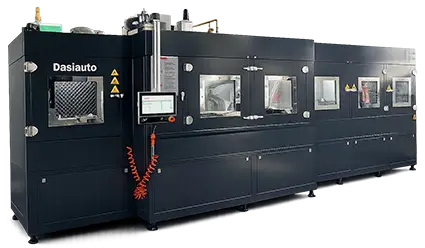
How Does wet blasting equipment price Work
Strictly speaking, a price does not “work,” but the reason wet blasting equipment price varies is that the machine’s internal working principle directly shapes its engineering complexity. The more precisely the slurry is controlled, accelerated, recovered, and recycled, the more specialized the equipment becomes. Understanding how the process works is therefore essential to understanding why one quotation is substantially different from another.
Slurry System: Water Plus Abrasive Suspension
The process begins with a slurry tank where abrasive media and water are combined in a controlled ratio. That ratio is not a minor setting. If abrasive settles quickly or concentration drifts during operation, the machine becomes inconsistent and the process result changes from part to part.
Better machines devote more engineering to agitation, pump design, return flow, and slurry circulation. Those design choices affect both finishing stability and maintenance effort, which is why they also influence price.
Compressed Air Acceleration and Nozzle Behavior
Compressed air then accelerates the slurry through the blasting nozzle toward the workpiece. Removal rate, cosmetic texture, deburring effect, and edge-conditioning behavior all depend on the interaction among pressure, abrasive type, slurry density, nozzle size, stand-off distance, and impact angle.
Machines intended for precision work often include more stable regulation because surface outcomes are highly sensitive to pressure drift. A cabinet built for rough cleaning may tolerate that drift; a system built for controlled edge preparation usually cannot.
Closed-Loop Recovery and Sedimentation
After impact, the slurry drains into a recovery path where it is recirculated, settled, or cleaned before reuse. The quality of that return loop has a large effect on real-world performance. Poor recovery design increases sludge buildup, shortens media life, and makes the process more labor-intensive.
This is also a major cost differentiator. A basic recovery loop may function for intermittent jobs, but a more advanced sedimentation and discharge system is usually justified for higher-duty production. Over time, such features reduce downtime and contribute to lower ownership cost even if the purchase price is higher.
Dust Collection, Water Mist, and Visibility
Wet blasting produces far less airborne dust than dry blasting, but it still generates water mist and suspended fines inside the enclosure. Good mist extraction helps maintain operator visibility and keeps the cabinet environment more stable. Buyers sometimes underestimate this until they see how much visibility affects loading accuracy, cycle confidence, and operator fatigue.
PID Regulation and Recipe-Based Control
Higher-end systems typically include closed-loop control for blasting pressure and recipe storage for validated process settings. That combination reduces dependence on manual adjustment and makes shift-to-shift consistency easier to maintain. It also supports faster setup when multiple part families run through the same machine.
In industrial wet blasting, the machine price often rises with process stability, not with blasting force alone.
| Parameter | Typical Industrial Condition | Why It Matters |
|---|---|---|
| Working pressure | Typical low-to-medium compressed-air blasting range, selected by application | Influences removal intensity, finish texture, and part sensitivity |
| Slurry concentration | Typical controlled abrasive-to-water ratio by weight or volume | Affects consistency, aggression, and media efficiency |
| Abrasive particle size | Fine to medium PSD chosen by substrate and finish goal | Changes roughness, deburring selectivity, and nozzle wear |
| Air flow demand | Varies by nozzle size, pressure setpoint, and duty cycle | Determines compressor requirement and process energy |
| Media consumption | Application-dependent; influenced by breakage, carryout, and recovery quality | Shapes consumable cost and maintenance planning |
| Control system | Manual adjustment to PLC/HMI with PID pressure management | Determines repeatability, recipe discipline, and operator dependence |
Why Working Principle Explains Price Gaps
When one wet blasting machine quote is much higher than another, the difference is often hidden inside the working system rather than the machine shell. Slurry stability, recovery layout, sedimentation convenience, control architecture, and motion accuracy are the factors that usually explain why prices diverge in the market.
Wet Blasting vs Dry Blasting vs Other Methods
Price evaluation only makes sense when wet blasting is compared with credible alternatives. Buyers usually want to know not just what wet blasting equipment costs, but whether it creates better value than dry blasting, shot peening, or vibratory finishing for a given part family.
| Comparison Point | Wet Blasting | Dry Blasting | Shot Peening | Vibratory Finishing |
|---|---|---|---|---|
| Airborne dust | Low because water suppresses dust | Higher unless strongly extracted | Moderate, enclosure-dependent | Low external dust, though media and compounds require handling |
| Surface finish control | Fine, even, tunable | Effective but often harsher | Functional impact-focused, less cosmetic | Good for bulk smoothing on suitable geometries |
| Media embedding risk | Generally lower on sensitive surfaces | Higher on some soft or coated materials | Depends on media and process goal | Usually not the main concern |
| Localized treatment | Good with nozzle targeting and fixtures | Good, but often more operator-sensitive | Coverage-oriented rather than selective finishing | Less suitable for tight localized features |
| Best-fit applications | Deburring, edge prep, coating prep, AM finishing | Cleaning, stripping, rough preparation | Fatigue-related surface engineering | Bulk smoothing and edge softening |
| Environmental handling | Slurry, mist, and wastewater management required | Dust collection and dry media disposal required | Media recovery and containment required | Wet waste and compound management required |
Wet Blasting vs Dry Abrasive Blasting
Dry blasting generally has a lower entry cost and remains useful for aggressive cleaning or stripping. However, it also brings more dust, a harsher impact profile, and in some cases a less controlled cosmetic result. Where finish consistency, lower dust, and precision deburring matter, wet blasting often justifies a higher price.
Wet Blasting vs Shot Peening
Shot peening is a distinct process family with a different functional objective. Its main role is to impart compressive residual stress for fatigue performance rather than simply clean or refine a surface. Industrial terminology discussed in shot peening process references helps clarify why a peening machine and a wet blasting machine should not be priced or specified as if they serve the same goal.
Wet Blasting vs Vibratory Finishing
Vibratory finishing is efficient for bulk quantities of suitable parts, especially when all-over smoothing is acceptable. Wet blasting becomes more attractive when the geometry is complex, when certain areas must be treated selectively, or when surface directionality and stand-off control matter.
Surface Preparation and Environmental Perspective
For coating-related work, process selection should also consider downstream adhesion and cleanliness. Guidance from AMPP surface preparation resources is often relevant because pretreatment quality affects the performance of the next manufacturing stage, not just the immediate appearance of the blasted surface.
Key Specifications to Evaluate Before Buying
A wet blasting equipment price should always be tied to a structured specification review. Without that review, quotations are easy to compare incorrectly because they may describe very different levels of process control, maintenance burden, or production readiness.
Blasting Pressure and Stability Window
Maximum rated pressure is less useful than stable operating pressure. Buyers should ask how the machine maintains process consistency when plant air fluctuates, nozzles wear, or slurry characteristics shift over a production run. A stable pressure window is often more important than a higher nominal peak.
Motion Precision and Nozzle Positioning
For simple cleaning, manual gun operation may be sufficient. For controlled deburring, cosmetic uniformity, or edge preparation, the path, stand-off, angle, and dwell time of the nozzle matter much more. Servo-driven X/Y/Z motion becomes relevant when part quality depends on repeatable surface interaction rather than rough coverage.
Throughput and Real Cycle Time
Cycle time should include loading, fixture clamping, blasting, drain-back, unloading, changeover, and waste handling. Many buyers focus too heavily on pure blasting speed, even though the largest productivity losses often occur in manual handling or recovery maintenance.
Workspace Envelope and Part Family Range
The machine’s internal envelope should be evaluated not only against the current part dimensions but also against expected part mix, fixture access, nozzle travel, and maintenance clearance. A compact cabinet may look cost-effective initially but become limiting as the product family expands.
HMI, Recipes, and Operator Dependence
Recipe control can be a strong economic differentiator. It shortens changeovers, reduces setup errors, and helps standardize results across different operators and shifts. In mixed-product environments, recipe storage often has a direct effect on productivity and scrap reduction.
Dust, Mist, and Waste-Sand Handling
Wet blasting does not eliminate environmental management; it shifts the problem from dry dust to slurry, mist, and sediment. Buyers should confirm how the system extracts mist, removes sludge, and supports routine cleaning. Machines that are difficult to purge or clean may look cheaper at purchase but cost more in labor.
Utilities and Safety Features
Compressed air demand, electrical supply, water use, drainage planning, interlocks, visibility, emergency stops, and access to wear parts all belong in the buying checklist. These factors influence installation cost and daily usability at least as much as the machine’s headline dimensions.
Applications Across Industries
The practical value of wet blasting equipment price becomes clearer when tied to actual applications. Different industries buy these systems for different reasons, and the process value changes depending on whether the target is burr removal, edge geometry control, oxide removal, coating adhesion, or cosmetic surface refinement.
| Application Type | Target Industry | Workpiece Example | Process Benefit |
|---|---|---|---|
| Edge honing of cutting tools | Carbide tooling and metal cutting | Inserts, drills, end mills | Controlled edge preparation and more stable K-factor |
| Burr removing of metal parts | Precision machining and component production | Turned, milled, or stamped parts | Selective deburring with less manual finishing effort |
| Scale removal from forgings or bars | Forging and steel processing | Forged parts, rods, bar stock | Removes oxide and scale with lower airborne dust |
| Pretreatment before coating | Fabrication, appliance, and automotive supply | Panels, brackets, housings | Creates a cleaner, more uniform pre-coating surface |
| AM post-processing | Additive manufacturing | 3D printed metal parts | Refines texture and removes loose residue |
| Peening / surface conditioning | Engineered metal components | Springs, formed parts, wear surfaces | Controlled impact treatment for functional needs |
| Glass frosting | Architectural and decorative glass | Panels, glass features, specialty pieces | Produces an even matte finish |
| 3C device finishing | Consumer electronics supply chain | Frames, shells, and covers | Improves cosmetic consistency and tactile smoothness |
Cutting Tools and Edge Geometry
Wet blasting is widely used for carbide-tool finishing because it can support controlled edge conditioning without the heavy dust load of dry blasting. In that context, the process value is tied less to visible cleaning and more to geometry control, which is why edge honing of cutting tools is often assessed in terms of K-factor consistency and downstream coating behavior.
Machined Parts and Selective Deburring
Deburring is one of the most common industrial justifications for wet blasting. The process can target edges and fine features more selectively than some mass-finishing methods, while reducing manual labor compared with hand deburring. In that application family, burr removing of metal parts is usually evaluated on labor savings, defect reduction, and repeatability across batches.
Forgings, Coating Prep, and AM Parts
The same machine class can also serve rougher or more transitional jobs, such as oxide removal from forgings, surface conditioning before coating, and post-processing of metal additive parts. In those cases, price should be evaluated against the value created in the next step of production, not just the blasting step itself.
Equipment Selection Guide
A buyer searching for wet blasting equipment price usually reaches a more useful decision by comparing machine configurations rather than comparing raw quotations. Different equipment types serve different production scales, part geometries, and control requirements, so the “right” price depends on which configuration fits the process.
| Configuration / Model Tier | Target Production Scale | Workpiece Size Range | Precision Level | Recommended Applications |
|---|---|---|---|---|
| R&D robot-assisted platform | Process development, sample testing, pilot work | Small to medium, mixed geometry | High | Trials, recipe development, new-part validation |
| Compact manual cabinet | Small-lot workshop production | Small parts | Medium | Basic cleaning, light deburring, visual finishing |
| Standard batch production cabinet | Routine manufacturing | Small to medium parts | Medium to high | Repeated batch work with moderate part variation |
| Single-piece dedicated machine | Repetitive part-by-part processing | Small to medium dedicated parts | High | Stable orientation and repeatable treatment of one part family |
| Servo multi-axis complex-part system | Precision parts with geometry variation | Small to medium complex parts | Very high | Edge honing, selective deburring, controlled nozzle paths |
| Plate-part dedicated machine | Flat or plate-like workpieces | Medium to large flat parts | High | Uniform treatment of sheet, plate, and panel products |
| Round-rod processing system | Continuous or semi-continuous rod handling | Long cylindrical workpieces | Medium to high | Scale removal and conditioning of rods or bars |
| Double-chamber production system | Higher-throughput manufacturing | Small to medium production parts | High | Reduced idle time and more continuous production flow |
R&D and Process-Proving Configurations
In early-stage development, flexibility often matters more than speed. A machine such as the RB-6 robot-type wet blasting system is relevant when the buyer needs sample testing, path development, and process proof before locking into a production layout.
Standard Cabinets vs Dedicated Systems
For many factories, a standard production cabinet is enough if part variation is manageable and finish tolerance is moderate. Dedicated single-piece or multi-axis systems become more attractive when part orientation, dwell time, and nozzle path must be tightly controlled to avoid variability.
Selecting by Throughput and Surface Requirement
High throughput alone does not automatically justify a more expensive system. The stronger case appears when output demand is paired with strict finish requirements, low scrap tolerance, or a need to reduce operator dependence. In those cases, automation adds process value rather than just convenience.
Cost, Lead Time and ROI Considerations
The most important buying mistake in this category is treating wet blasting equipment price as a standalone number. In practice, capital cost, lead time, process validation, and operating cost are interdependent, and the best purchasing decision is usually based on total cost of ownership rather than the lowest initial quotation.
Main Price Drivers
Price is shaped by machine size, work envelope, automation level, nozzle and fixture complexity, recovery-loop design, sludge-handling convenience, and control-system depth. A manually adjusted cabinet with basic recovery will naturally cost less than a servo-driven system with HMI recipes, stable pressure regulation, and low-intervention sedimentation.
Abrasive strategy also affects project scope. Media type, particle size, replenishment frequency, and compatibility with the pump and nozzle path all contribute to both machine design and operating economics.
Typical Lead-Time Bands
Standard cabinet-type systems generally have shorter lead times than custom automated machines. Lead time extends when the project requires sample processing, part-specific fixturing, custom servo logic, staged factory testing, or installation planning for a production line. Buyers should therefore ask for a phased schedule rather than a single promised delivery date.
ROI Logic for Wet Blasting Investments
Return on investment usually comes from four areas: labor reduction, improved consistency, reduced rework or scrap, and stronger downstream process performance. For example, replacing manual deburring can reduce labor hours; tighter edge preparation can improve tooling consistency; better coating pretreatment can improve adhesion and reduce rework; and cleaner AM post-processing can stabilize finishing quality.
A useful ROI discussion starts with the current process problem. If the main issue is hand-finishing labor, the value case differs from a project where the main issue is coating failure or uncontrolled edge geometry. The right machine is the one whose capabilities directly solve the dominant cost driver in the production line.
Hidden Costs That Distort Cheap Quotes
Low entry price can hide costly weaknesses in maintenance access, pump durability, nozzle wear, mist extraction, or sludge handling. If operators spend too much time cleaning the system or correcting inconsistent finishes, the machine’s low purchase price loses its advantage quickly.
Quote Preparation and Technical Clarity
Accurate pricing depends on the quality of the RFQ. Buyers who provide part drawings, substrate material, target finish, expected output, utility conditions, and current pain points usually receive more comparable proposals. If sample testing is needed to confirm feasibility, the commercial discussion should follow that validation step rather than precede it.
Why Choose DassiAuto — Our Company
DassiAuto Intelligent Equipment Co., Ltd is a Chinese manufacturer established in 2012 and focused on wet blasting technology for industrial surface treatment. According to its published about DassiAuto information, the company operates as a national high-tech enterprise under the ISO 9001 quality management standard, with invention patents, utility model patents, and software copyrights related to blasting equipment and control systems.
Its published scope covers planning, design, manufacturing, sales, and application development across the surface-treatment equipment value chain. The company describes engineering features across its lineup that include PID closed-loop slurry pressure control, servo-driven X/Y/Z linkage with 0.02 mm control accuracy, HMI recipe management with hierarchical permission control, automatic waste-sand sedimentation with one-click discharge, and dust-collection systems intended to reduce water mist. DassiAuto also identifies customer references including Wecan, Ruian, Huareal, Metcera, OKE, YG, Kelite, and XTC, especially in carbide cutting tool manufacturing.
The company’s stated application coverage includes edge honing of cutting tools, burr removal of metal parts, scale removal of steel bars or forgings, pretreatment before coating, additive-manufactured part post-processing, peening, glass frosting, and 3C finishing. Its service model spans sample testing, planning, design, manufacturing, installation, commissioning, training, after-sales support, spare parts, abrasive resupply, and process optimization. From a procurement perspective, that profile indicates a supplier organized around process-verified solutions rather than only stand-alone equipment sales.
FAQ
Q1. Why do wet blasting equipment prices vary so much between suppliers?
Prices vary because the machines are rarely equivalent in process control, slurry recovery, automation, mist extraction, and maintenance design. Two cabinets may look similar externally while differing substantially in pressure stability, fixturing complexity, and operating labor. The most useful comparison is capability per application, not price per enclosure.
Q2. Should I request sample testing before asking for a final wet blasting equipment price?
Yes, especially for precision deburring, edge honing, cosmetic finishing, or additive-manufactured parts. Sample testing helps confirm abrasive grade, blasting parameters, part orientation, and expected finish before the equipment is finalized. That usually makes the final quotation more accurate and reduces project risk.
Q3. Does a higher wet blasting equipment price always mean better ROI?
No. A higher price is justified only when the additional features solve a real production problem such as inconsistency, labor intensity, scrap, or low throughput. If the application is simple, a basic cabinet may have a better return than an over-engineered automated system.
Q4. What costs should I include beyond the purchase price of the machine?
Buyers should include installation, commissioning, training, compressor capacity, utilities, nozzles, pumps, abrasive replenishment, sludge handling, and routine maintenance labor. These items often determine the actual operating economics more than the initial invoice amount.
Q5. How does customization affect wet blasting equipment price and lead time?
Customization usually increases both because it adds engineering work, fixture design, control logic, and verification time. The effect is most noticeable when the process requires servo motion, part-specific orientation, integrated handling, or specialized recovery and sedimentation design.
Q6. What is the best way to compare two wet blasting equipment price quotations fairly?
Compare them against the same part family, finish target, throughput, utility assumptions, and support scope. Review pressure control method, slurry-loop design, sludge-discharge effort, recipe capability, maintenance access, and included services such as testing or training. In industrial practice, those details explain the real cost difference better than the number at the bottom of the quote.