
Quick Answer
A wet blasting machine China buyer should select equipment based on part geometry, required finish consistency, automation level, and recovery-system stability rather than chamber size alone. In most industrial cases, wet blasting is preferred when the process must reduce free dust, avoid harsh dry-media impact, and deliver repeatable cosmetic or functional finishes on tools, metal parts, glass, or additive-manufactured components. The best-fit machine is usually the one that can hold pressure, slurry concentration, nozzle motion, and waste handling within a controlled production window over long operating cycles.
| Core Factor | Typical Conclusion | Why It Matters |
|---|---|---|
| Process family | Wet blasting / slurry blasting / vapor blasting | Defines impact style, finish quality, and dust behavior |
| Working pressure | Typical operating band around 0.2-0.7 MPa | Balances removal rate with surface sensitivity |
| Control level | Timed cycle, fixture control, or servo multi-axis | Determines repeatability from batch to batch |
| Main applications | Deburring, edge honing, coating pretreatment, scale removal, cosmetic finishing | Confirms whether the machine matches the production target |
| Environmental profile | Low free dust with enclosed slurry and mist extraction | Supports cleaner plant operation than dry blasting |
| Project timing | Standard units shorter; engineered systems longer | Affects validation, delivery, and commissioning planning |
What Is wet blasting machine China
The term “wet blasting machine China” generally refers to industrial wet blasting equipment manufactured in China for abrasive surface treatment applications. Technically, the machine uses water and abrasive media to form a slurry, then projects that slurry onto a workpiece through compressed air or a slurry-pressure delivery system inside an enclosed cabinet or automated cell. It belongs to the broader abrasive blasting process family, but it differs from dry blasting because the water phase changes both impact mechanics and workplace conditions.
In practical procurement language, the phrase does not describe one single machine type. It can refer to a manual-assisted wet cabinet, a servo-driven precision system, a single-piece production unit, a batch chamber, or a specialized line for tools, rods, plates, or pretreatment. The common denominator is that all of these systems use slurry rather than dry abrasive flow as the working medium.
Where Wet Blasting Fits in the Surface-Treatment Process Family
Wet blasting sits between aggressive dry abrasion and gentler mass-finishing methods. It is often chosen when the process must remove burrs, condition an edge, clean scale, create a uniform matte appearance, or prepare a substrate without the harsher dust profile associated with dry-only blasting.
In industrial settings, wet blasting is less about “cleaning with water” than about controlled micro-erosion. The water acts as a carrier and cushion for the abrasive, which can make the finish more even on precision parts and visible surfaces. That is why the method is common in carbide tooling, fine metal components, glass finishing, and cosmetic 3C applications.
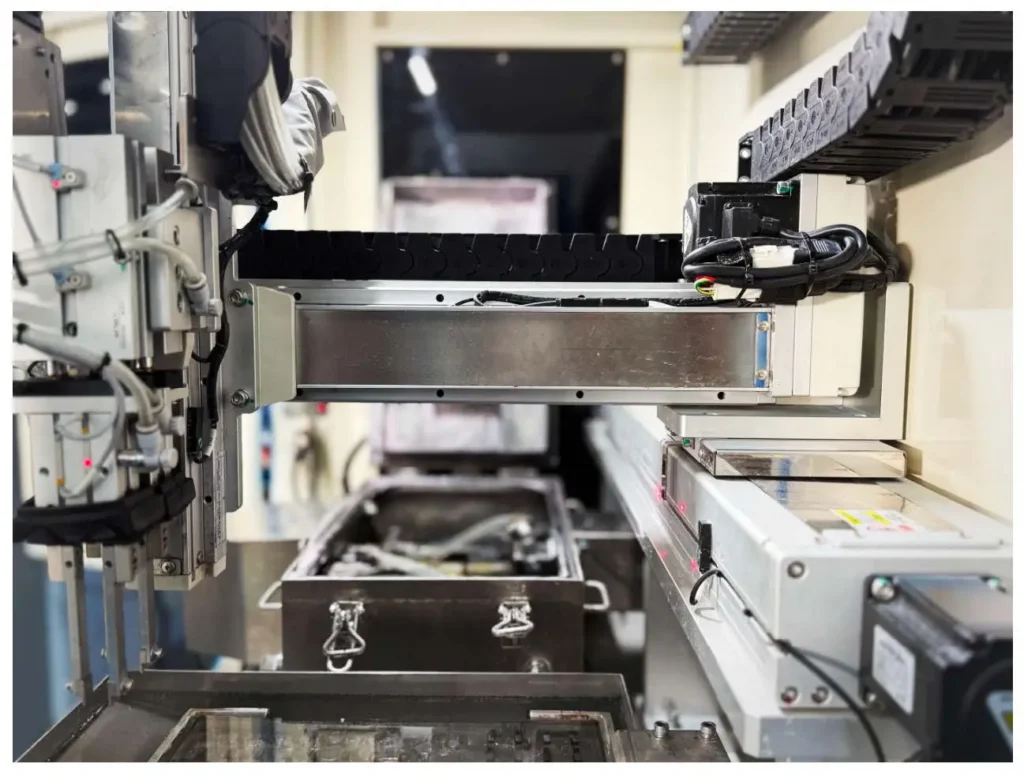
Core Selling Points of a Wet Blasting Machine China Supplier Category
One major advantage is dust suppression. Because the abrasive is suspended in water, the process produces much less free airborne dust than dry blasting, although extraction is still required to manage mist and overspray inside the enclosure.
A second advantage is the lower tendency for harsh media interaction on some soft or coated surfaces. The water film moderates particle impact, which can reduce unwanted surface aggression and help preserve dimensional intent on delicate features.
A third advantage is finish consistency. When a machine can stabilize slurry ratio, blasting pressure, nozzle distance, and cycle time, it usually produces a more consistent result than manual dry blasting. A fourth advantage is process repeatability, especially when the machine stores recipes and controls access to parameter changes.
Why the “China” Part of the Keyword Matters
In B2B search behavior, “wet blasting machine China” usually signals sourcing intent rather than process curiosity. Buyers using this keyword are often comparing manufacturing origin, engineering depth, customization flexibility, lead time, and cost structure. They may also be assessing whether a Chinese supplier can provide process validation, spare parts, commissioning support, and application-specific machine design rather than a generic cabinet only.
For that reason, the keyword has two layers: the process itself and the supply-chain decision behind it. A buyer is not just asking what wet blasting is; the buyer is asking whether China-based production can meet industrial requirements for precision, durability, and process control.
How Does wet blasting machine China Work
A wet blasting machine China system works as a closed industrial loop. Abrasive and water are mixed into slurry, circulated through a delivery circuit, accelerated by compressed air toward the part, collected after impact, and then returned through recovery, sedimentation, and reuse stages. The quality of the final finish depends on how well that entire loop remains stable during production, not only on nominal blasting pressure.
Slurry Preparation: Water Plus Abrasive Suspension
The process begins in a slurry tank or circulating reservoir. Water is combined with a selected abrasive grade, and the mixture is kept in suspension by agitation and circulation so that the solids do not settle unevenly. Stable suspension is essential because concentration drift changes impact intensity, finish character, and media behavior over time.
In industrial equipment, slurry preparation is therefore an engineering function rather than a simple mixing step. Tank geometry, circulation path, pump sizing, and cleanout access all affect whether the machine can maintain the same blasting condition during long shifts.
Compressed-Air Acceleration and Nozzle Path
Once the slurry is in circulation, compressed air accelerates it through a nozzle or blasting gun toward the target surface. The effective result depends on nozzle diameter, stand-off distance, impingement angle, slurry concentration, particle size, dwell time, and pressure stability. If any of these variables change significantly, the surface result changes as well.
This is why automated wet blasting systems are often more consistent than manually operated cabinets. When nozzle path and distance are defined by fixtures or servo axes, the process becomes less dependent on operator habit and more dependent on controlled machine parameters.
Closed-Loop Recovery and Sedimentation
After striking the workpiece, the used slurry falls into the cabinet’s collection area and returns to the recovery loop. Reusable abrasive and water are recirculated, while broken media, removed burrs, scale, fines, and sludge are separated gradually through sedimentation and discharge routines.
This recovery stage is where many machines differ in real operating quality. A short demo with fresh slurry may look similar across suppliers, but long-run production stability depends heavily on how the system handles contamination, fines buildup, and waste-sand removal. Good recovery design reduces consumable waste and keeps the process window stable.
Mist Control and Enclosed Operation
Wet blasting suppresses dry dust, but it creates water mist and suspended contamination inside the chamber. Industrial machines therefore need enclosure airflow, drainage, view-window protection, and extraction to protect visibility and keep the machine serviceable. Poor mist control can slow setup, reduce inspection quality, and increase maintenance effort.
PID Pressure Control and Recipe Management
The most robust systems maintain pressure with automated regulation rather than repeated manual correction. When slurry pressure and air input are managed through PID logic, the machine can better hold a target setpoint despite wear, minor viscosity shifts, or compressor-load changes. When recipe management is added through HMI control, repeat jobs can run with fewer uncontrolled adjustments.
Stable wet blasting is usually achieved by controlling the loop, not by simply increasing pressure.
| Parameter | Typical Industrial Range or Condition | Why Buyers Should Check It |
|---|---|---|
| Working pressure | Typically about 0.2-0.7 MPa, depending on substrate and media | Governs removal rate, edge effect, and finish sensitivity |
| Slurry concentration | Typical low-to-medium solids loading by weight or volume | Affects consistency, flowability, and aggressiveness |
| Abrasive particle size | Fine to medium PSD selected by material and finish target | Influences roughness, edge radius formation, and nozzle wear |
| Compressed air demand | Varies with nozzle diameter, pressure, and duty cycle | Determines compressor sizing and plant utility load |
| Media consumption behavior | Depends on breakdown rate, contamination, carryout, and recovery efficiency | Shapes ongoing consumable cost and maintenance frequency |
| Control system | Manual regulation to PLC/HMI with PID pressure control | Sets the level of repeatability and operator dependence |
Why Working Principle Matters in Source Selection
Two machines may look similar in photos, yet perform very differently after several hours of operation. The important questions concern pressure stability, slurry recirculation quality, maintenance access, nozzle-path repeatability, and waste-handling behavior under actual contamination loads. For a buyer comparing wet blasting machine China options, those questions are often more important than cabinet dimensions alone.
wet blasting machine China vs Dry Blasting vs Other Methods
A wet blasting machine China search usually leads buyers to compare wet blasting not only with Chinese-made alternatives, but also with different finishing processes altogether. That comparison is necessary because the best method depends on whether the plant needs edge preparation, burr removal, cosmetic surface control, fatigue-related conditioning, or high-throughput bulk smoothing.
| Comparison Point | Wet Blasting | Dry Blasting | Shot Peening | Vibratory Finishing |
|---|---|---|---|---|
| Free airborne dust | Low free dust; mist extraction still required | Higher dust generation and heavier dust-collection dependence | Contained process, but media and fines still require control | Generally low free dust outside enclosure, though compounds and residues remain |
| Surface finish character | Fine, cushioned, and easier to control on precision surfaces | Often more aggressive and rougher | Functional impact surface, not primarily cosmetic | Bulk smoothing across many part surfaces |
| Media embedding risk | Generally lower on some sensitive or coated surfaces | Higher on some soft or delicate materials | Depends on media and intent of treatment | Usually not the main process concern |
| Localized process control | Good with nozzle targeting and fixtures | Good, but often more operator-sensitive | Coverage-focused rather than selective edge work | Limited on isolated features and hidden geometry |
| Automation repeatability | High when pressure, path, and slurry are controlled | Moderate to high depending on dry-feed stability | High in specialized systems | High for bulk loads of similar parts |
| Environmental handling | Slurry management, mist extraction, sediment discharge | Dust collection and dry spent-media handling | Intensity control and media containment | Media separation, wastewater, and compound handling |
Wet Blasting vs Dry Blasting for Precision Parts
Dry blasting still has a place where rapid material removal, coating stripping, or heavy rust attack is the priority. Wet blasting becomes more attractive when the substrate is geometry-sensitive, appearance-sensitive, or part of a clean manufacturing environment where airborne dust is a problem.
For precision parts, the water-cushioned interaction can provide a more even finish and a lower risk of over-aggressive surface attack. That is one reason wet blasting is widely considered for tooling, medical-type precision metalwork, and tightly controlled deburring operations.
Wet Blasting vs Shot Peening
Shot peening is related to blasting but serves a different primary purpose. In most engineering contexts, peening is used to induce compressive stress and improve fatigue-related behavior rather than to clean or cosmetically refine a surface. That distinction is reflected in ASTM B851 shot peening terminology, which helps buyers separate surface-finishing objectives from peening objectives.
Wet Blasting vs Vibratory Finishing
Vibratory finishing is effective when many similar parts can be processed in bulk and when broad edge softening is acceptable. It is usually less suitable when treatment must be directional, selective, or focused on one visible face, one sharp edge, or one burr-prone feature. Wet blasting holds an advantage when nozzle angle and dwell location directly determine the part outcome.
Key Specifications to Evaluate Before Buying
Selecting a wet blasting machine China supplier should begin with process capability, not brochure language. A machine can have a large cabinet, a powerful pump, and attractive pricing, yet still fail to hold the finish, edge radius, or cosmetic consistency that the production line requires. The most useful procurement checklist is therefore process-based.
Blasting Pressure Window and Stability
Define the operating pressure range needed for the substrate, abrasive, and finish target. Edge honing, fine deburring, and visible-surface texturing typically need a narrower and more stable pressure window than general descaling or cleaning. Ask whether the machine uses manual regulation, electro-pneumatic regulation, or PID closed-loop control.
Slurry Concentration Control and Abrasive Matching
A serious supplier should explain how slurry is prepared, circulated, corrected, and cleaned during use. Abrasive grade selection should reflect part material, hardness, geometry, particle size target, finish expectations, and cost discipline. If a machine cannot keep the solids loading stable, consistent production will be difficult even if the initial sample result looks acceptable.
Motion Accuracy and Nozzle Repeatability
For geometry-sensitive finishing, axis control matters as much as blasting pressure. Buyers should clarify whether the machine uses fixed nozzles, indexed fixtures, timed reciprocation, or servo-driven X/Y/Z movement. Path repeatability is especially important in tool edge preparation, selective deburring, and any process that must preserve dimensional intent.
Throughput, Takt Time, and Changeover
Cycle time should include loading, clamping, blasting, drain-back, unloading, inspection, and any between-batch cleaning. A machine with short blasting time but slow changeover may still underperform in real production. For mixed-SKU plants, recipe recall and fixture swap time can matter more than the nozzle’s maximum removal rate.
Working Envelope, Footprint, and Service Access
Useful chamber size is not the same as external cabinet size. The buyer should assess door opening, fixture approach, nozzle travel envelope, drain design, sediment zone access, pump maintenance space, and electrical or pneumatic service clearances. These details affect uptime and maintenance labor long after installation.
HMI, Permissions, and Production Discipline
Where multiple operators or multiple part numbers are involved, recipe storage and permission control are essential. Machines that allow unrestricted parameter changes are harder to validate and more likely to drift out of process. Good HMI logic supports repeatability by standardizing setup and limiting unnecessary adjustment.
Mist Extraction, Waste Handling, and Utilities
Even though wet blasting reduces free dust, the plant still needs extraction for mist, drainage for slurry management, and a clear plan for sludge discharge. Utility review should include compressed air, electrical demand, water management, wastewater responsibilities where applicable, and maintenance consumables such as nozzles, seals, windows, and pump components.
Safety Functions and Operator Environment
Interlocks, emergency stops, guarding, splash containment, lighting, and visibility protection should be examined in detail. A safer machine is often a more consistent machine because the operator can verify loading, nozzle condition, and process status without improvising unsafe workarounds.
Applications Across Industries
The strength of wet blasting lies in its adaptability. By changing abrasive type, particle size, pressure, nozzle path, and fixture strategy, one process family can support very different industrial outcomes, from carbide edge preparation to cosmetic glass frosting.
| Application Type | Target Industry | Workpiece Example | Process Benefit |
|---|---|---|---|
| Edge honing of cutting tools | Carbide tooling and machining supply | Inserts, drills, end mills | Controlled edge preparation and more stable K-factor development |
| Burr removing of metal parts | Machining, stamping, and precision components | Machined housings, stamped parts, small metal assemblies | Selective deburring with less manual finishing variability |
| Scale removal from forgings or bars | Forging and steel processing | Forged parts, rods, bar stock | Removes oxide and scale with lower free dust than dry blasting |
| Pretreatment before coating | Fabrication, appliance, transport components | Brackets, panels, metal housings | Improves cleanliness and supports more consistent coating adhesion |
| AM post-processing | Additive manufacturing | Metal 3D-printed components | Smooths rough surfaces and removes residual loose material |
| Peening and surface conditioning | Functional metal components | Wear parts, fatigue-sensitive items | Controlled impact for engineered surface condition |
| Glass frosting | Architectural and decorative glass | Panels, covers, display pieces | Creates an even matte or frosted appearance |
| 3C device finishing | Consumer electronics supply chain | Frames, shells, exterior covers | Improves cosmetic consistency and tactile smoothness |
Edge Honing and Cutting Tool Preparation
Cutting-tool finishing is one of the most demanding wet blasting applications because it often involves controlled edge rounding rather than bulk cleaning. In this context, tool edge preparation solutions are used to support K-factor control and repeatable micro-geometry before coating or final use.
Precision Deburring of Metal Parts
Deburring is another strong application because it benefits from directional treatment and programmable exposure. For repetitive burr locations on machined or stamped components, metal-part deburring processes can reduce operator variability compared with manual hand finishing.
Coating Pretreatment and Integrated Surface Preparation
For painting and related finishing systems, wet blasting can act as a cleaning and activation step before the next process stage. In application planning, pretreatment before coating is evaluated not only by immediate appearance but also by how it supports downstream adhesion and rework reduction. Surface-preparation expectations in protective coatings are commonly framed through documents and guidance from AMPP surface preparation practice.
AM Parts, Forgings, Glass, and 3C Components
Additive-manufactured parts often need a process that can smooth rough texture without indiscriminate heavy stock removal. Forgings and steel bars may need scale removal with better environmental conditions than dry blasting. Glass and 3C parts, by contrast, place more emphasis on appearance uniformity and tactile refinement. These very different goals can still be addressed within the same wet blasting process family when the machine is properly matched to the application.
Equipment Selection Guide
The phrase wet blasting machine China covers a wide range of equipment configurations, and the correct choice depends on the production scenario. Some buyers need a development platform for sample verification, while others need a robust batch cabinet or a higher-throughput production arrangement with minimal idle time.
| Configuration / Model Tier | Target Production Scale | Workpiece Size Range | Precision Level | Recommended Applications |
|---|---|---|---|---|
| R&D robot-assisted platform | Trial work, sample testing, process development | Small to medium mixed parts | High | Abrasive trials, path development, early-stage process validation |
| Compact automatic cabinet | Small-lot production | Small parts | Medium | Light deburring, cleaning, entry-level automated wet blasting |
| Standard single-chamber batch system | Daily batch manufacturing | Small to medium parts | Medium to high | Repetitive finishing with controlled footprint |
| Dedicated single-piece system | Repetitive one-part-family production | Small to medium dedicated parts | High | Stable orientation and part-by-part processing |
| Servo multi-axis complex-part cell | Precision production | Small to medium complex geometries | Very high | Edge honing, selective deburring, intricate surfaces |
| Plate-part dedicated machine | Flat-part manufacturing | Medium to large plate-shaped parts | High | Uniform treatment of panels and flat workpieces |
| Round-rod process machine | Semi-continuous or continuous production | Long cylindrical parts | Medium to high | Bar-stock conditioning and scale removal |
| Double-chamber production system | Higher-throughput manufacturing | Small to medium production parts | High | Reduced idle time and more continuous loading rhythm |
R&D and Flexible Validation Platforms
When the process itself is still being defined, a flexible development system is often the best starting point. An R&D robot wet blasting unit is suited to sample testing and parameter exploration because it supports broader trial work than a fully dedicated production cell.
Standard Batch and Single-Piece Production
For stable production of recurring part families, a standard batch cabinet or dedicated single-piece machine is often the practical middle ground. A single-chamber batch cabinet typically balances repeatability, floor-space efficiency, and manageable maintenance better than either a very small manual system or an overengineered custom line.
Complex Geometry and Higher Throughput
As geometry becomes more demanding, motion control becomes more important. Multi-axis systems help hold stand-off distance and nozzle angle across curved or feature-rich parts. At the other end of the production spectrum, higher-volume plants may move toward double-chamber or parallelized layouts to reduce loading dead time and improve effective machine utilization.
How Buyers Usually Narrow the List
The most reliable selection rule is to choose the least complicated configuration that still meets finish, quality, and takt requirements. Under-automation can lead to hidden labor cost and variable quality, while over-automation can add capital cost and maintenance burden without improving the surface result.
Cost, Lead Time and ROI Considerations
The cost of a wet blasting machine China project is driven more by engineering content than by the basic fact that the machine uses slurry. Two systems may both be described as wet blasting equipment, yet differ greatly in price because of automation architecture, precision motion, wear-resistant materials, part handling, enclosure size, extraction quality, and control sophistication.
Main Price Drivers
The largest cost drivers usually include chamber configuration, automation level, fixture complexity, servo motion, slurry-circuit design, HMI recipe logic, and sludge-handling features. A simple wet cabinet with manual control belongs to a different investment category than a dedicated precision cell with programmed nozzle paths and closed-loop pressure regulation.
Running cost also matters. Abrasive breakdown, nozzle wear, pump wear, view-window protection, mist management, and sludge disposal all contribute to ownership cost. Buyers comparing suppliers should therefore separate purchase price from lifecycle cost.
Typical Lead-Time Bands
Lead time is generally shortest for standard machine formats with limited customization and longer for engineered systems tied to one part family or multiple motion axes. A typical schedule may include sample testing, process confirmation, design finalization, manufacturing, internal FAT-style verification, shipping, site installation, commissioning, and training. When the project includes nonstandard fixtures, integrated loading, or combined pretreatment functions, the timeline usually extends.
ROI Framing for Wet Blasting Projects
Return on investment should be tied to the operational pain point being addressed. In deburring, the benefit may come from reduced manual labor and less rework. In edge honing, the value may appear through better geometry consistency, improved coating response, or longer tool life. In pretreatment, the gain may come from fewer coating failures and lower downstream scrap.
That is why a credible ROI estimate uses plant-specific data. Labor consumption, quality escapes, scrap rate, takt shortfalls, operator training burden, and consumable usage are usually more useful than generic percentage claims.
Hidden Ownership Costs Buyers Often Miss
A lower quoted price can conceal higher operating cost if the machine is difficult to clean, unstable under contamination, or awkward to service. Slurry drift, poor visibility, long maintenance access times, and inefficient waste discharge are common sources of hidden cost. For a wet blasting machine China procurement project, these factors should be evaluated during sample testing and technical discussion, not after purchase.
Why Process Validation Improves Payback Confidence
Validation turns the project from a machine purchase into a controlled process decision. When abrasive grade, pressure range, dwell time, and fixture logic are verified in advance, the final equipment is more likely to reproduce a proven process window instead of relying on trial and error after installation. That makes payback forecasts more realistic.
Why Choose DassiAuto — Our Company
DassiAuto Intelligent Equipment Co., Ltd is a Chinese manufacturer established in 2012 and focused on wet blasting technology for industrial surface treatment. According to its published company profile, it operates as a national high-tech enterprise under ISO 9001 quality management, with invention patents, utility model patents, and software copyrights related to blasting equipment and control systems.
Based on the company context provided, DassiAuto covers planning, design, manufacturing, sales, and application development across the surface-treatment equipment value chain. Its lineup includes eight wet blasting configurations for R&D, batch production, and application-specific requirements. Engineering highlights identified in the source material include PID closed-loop slurry pressure control, servo-driven X/Y/Z linkage with 0.02 mm control accuracy, HMI recipe management with hierarchical permissions, automatic waste-sand sedimentation with one-click discharge, and dust-collection systems designed to reduce water mist.
The same source material lists customer references including Wecan, Ruian, Huareal, Metcera, OKE, YG, Kelite, and XTC, particularly in carbide cutting tools and related industrial applications. It also describes a full-cycle service model covering sample testing, planning and design, manufacturing and quality control, installation, commissioning, training, after-sales support, spare parts, TR-series abrasive resupply, and process optimization. In procurement terms, that places the company in the category of process-verified solutions rather than a simple cabinet supplier.
FAQ
Q1. Is there usually a minimum order quantity for a wet blasting machine China project?
For industrial equipment, procurement is typically project-based rather than MOQ-based in the way consumable products are. The more important question is whether the machine is a standard configuration or a customized system, because that affects technical review, quotation detail, and manufacturing lead time. Buyers should focus on process scope, not only unit count.
Q2. Should I send parts for sample testing before placing an order?
In most cases, yes. Sample testing helps confirm abrasive selection, pressure range, fixture concept, surface finish, and cycle logic before machine design is finalized. It also reduces the risk of choosing the wrong machine architecture for the part family.
Q3. How long does installation and commissioning usually take?
The timeline depends on machine size, utility readiness, and the amount of customization in controls or fixtures. Standard systems are generally faster to install than multi-axis or integrated production cells. Commissioning should include process confirmation, safety checks, recipe setup, and trial production rather than only power-on verification.
Q4. What operator training is normally required for wet blasting equipment?
Training should cover startup, shutdown, abrasive and slurry handling, recipe selection, nozzle inspection, visibility management, routine cleaning, and waste discharge. Operators also need to understand signs of process drift such as finish inconsistency, reduced blasting intensity, or excessive fines in the circuit. Good training lowers both scrap risk and maintenance errors.
Q5. How important are spare parts and abrasive resupply after delivery?
They are essential because pumps, nozzles, seals, hoses, windows, and valves are all wear-related items in blasting service. Abrasive consistency matters as well, since changes in particle characteristics can alter finish quality and cycle time. A machine performs best when parts, media, and process settings are managed together over its operating life.
Q6. How should buyers estimate ROI for a wet blasting machine China purchase?
The most reliable method is to compare the proposed process against the plant’s current labor content, scrap, rework, takt loss, and surface-quality variation. Some projects justify themselves through deburring labor reduction, while others justify through coating reliability, tool-life stability, or fewer quality escapes. ROI is most credible when it is built from tested process results and actual production data rather than general claims.