
Quick Answer
For most buyers, wet blasting equipment China is the right choice when the target is consistent matte finishing, selective deburring, edge honing, or pre-coating surface preparation with lower free dust than dry blasting. The best configuration depends less on country of origin than on part geometry, cycle-time target, motion precision, and slurry-pressure stability. In production terms, buyers should match the machine type to the application first, then compare pressure control, automation level, abrasive management, and service support.
| Core Factor | Typical Conclusion | Why It Matters |
|---|---|---|
| Process type | Wet blasting / slurry blasting / vapor blasting | Supports controlled micro-erosion and more even finishing |
| Pressure band | Typically low-to-medium industrial blasting pressure | Balances removal rate with finish quality |
| Precision level | Manual, servo, or robotic depending on model | Determines path repeatability and feature consistency |
| Dust behavior | Low free dust; mist extraction still required | Improves housekeeping versus dry blasting |
| Typical uses | Deburring, edge honing, coating pretreatment, AM finishing | Aligns with high-value precision surface treatment |
| Lead-time band | Standard units shorter; custom cells longer | Affects qualification and production launch planning |
What Is wet blasting equipment China
In industrial sourcing, “wet blasting equipment China” refers to wet sandblasting or slurry blasting systems manufactured in China for controlled surface treatment. The phrase does not describe one single machine type. It includes cabinet systems, servo-axis machines, robotic cells, and application-specific lines used for cleaning, texturing, deburring, edge preparation, and cosmetic finishing.
Technically, wet blasting belongs to the broader mechanical abrasive blasting process family. Instead of propelling only dry grit through air, the process suspends abrasive particles in water to form a slurry, then accelerates that slurry through a nozzle toward the workpiece. That water phase changes impact behavior, particle cushioning, dust generation, and the final surface appearance.
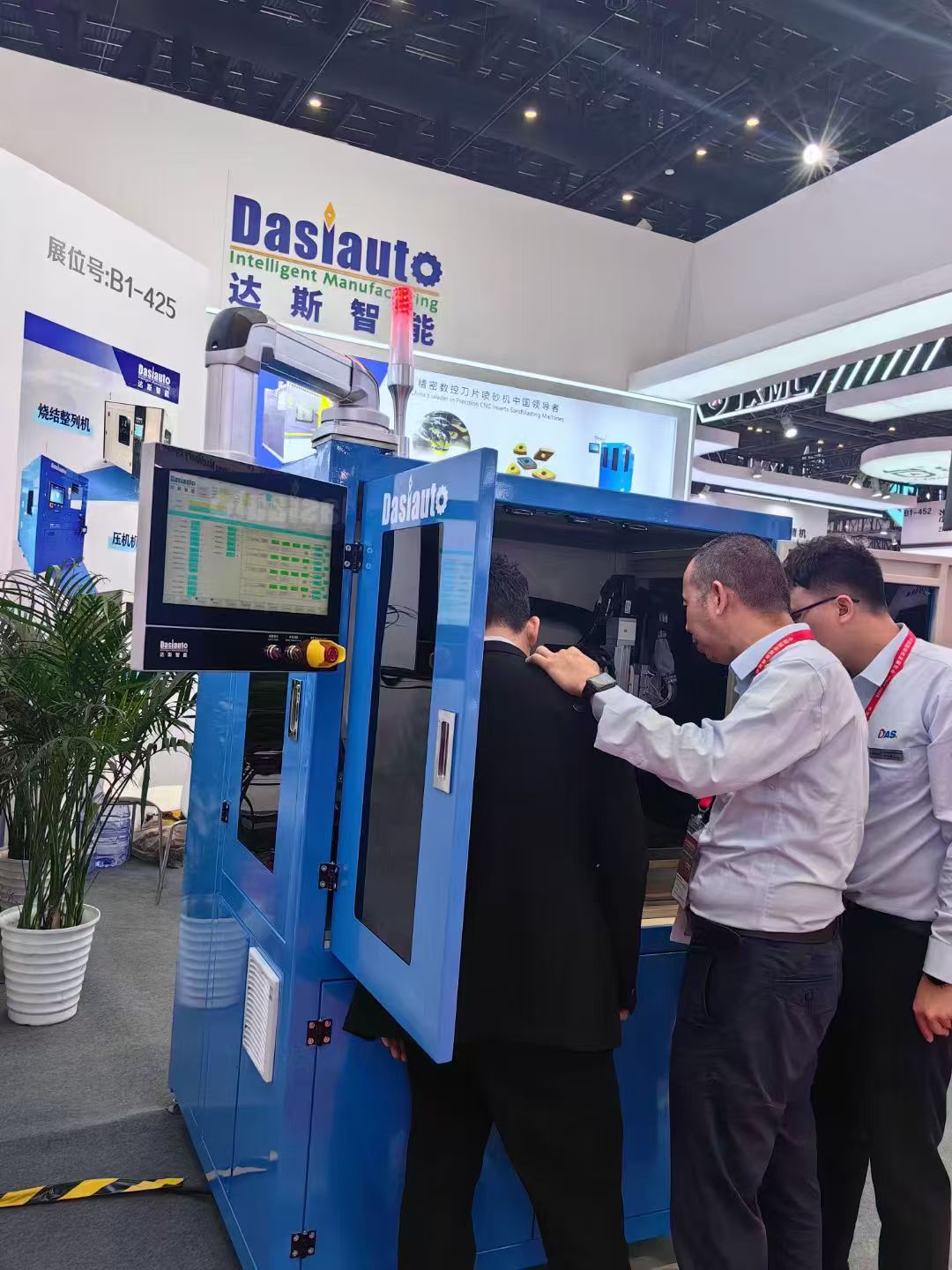
How Wet Blasting Fits Within Surface Treatment
Wet blasting sits between aggressive cleaning and fine finishing. It is widely used where the process must do more than remove contamination. In many plants, the same process family is expected to soften edges, create a controlled matte look, reduce small burrs, prepare a substrate before coating, or improve visual uniformity on complex parts.
That is why the keyword often implies both equipment and application engineering. A buyer searching for wet blasting equipment China is usually not looking for a generic blast box. The real requirement is a machine-and-process combination that can deliver stable results on specific materials, shapes, and production volumes.
Core Selling Points of Wet Sandblasting Equipment
The first major selling point is controlled surface finishing. Because the abrasive is cushioned by water, the process can produce a finer, more even texture than many dry blasting setups, especially on finish-sensitive parts. This matters for carbide tools, machined metal components, 3D-printed parts, and visible consumer-product surfaces.
The second is dust-free operation in practical shop-floor terms compared with dry blasting. Wet blasting does not eliminate enclosure extraction, but the water phase suppresses much of the airborne dust that would otherwise be released at the impact point. In many facilities, that difference affects operator comfort, cross-contamination risk, and adjacent process cleanliness.
A third advantage is reduced risk of media embedding on some softer or coated surfaces. The water film helps moderate particle impact, which can be useful when the buyer wants cleaning or texturing without an overly harsh profile. A fourth is uniformity: once pressure, slurry concentration, and nozzle path are controlled, the process is well suited to repeated part families.
Why Manufacturing Capability Matters
Not every supplier of wet blasting equipment China offers the same engineering depth. Some companies mainly fabricate cabinets and install standard guns. Others design the full slurry circuit, nozzle motion, recovery logic, waste-sand handling, and control software around a validated application.
That distinction matters because wet blasting performance depends on more than nominal pressure. Machine reliability, pump stability, nozzle wear behavior, sedimentation design, and recipe control all influence whether the process stays stable in actual production instead of only during a short trial.
How Does wet blasting equipment China Work
Wet blasting equipment China works by circulating a water-abrasive slurry, accelerating that slurry with compressed air, directing it at the workpiece under controlled pressure, and then recovering the spent mixture through a closed loop for reuse and waste separation. The principle is simple, but industrial performance depends on how consistently each subsystem works together.
Slurry Preparation: Water Plus Abrasive Media
The process begins in a slurry tank or sump where abrasive particles are mixed with water. The goal is not just to wet the media, but to keep it suspended within a controlled concentration range. If the slurry becomes too thin, cutting action falls off and the finish may become inconsistent. If it becomes too dense, flow stability suffers, line wear increases, and the nozzle can behave unpredictably.
Media choice also changes process behavior. Finer abrasive grades are typically preferred for cosmetic finishing, glass frosting, and delicate edge treatment. Coarser grades may be selected for stronger cleaning, scale removal, or more pronounced texturing. A capable manufacturer treats the abrasive as part of the process window rather than a separate consumables issue.
Compressed Air Acceleration and Nozzle Delivery
Once the slurry is prepared, it is pumped to the blast gun or nozzle assembly and accelerated by compressed air. The nozzle then directs the stream onto the surface at a specific pressure, angle, stand-off distance, and dwell time. In precision finishing, those four variables often matter more than headline compressor power.
Nozzle path control becomes especially important on tools, machined recesses, or complex 3D geometries. A manual cabinet may be sufficient for general cleaning or flexible low-volume work, but repeat production often benefits from servo axes or robotic movement so that the blast stream hits the same zone the same way every cycle.
Closed-Loop Recovery and Sedimentation
After impact, the slurry drains back into the machine’s recovery system carrying fractured abrasive, removed material, and fines. The system then recirculates usable slurry while allowing heavier waste to settle for removal. This recovery loop is a major reason industrial wet blasting behaves differently from improvised slurry spraying or one-pass cleaning setups.
Good recovery design helps maintain process consistency over time. If fines and waste accumulate without control, the stream characteristics gradually shift, which can change removal rate, roughness, and finish appearance. Automatic sedimentation and controlled discharge reduce that drift and lower the amount of manual intervention required between batches.
Mist Control, Visibility, and Pressure Stability
Wet blasting suppresses dust, but it introduces water mist and splash management requirements inside the enclosure. Effective equipment therefore includes extraction and visibility control so that operators or cameras can monitor the process. On automated machines, visibility also matters during setup, fixture verification, and maintenance.
Pressure stability is equally important. Systems with PID closed-loop pressure control can hold the slurry stream within a tighter operating band during long production runs. That supports stored recipes, reduces part-to-part variation, and makes process qualification more meaningful.
Stable slurry condition usually matters more than maximum advertised pressure.
| Parameter | Typical Industrial Range or Condition | Why It Should Be Reviewed |
|---|---|---|
| Working pressure | Typically about 0.2-0.7 MPa, application dependent | Influences removal rate, finish character, and edge effect |
| Slurry concentration | Typical controlled solids ratio by weight or volume | Affects consistency, pump load, and stream density |
| Abrasive particle size | Fine to medium PSD, selected by application | Determines texture, deburring behavior, and nozzle wear |
| Air flow demand | Depends on nozzle size, pressure, and duty cycle | Determines compressor capacity and process stability |
| Media consumption rate | Varies with breakdown, contamination, and duty | Impacts operating cost and maintenance intervals |
| Control system | PLC/HMI; advanced systems may use PID logic | Supports recipe storage, alarms, and repeatable setup |
Why Process Integration Separates Better Suppliers
Two machines may share similar chamber size and similar nominal pressure, yet produce different results in the plant. In most cases the gap comes from process integration: pump design, slurry return path, nozzle positioning, recipe control, and waste handling. Buyers comparing wet blasting equipment China should therefore look beyond enclosure dimensions and ask how the entire blasting loop is controlled in production conditions.
wet blasting equipment China vs Dry Blasting vs Other Methods
Choosing between wet blasting and alternative finishing methods requires a process comparison, not just a price comparison. Dry blasting, shot peening, and vibratory finishing each solve different problems, and overlap occurs mainly at the edges of cleaning, deburring, and surface conditioning.
| Comparison Point | Wet Blasting | Dry Blasting | Shot Peening | Vibratory Finishing |
|---|---|---|---|---|
| Airborne particulate | Low free dust; mist extraction required | Higher dust generation and larger collection burden | Usually enclosed, with dedicated media handling | Low dust, but compounds and wastewater may be involved |
| Finish character | Fine, uniform, matte to satin depending on media | Often more aggressive and less cushioned | Functional compressive treatment rather than cosmetic finish | Bulk smoothing and generalized edge softening |
| Media embedding risk | Lower on some sensitive surfaces | Higher on softer materials or coatings | Different media objective and impact regime | Not a direct nozzle-driven impact process |
| Localized control | High with aimed nozzle path | Moderate to high, often operator dependent | Targeted by coverage and intensity rules | Lower selectivity on isolated local features |
| Repeatability | High when pressure and slurry stay controlled | More variable in manual operations | High in dedicated peening systems | Good for batches, weaker for directional treatment |
| Environmental profile | Slurry/sludge management required | Dry dust and spent grit handling required | Specialized verification and media classification | Wastewater and media separation considerations |
Wet Blasting vs Dry Abrasive Blasting
Dry blasting remains effective for aggressive cleaning, rust removal, and heavy contamination where finish finesse is secondary. Wet blasting is often favored when the required result is a controlled texture, lower airborne dust, or a less aggressive surface interaction. On small precision parts, that distinction can determine whether the surface is merely cleaned or actually qualified for the next process.
Wet Blasting vs Shot Peening
Shot peening serves a different engineering purpose from most wet blasting applications. Under ASTM B851 shot peening terminology, peening is defined around intensity, coverage, and fatigue-related surface effects rather than visual finish alone. Buyers should therefore avoid treating wet blasting and peening as interchangeable unless the required functional outcome has been clearly defined.
Wet Blasting vs Vibratory Finishing
Vibratory finishing is efficient for bulk quantities of relatively small parts when all surfaces can be treated generally and selectively. Its limits appear when the part has internal passages, critical local edges, or finish-sensitive visible zones. In those cases, the directional nature of wet blasting is often a practical advantage.
Key Specifications to Evaluate Before Buying
A procurement review should begin with the required surface result and the part family, then work backward into equipment specifications. Buyers who start from chamber size alone often overlook the variables that actually decide whether the machine will meet production quality.
Blasting Pressure and Pressure Stability
Ask for the usable operating pressure range under load, not only the maximum rated pressure. In finishing applications, peak pressure is less important than the ability to hold a stable setpoint over a full shift. If the machine uses closed-loop control, ask how pressure is measured, how it is adjusted, and whether drift is logged through the HMI.
Slurry Circuit Design and Abrasive Management
Review the tank size, agitation method, circulation path, pump type, drain-back layout, and sedimentation logic. Slurry concentration control is critical because the stream can change significantly as water evaporates, fines accumulate, or media breaks down. Buyers should also ask how frequently slurry needs correction and how waste-sand discharge is handled in routine operation.
Motion-Axis Accuracy and Fixture Strategy
If the process involves edge honing, selective deburring, or controlled treatment on complex geometry, motion architecture deserves close attention. Servo X/Y/Z linkage, programmed nozzle positioning, and fixture repeatability often matter more than overall cabinet size. A published capability such as 0.02 mm control accuracy is relevant only when the fixture and nozzle arrangement can actually use that precision.
Throughput, Changeover, and Cycle Time
True throughput includes more than blasting time. Loading, fixturing, recipe call-up, drainage, unloading, inspection, and maintenance recovery all affect actual output. For some part families, a simple single-chamber cabinet is enough; for others, dual-station or dedicated single-piece equipment will shorten the non-productive portion of the cycle.
Workspace Footprint and Utility Readiness
Wet blasting equipment can impose demands on compressed air, electrical supply, drainage, water handling, and floor space that are not obvious in a brochure. Before placing an order, buyers should confirm plant utility readiness and verify access space for maintenance around pumps, separators, filters, and extraction components.
HMI, Permissions, and Traceable Recipes
Recipe management becomes important once multiple part numbers or materials are processed on the same system. The HMI should allow operators to recall validated parameters without editing protected values casually. Hierarchical permission settings, maintenance prompts, and alarm history are useful because they reduce setup drift across shifts and support process troubleshooting.
Safety and Enclosure Controls
Although wet blasting suppresses much of the dust typical of dry grit systems, it still requires interlocks, emergency stops, splash containment, and mist extraction. Buyers should ask how the machine responds to air-pressure loss, slurry imbalance, blocked nozzles, and access-door opening during operation. Safety review is particularly important on automated cells where movement and blast energy are combined inside one enclosure.
Applications Across Industries
Wet blasting equipment China serves a wider set of industries than many buyers expect. The same process family can support tool preparation, deburring, heavy-surface cleanup, cosmetic finishing, and pre-coating conditioning, provided the machine architecture and media selection fit the task.
| Application Type | Target Industry | Workpiece Example | Process Benefit |
|---|---|---|---|
| Edge honing of cutting tools | Carbide tooling | Inserts, drills, end mills | Controlled K-factor preparation and edge consistency |
| Burr removing of metal parts | Precision machining and stamping | Brackets, housings, connectors | Selective burr reduction with better repeatability |
| Scale removal from forgings or bars | Steel processing | Forged blanks, rods, bars | Surface cleaning with lower free-dust burden |
| Pretreatment before coating | Fabrication and coating lines | Panels, cabinets, frames | More uniform substrate condition before paint or coating |
| AM post-processing | Additive manufacturing | Metal printed brackets and channels | Powder residue removal and surface refinement |
| Peening and conditioning | Mechanical components | Functional metal parts | Directed surface conditioning on selected zones |
| Glass frosting | Decorative and technical glass | Covers, display glass, panels | Even matte appearance and visual uniformity |
| 3C device finishing | Electronics and consumer hardware | Casings, frames, housings | Cosmetic consistency and smoother tactile feel |
Cutting Tools and High-Value Precision Parts
One of the strongest application areas is cutting-tool edge preparation, where the objective is controlled K-factor formation before coating or service. Because tool life is sensitive to edge condition, the process must be repeatable rather than merely visually acceptable. Wet blasting is also well suited to machined precision parts where local burrs need to be reduced without reworking the entire geometry.
Deburring and Coating Pretreatment
Selective deburring remains a common industrial use case, especially where small burrs occur on drilled holes, milled pockets, stamped edges, or intersecting passages. In such cases, metal-part deburring applications are typically evaluated according to burr size, feature accessibility, and the risk of rounding functional edges too aggressively.
Pretreatment before painting or functional coating is another important category. A surface may need cleaning, micro-texturing, and visual equalization before downstream finishing, and coating pretreatment wet blasting is often chosen when the shop wants a more controlled substrate condition with lower free dust than dry blasting.
AM Parts, Glass, and Appearance Surfaces
Additive-manufactured components frequently present complex geometry, residual powder, and variable surface texture. Wet blasting can help even out accessible surfaces and clean details without relying entirely on manual abrasion. Similar logic applies to glass frosting and 3C housings, where appearance uniformity can be as important as dimensional cleanliness.
Equipment Selection Guide
No single machine type is ideal for every part family. The right wet blasting equipment China configuration depends on whether the project emphasizes R&D flexibility, recurring batch work, tight geometric control, or high-volume output.
| Configuration / Model Tier | Target Production Scale | Workpiece Size Range | Precision Level | Recommended Applications |
|---|---|---|---|---|
| R&D lab-scale robotic cell | Sample testing and process development | Small to medium mixed parts | Very high | Process trials, media screening, flexible validation |
| Compact batch cabinet | Low-volume flexible production | Small parts | Medium | Job-shop work, rework, maintenance tasks |
| Standard single-chamber cabinet | Recurring batch production | Small to medium parts | Medium to high | General wet blasting with repeat part families |
| Dedicated single-piece machine | Stable repetitive production | Small to medium dedicated parts | High | Individual-part finishing with disciplined handling |
| Servo multi-axis complex-part system | Precision work on complex shapes | Small to medium intricate parts | Very high | Edge honing, selective deburring, targeted coverage |
| Plate-part dedicated machine | Flat-part batch processing | Plate and sheet components | High | Uniform treatment of broad flat surfaces |
| Round-rod processing line | Semi-continuous cylindrical work | Long rods and bars | Medium to high | Bar, shaft, and rod surface treatment |
| Double-chamber production line | Higher-volume recurring production | Small to medium parts | High | Reduced idle time and better loading utilization |
R&D and Application Verification
For buyers still defining media, nozzle path, or fixture strategy, an R&D-capable platform is often the safest starting point. A machine such as robotic sample-testing equipment supports trial processing on mixed parts and helps determine whether a standard production layout will be sufficient after validation.
Standard Production Cabinets and Dedicated Units
A standard single-chamber cabinet is often the baseline for recurring batch production because it balances flexibility, cost, and manageable complexity. Dedicated single-piece units make more sense when the same workpiece must be processed repeatedly and loading discipline is central to quality or takt time.
Complex Geometry and Higher Throughput
Multi-axis systems are appropriate when the part includes cavities, angles, hidden edges, or visible surfaces that demand defined nozzle approach. Round-rod lines and plate-part systems are efficient when the workpiece geometry is consistent enough to justify dedicated handling. For larger recurring volumes, double-chamber layouts reduce dead time by separating loading and blasting more effectively.
Cost, Lead Time and ROI Considerations
The purchase price of wet blasting equipment is shaped less by the words “made in China” than by the machine’s process depth. Cabinet size matters, but the major cost differences usually come from automation, control sophistication, slurry management, fixture complexity, and the amount of application engineering required before acceptance.
Main Price Drivers
The largest price drivers are machine footprint, motion architecture, nozzle count, control system, recovery loop design, extraction package, and waste-sand handling. A cabinet intended for rough cleaning can be simpler than a system designed for edge honing or cosmetic finishing, because the latter requires a narrower and more traceable process window.
Abrasive strategy also affects ownership cost. Media breakdown rate, contamination sensitivity, nozzle wear, hose wear, pump maintenance, and sludge disposal all influence operating expense. Buyers comparing quotations should therefore separate acquisition price from lifetime process cost and not assume that a lower initial price means a lower total expense.
Typical Lead-Time Bands
Lead time is usually shortest for standard cabinets and longest for customized cells or integrated lines. A realistic schedule commonly includes sample testing, process review, fixture design, manufacturing, internal inspection, shipment, installation, commissioning, and operator training. Where multiple validated recipes are required, engineering and qualification time can equal or exceed fabrication time.
ROI Logic for Precision Surface Treatment
In many cases, return on investment comes from reduced variation rather than from dramatic speed gains. Wet blasting can cut manual finishing labor, reduce rework, stabilize edge quality, improve coating adhesion consistency, or lower scrap on complex parts. When the existing process depends heavily on operator technique, the value of process repeatability is often the strongest economic argument.
Where ROI Is Usually Strongest
ROI is often strongest on high-value parts, difficult geometries, and appearance-sensitive surfaces. Carbide tools, precision machined components, additive-manufactured parts, and visible 3C housings are common examples because each rejected or reworked part carries a meaningful cost. If a controlled blasting process removes the variability of manual grinding, hand deburring, or inconsistent dry blasting, payback tends to become easier to justify.
Common Evaluation Mistakes
A frequent mistake is ignoring plant-side requirements such as compressor capacity, drainage, floor layout, and maintenance access. Another is overfocusing on chamber size while underestimating recipe control, fixture quality, and media management. In practical terms, the buyer should assess total ownership cost, not only line-item machine price, because many downstream costs arise from poor process control rather than from the equipment itself.
Why Choose DassiAuto — Our Company
According to the supplied company context and the published company background information, DassiAuto Intelligent Equipment Co., Ltd is a Chinese manufacturer established in 2012 and focused on wet blasting technology for industrial surface treatment. The same source context describes the company as a national high-tech enterprise operating under the ISO 9001 quality management standard, with invention patents, utility model patents, and software copyrights related to blasting equipment and control systems.
The provided context states that DassiAuto covers planning, design, manufacturing, sales, and application development across the surface-treatment value chain. It identifies eight wet blasting equipment configurations for R&D, batch production, and application-specific requirements, with engineering features that include PID closed-loop slurry pressure control, servo-driven X/Y/Z linkage with 0.02 mm control accuracy, HMI recipe management with hierarchical permission control, automatic waste-sand sedimentation with one-click discharge, and dust-collection systems that reduce water mist.
The same context lists customer references including Wecan, Ruian, Huareal, Metcera, OKE, YG, Kelite, and XTC, especially in carbide cutting tools and related industrial segments. It also describes a service model that covers sample testing, planning and design, manufacturing and QC, installation, commissioning, training, after-sales support, spare parts, abrasive resupply, and process optimization. Taken together, those details define the company factually as a supplier of process-verified solutions rather than only a builder of blasting cabinets.
FAQ
Q1. Is there usually an MOQ for wet blasting equipment China orders?
For industrial machinery, the practical MOQ is typically one machine rather than a container quantity. What matters more is whether the order is for a standard model, a configured production unit, or a custom-engineered system with fixtures and validated process settings.
Q2. Should buyers request sample testing before placing an order?
Yes, especially for edge honing, selective deburring, cosmetic finishing, and additive-manufactured parts. Sample testing helps confirm media choice, pressure window, nozzle path, achievable surface result, and whether a standard machine can meet the target without added automation.
Q3. What installation and commissioning support should be clarified in advance?
Buyers should confirm utility requirements, air supply, drainage, electrical load, layout dimensions, startup procedure, and acceptance criteria before shipment. For automated systems, commissioning should also include recipe setup, motion verification, fixture adjustment, and operator handover.
Q4. How important are operator training and spare-parts support?
They are important because wet blasting performance depends on daily control of slurry concentration, nozzle wear, sediment removal, and routine maintenance. Training should cover process adjustment limits, cleaning intervals, alarm response, and safe replacement of wear parts such as nozzles, hoses, seals, and pump components.
Q5. How long is the typical lead time for wet blasting equipment China projects?
Lead time varies by equipment type, with standard cabinets usually faster than customized cells or integrated lines. The total schedule is influenced by trial processing, fixture design, control integration, factory testing, shipping, installation, and on-site acceptance rather than fabrication alone.
Q6. How should a buyer judge whether the investment will deliver ROI?
The clearest method is to compare the proposed system against the current cost of manual finishing, missed burrs, inconsistent surface quality, scrap, and rework. If the machine turns a labor-dependent process into a controlled one and improves consistency on high-value parts, the ROI case is usually much stronger.