
Quick Answer
Deburring of metal parts removes sharp edges, residual flashes, feather burrs, and micro-protrusions left by machining, stamping, laser cutting, forging, or additive manufacturing. In precision production, wet blasting is often selected because it combines burr reduction with surface refinement, low dust generation, and stable process control. Compared with manual deburring, it is easier to standardize across batches, especially for small, complex, or finish-sensitive components where edge consistency and downstream coating or assembly performance matter.
| Core Factor | Typical Conclusion |
|---|---|
| Process type | Wet blasting / slurry blasting for controlled abrasive deburring |
| Common pressure band | Typically low-to-medium blasting pressure, adjusted by material and burr size |
| Finish outcome | Uniform matte or satin surface with reduced edge irregularity |
| Dust behavior | Very low airborne dust because abrasives are carried in water |
| Best-fit parts | Precision machined parts, carbide tools, AM parts, forgings, coating pretreatment components |
| Typical project lead time | Usually depends on machine size, automation, fixturing, and validation scope |
What Is deburring of metal parts
Deburring of metal parts is the controlled removal of unwanted edge projections created during manufacturing. Burrs may appear after milling, turning, drilling, sawing, stamping, punching, broaching, grinding, or thermal cutting. Even when the burr height is small, the effect can be significant: poor fit during assembly, unsafe handling, premature coating failure, distorted metrology, and reduced fatigue performance at stressed edges.
Within the industrial surface-treatment family, deburring sits between pure dimensional finishing and pure surface conditioning. Some methods remove large burrs mechanically with belts, brushes, or cutters; others refine edges by abrasive flow, blasting, vibratory finishing, or electrochemical action. Wet blasting belongs to the abrasive blasting branch and uses a water-borne abrasive slurry to strike the part in a more cushioned, controlled way than dry blasting. Process terminology is broadly aligned with abrasive blasting definitions used across finishing industries.
In practice, deburring is rarely only about “taking the burr off.” Manufacturers increasingly want a combined outcome: burr removal, edge blending, cosmetic surface equalization, and preparation for the next process step. That is why slurry blasting is often chosen where parts must be clean, visually consistent, and repeatable from lot to lot.
Why wet blasting is often preferred for precision deburring
For finish-sensitive components, the main attraction is dust-free operation relative to dry abrasive processes. Water suppresses airborne fines, improves housekeeping, and helps operators manage visibility and cleanliness around the process chamber. That becomes important in toolmaking, medical-component subcontracting, electronics hardware, and coating-prep environments.
A second advantage is no media embedding in many applications where dry blasting might drive particles into softer or more ductile surfaces. The water film helps cushion impact and reduce impregnation risk, which matters when the part will later be coated, brazed, inspected optically, or used in a contamination-sensitive assembly.
A third benefit is finish uniformity. Because the abrasive is suspended in slurry rather than propelled as a dry, more aggressive stream, the erosion action can be gentler and more even. This makes wet blasting suitable for selective burr removal, edge softening, and finish improvement on complex geometries.
Where deburring of metal parts fits in a production route
Deburring can occur at several different points in a manufacturing cell:
- immediately after machining to make parts safe to handle and fixture
- before coating, anodizing, plating, or phosphating to stabilize the surface
- after heat treatment when minor scale or recast layers also need attention
- after additive manufacturing to clean support-contact zones and refine texture
- before final inspection when burrs would otherwise distort measurement results
For application-specific processing, DassiAuto’s page on burr removing of metal parts shows how wet blasting is positioned as a selective deburring method rather than a heavy stock-removal process.
In precision finishing, the best deburring method is usually the one that removes the burr without creating a second defect.
How Does deburring of metal parts Work
Wet blasting for deburring works by suspending abrasive particles in water and accelerating that slurry toward the workpiece using compressed air. When the slurry strikes the surface, individual abrasive grains cut, fracture, or smooth tiny protrusions. Because the particles are carried in a liquid phase, impact is moderated compared with a dry stream, which helps preserve base geometry while still attacking burr roots and sharp edge lips.
Slurry system and abrasive suspension
The process begins in a mixing and circulation tank. Water and abrasive are combined at a controlled concentration so that particle distribution remains stable over time. Agitation and pumping prevent settling, while the slurry loop keeps the media available at the blast gun or nozzle inlet.
The abrasive selection depends on substrate hardness, target finish, burr thickness, and allowable edge break. Fine media is used where surface preservation is critical; coarser media increases cutting action but can roughen the surface or over-round edges if not controlled carefully.
Compressed-air acceleration path
Once the slurry reaches the gun assembly, compressed air accelerates it through the nozzle. The nozzle geometry, stand-off distance, traverse speed, and incident angle all influence the deburring result. Shallow angles can feather edges and reduce burr height gently, while more direct impact increases local cutting intensity.
For automated systems, this path is stabilized through closed-loop pressure control. Instead of relying only on manual regulator settings, industrial equipment can hold a consistent blasting pressure over long runs, reducing variation between the first and last part in a batch. This is where PID closed-loop pressure control becomes important: it corrects pressure drift in real time so the abrasive energy delivered to the part remains within a narrow operating window.
Closed-loop recovery, sedimentation, and mist control
After striking the workpiece, slurry drains back into the recovery section of the machine. Oversized debris, removed burr fragments, and worn abrasive are separated from reusable media. In more advanced layouts, waste sand and fines settle through an automatic sedimentation stage, allowing cleaner slurry recirculation and easier maintenance.
Wet blasting does not eliminate environmental controls, but it changes their nature. Instead of dry dust collectors sized for airborne abrasive, the process focuses on slurry management, mist suppression, drainage, and chamber sealing. Machines with automatic waste-sand sedimentation and one-click discharge reduce manual cleanout time and help keep process concentration more stable.
Motion control and recipe repeatability
On complex parts, deburring quality depends as much on motion consistency as on abrasive selection. If the nozzle path drifts, one edge may be under-processed while another is over-rounded. Servo-controlled multi-axis equipment addresses this by holding programmed path, angle, and dwell with high repeatability. In DassiAuto’s equipment architecture, servo X/Y/Z linkage with 0.02 mm control accuracy is used where path precision directly affects finish consistency on tools and shaped metal parts.
Recipe-based control through an HMI also matters. Operators can store programs by part family, reducing dependence on individual technique and supporting traceable, repeatable processing. For general quality-system alignment, many buyers evaluate finishing equipment within an ISO 9001 quality management standard framework so process instructions, records, and revisions can be formalized.
| Process Parameter | Typical Range or Practice | Why It Matters |
|---|---|---|
| Working pressure | Typically low to medium pressure, set by material and burr severity | Controls cutting intensity and edge break rate |
| Slurry concentration | Commonly managed as a stable water-to-abrasive ratio by weight or volume | Affects consistency, finish, and media utilization |
| Abrasive particle size | Fine to medium grades, selected for burr thickness and surface target | Balances deburring speed against roughness risk |
| Air flow and nozzle size | Matched to gun design and cabinet capacity | Determines slurry acceleration and coverage rate |
| Stand-off distance | Set as a repeatable process variable | Changes impact energy and pattern width |
| Nozzle angle | Direct or oblique depending on burr location | Influences whether the process cuts, blends, or peens |
| Media consumption | Depends on media fracture rate, contamination, and recovery efficiency | Drives operating cost and maintenance frequency |
| Control system | Pressure control, HMI recipes, alarms, and slurry recovery monitoring | Supports repeatability and lower operator dependence |
deburring of metal parts vs Dry Blasting vs Other Methods
No single finishing method is ideal for every burr. Heavy burrs from rough stamping may need a primary mechanical step before blasting. Thin burrs on precision parts may be best removed by wet blasting alone. The comparison below shows where slurry blasting tends to fit against other common options.
| Evaluation Factor | Wet Blasting | Dry Blasting | Shot Peening | Vibratory Finishing |
|---|---|---|---|---|
| Dust generation | Low airborne dust; water suppresses fines | High unless containment is strong | Moderate; depends on media and enclosure | Low airborne dust but wet compounds may be needed |
| Burr-removal control | Good for light to medium burrs and edge blending | Aggressive, but easier to over-process delicate edges | Not primarily a deburring method | Good for batch edge softening on small parts |
| Surface finish uniformity | High on complex visible surfaces | Can be less uniform on delicate parts | Designed for residual stress effects more than finish quality | Good on bulk loads, less selective |
| Media embedding risk | Lower in many finish-sensitive applications | Higher on some soft or ductile surfaces | Depends on media and substrate | Generally low, but part-to-part contact can mark surfaces |
| Selectivity | Good with nozzle targeting and motion control | Good with nozzle targeting, but more aggressive | Low for burr-specific work | Low; entire batch is processed together |
| Repeatability | Strong when pressure, concentration, and path are controlled | Good, but dust and wear can shift conditions | Strong for peening objectives under spec control | Good for bulk parts, less ideal for critical single edges |
| Environmental handling | Requires slurry and wastewater management | Requires dust collection and abrasive containment | Requires media handling and enclosure controls | Requires compound, water, and sludge management |
| Typical role | Precision deburring, finish refinement, coating prep | Cleaning, stripping, roughening, aggressive deburring | Surface strengthening; see shot peening process overview | Mass finishing of smaller components |
Dry blasting remains useful where aggressive cleaning or roughening is needed and surface cosmetics are secondary. However, when dust control, visual finish, and delicate-edge consistency are priorities, wet blasting usually has the stronger technical case.
Shot peening deserves separate treatment because its main purpose is not burr removal. Standards and terminology around peening performance are covered by organizations such as ASTM International technical standards, but peening should not be treated as a substitute for controlled deburring unless the application specifically allows it.
Vibratory finishing is efficient for high-volume small parts, especially when selective targeting is unnecessary. Its limitation is that every exposed area tends to be processed together, so it is less suited to parts with localized burrs, critical sealing edges, or geometry that can tangle, nest, or impact neighboring parts.
Key Specifications to Evaluate Before Buying
Selecting a deburring system starts with the burr itself. Buyers should define whether the target is feather burr removal, edge radiusing, corner softening, oxide-scale cleanup, or cosmetic surface equalization. Without that definition, pressure range and abrasive choice cannot be specified rationally.
Pressure and process window
The first question is whether the machine can sustain the process window your parts require. A machine that reaches high pressure is not automatically better; precision deburring often depends on stable low-to-medium pressure with minimal fluctuation. Ask whether the control architecture can maintain setpoint under continuous circulation, nozzle wear, and batch-to-batch loading changes.
Precision of motion and nozzle positioning
If parts are simple and hand-loaded, manual or semi-automatic cabinets may be enough. For cutting tools, medical-style small parts, intricate castings, or repeatable K-factor edge preparation, nozzle path precision becomes a buying criterion in its own right. Evaluate servo-axis layout, fixture repeatability, indexing logic, and whether the recipe stores angle, distance, traverse speed, and dwell.
Throughput, cycle time, and chamber logistics
Procurement teams often underestimate the effect of handling time. Two machines with similar blasting capacity can deliver very different output if one requires frequent chamber opening, fixture adjustment, or slurry cleanout. Review part loading method, single-piece versus batch logic, dual-chamber potential, and how easily the machine integrates upstream and downstream steps.
Footprint, utilities, and maintenance
Wet blasting systems need more than floor space. Confirm compressed-air demand, power supply, water management, drainage, and access for tank cleaning or nozzle replacement. A cabinet that fits physically may still be impractical if plant utilities are constrained or if maintenance access is poor.
HMI, traceability, and safety features
For regulated or quality-sensitive environments, recipe management is often as important as mechanics. Look for hierarchical user permissions, alarm history, parameter locks, and simple export of process records if required by the plant’s quality system. Safety review should cover door interlocks, mist extraction, visibility, emergency stop logic, and waste-sand handling.
Some buyers also compare the equipment with broader surface-preparation frameworks used in protective-coating industries, including guidance from AMPP surface preparation resources. That is especially relevant when deburring is combined with pretreatment before coating or corrosion-protection steps.
Applications Across Industries
Deburring is rarely isolated from the rest of the manufacturing route. In one plant it prepares a machined part for coating; in another it improves assembly fit; in another it produces a controlled edge on a cutting insert or tool body. Wet blasting’s value is that it can perform these surface-conditioning tasks while keeping surface finish visually consistent.
| Application Type | Target Industry | Workpiece Example | Process Benefit |
|---|---|---|---|
| Edge honing of cutting tools | Carbide tool manufacturing | Inserts, drills, end mills | Controlled edge prep, lower chipping risk, more stable tool life |
| Burr removing of metal parts | Precision machining and stamping | Valve bodies, brackets, housings, clips | Removes sharp projections without heavy dimensional loss |
| Scale removal from forgings or bars | Forging and primary metal processing | Forged fittings, steel bars, heat-treated parts | Cleans oxide and smooths surface for downstream machining or coating |
| Pretreatment before coating | Automotive, hardware, general fabrication | Sheet-metal parts, enclosures, welded assemblies | Improves cleanliness and surface uniformity before paint or phosphating |
| Post-processing of AM parts | Additive manufacturing | Metal printed brackets, manifolds, lattice-adjacent surfaces | Reduces powder-related roughness and cleans support-contact zones |
| Peening of metal parts | Mechanical components | Springs, gears, selected fatigue-critical parts | Adds controlled surface impact when process intent includes peening |
| Glass frosting | Architectural and consumer products | Glass panels, covers, decorative components | Produces even matte finish with controlled visual texture |
| 3C device finishing | Consumer electronics supply chain | Frames, shells, precision metal cosmetic parts | Smooth, uniform appearance on visible surfaces |
In toolmaking, edge preparation is often more critical than gross burr removal. A controlled edge radius can stabilize cutting performance and reduce micro-chipping, which is why some manufacturers evaluate deburring together with edge honing of cutting tools rather than as two separate finishing steps.
For coating lines, the role of deburring expands into pretreatment. Sharp burrs can become coating-thickness defects, local failure points, or handling hazards. That is why wet blasting is frequently used in coating pretreatment wet blasting workflows where surface cleanliness and profile consistency matter alongside burr control.
Additive manufacturing is another strong fit because printed parts often combine rough texture, powder residues, and fragile local geometry. Wet blasting can refine the surface without the dust load associated with dry abrasive cleaning, although parameter development must be cautious on thin walls and lattices.
Equipment Selection Guide
There is no universal “best” machine for deburring of metal parts. The correct configuration depends on batch size, part geometry, level of automation, and whether the process is primarily cosmetic, functional, or metrology-critical. The selection matrix below outlines eight common equipment directions.
| Configuration / Model Tier | Target Production Scale | Workpiece Size Range | Precision Level | Recommended Applications |
|---|---|---|---|---|
| R&D robot-assisted cell | Lab trials, process development, small batches | Small to medium complex parts | High | Sample validation, new-part development, flexible fixtures |
| Manual single-piece cabinet | Low-volume production | Individual small to medium parts | Medium to high | Job-shop work, selective deburring, frequent part changes |
| Standard single-chamber batch cabinet | General production | Small to medium repeat parts | Medium | Daily deburring, finish equalization, moderate throughput |
| Double-chamber production system | Higher throughput batch production | Small to medium repeat parts | Medium | Reduced idle time, continuous loading rhythm |
| Servo multi-axis precision cell | High-consistency precision work | Small complex geometries | Very high | Tool edge prep, localized burr removal, critical surfaces |
| Complex-shape dedicated system | Engineered production for intricate parts | Medium complex parts | High | Parts with recesses, contours, multiple attack angles |
| Plate-shaped parts system | Flat or panel-like components | Medium to large flat parts | Medium to high | Sheet parts, plates, covers, cosmetic face finishing |
| Round-rod / bar-stock line | Continuous or semi-continuous cylindrical work | Long rods, bars, cylindrical parts | Medium | Descaling, surface cleanup, uniform circumferential treatment |
For early-stage process qualification, an R&D-oriented platform is often the safest starting point because nozzle path, abrasive type, and fixture design can be adjusted quickly. In that context, the RB-6 robot-type wet blasting equipment aligns with sample testing and flexible development work rather than line-rate mass production.
Where throughput is more important than maximum flexibility, a standard batch cabinet or dual-chamber system is usually more economical. A general-purpose line can be built around an SC-40 single-chamber wet blasting cabinet for mainstream batch work, while double-chamber layouts suit plants that need loading and blasting to overlap in time.
Single-piece handling has its own logic when parts are fragile, cosmetic, or easy to mix up in batches. In those cases, an SP1580 single-piece wet blasting machine may fit better than a bulk-processing cabinet because it supports controlled handling and part-specific cycle discipline.
Cost, Lead Time and ROI Considerations
Capital cost in deburring equipment is driven less by the cabinet shell and more by the control strategy around it. Automation level, number of axes, slurry circulation architecture, waste-sand handling, fixturing complexity, mist control, and recipe-capable HMI all influence final price. A buyer comparing quotations should normalize scope carefully; two proposals may look similar while one excludes fixturing, media recovery automation, or installation support.
Abrasive strategy also affects operating cost. Media selection determines not only finish and deburring rate, but also fracture behavior, contamination risk, replacement frequency, and tank-cleaning intervals. Cheaper media can produce a higher true process cost if it breaks down quickly or causes more unstable finish results.
Lead time is typically a function of machine size, customization, and validation depth. Standard cabinets generally move faster than engineered multi-axis cells, while application-specific systems may need part trials, fixture design, and acceptance testing before release. Buyers should treat any quoted schedule as typical until the scope of automation, part family, and plant utility requirements are frozen.
How to think about ROI
Return on investment should be evaluated at the process-cell level, not just as labor replacement. Manual deburring may appear inexpensive until variability, rework, ergonomic burden, and inspection fallout are included. A wet blasting system can create value through several channels:
- lower direct labor for repetitive edge finishing
- reduced variation between operators and shifts
- improved coating adhesion or pretreatment consistency
- less scrap from over-deburring or missed burrs
- safer handling because sharp edges are controlled earlier
- longer tool life where controlled edge honing is part of the route
In many plants, the hidden gain is quality-system simplification. When deburring changes from a hand skill to a recipe-controlled process, it becomes easier to document, validate, and audit. That benefit matters especially where downstream failures are expensive and root-cause analysis repeatedly traces back to unstable edge condition.
Why Choose DassiAuto — Our Company
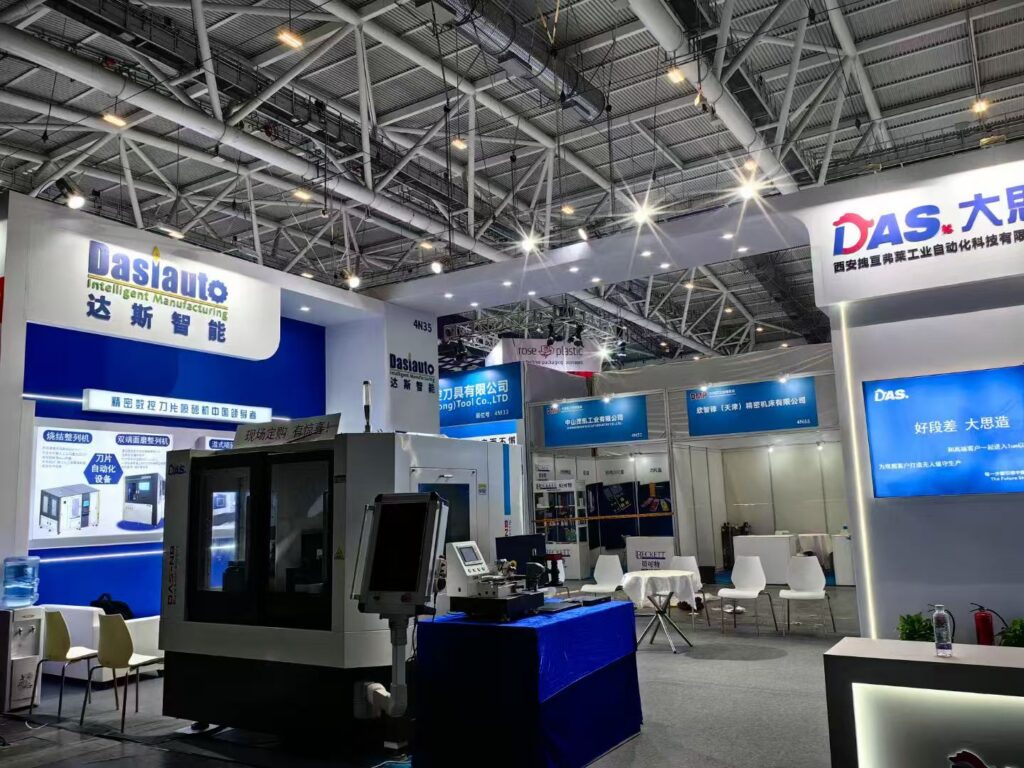
DassiAuto Intelligent Equipment Co., Ltd was established in 2012 and manufactures wet blasting equipment for industrial surface treatment. According to the company information published in its about DassiAuto profile, it operates as a national high-tech enterprise under ISO 9001 and holds invention patents, utility model patents, and software copyrights related to blasting equipment and control systems.
Its published technical scope covers planning, design, manufacturing, sales, and application development rather than machine supply alone. Across its wet blasting lineup, the stated engineering features include process repeatability through PID closed-loop slurry pressure control, servo-driven X/Y/Z linkage with 0.02 mm control accuracy, HMI recipe management with hierarchical permissions, automatic waste-sand sedimentation with one-click discharge, and dust-collection measures aimed at reducing water mist.
The same company context identifies eight equipment configurations serving R&D, batch production, and application-specific requirements, plus matched abrasive grades within a TR series. The listed application areas include burr removing of metal parts, edge honing of cutting tools, scale removal, coating pretreatment, additive-manufacturing post-processing, peening, glass frosting, and 3C device finishing.
Its disclosed customer references include Wecan Cutting Tools, Ruian Carbide Tools, Huareal, Metcera, OKE, YG, Kelite, and XTC. The service model is described as sample testing, planning and design, manufacturing and quality control, installation and commissioning, operator training, after-sales support, spare parts, abrasive resupply, and process optimization.
FAQ
Q1. Can deburring of metal parts be tested on samples before a machine is specified?
Yes. Sample testing is often the most reliable way to confirm whether wet blasting can remove the burr while holding the required edge condition and surface finish. It also helps define abrasive grade, nozzle path, cycle time, and whether the part needs simple batch handling or more precise fixturing.
Q2. Is wet blasting suitable for very small precision parts with cosmetic surfaces?
Often, yes, especially when dry dust, finish non-uniformity, or aggressive edge damage are concerns. The key is to tune media size, pressure, angle, and dwell so the burr is reduced without over-rounding sealing edges or changing visible cosmetic features beyond tolerance.
Q3. How should buyers compare lead times for deburring equipment quotations?
They should separate standard-machine lead time from custom-engineering lead time. A simple cabinet may move relatively quickly, but multi-axis automation, fixtures, sample validation, and site utility integration can extend the schedule materially even when the base machine platform is similar.
Q4. What installation and operator-training support is normally required?
Most plants need utility confirmation, machine placement, parameter setup, safety checks, and trial runs with production parts. Training should cover recipe management, nozzle and media maintenance, slurry cleanup, inspection criteria, and how to recognize over-processing before parts drift out of spec.
Q5. How important is abrasive resupply and spare-parts planning?
It is important because blasting consistency depends on stable media quality, nozzle condition, pump performance, and slurry recovery efficiency. Buyers should ask how quickly wear parts can be replaced, how media condition is monitored, and whether process settings need adjustment as abrasives age.
Q6. When does deburring of metal parts usually show ROI versus manual finishing?
ROI usually appears when burr removal is repetitive, labor-intensive, quality-sensitive, or difficult to standardize by hand. The strongest cases are typically parts with frequent rework, downstream coating or assembly issues, or high-value surfaces where missed burrs and operator variability generate scrap or delay.