
Quick Answer
Drill droplet removal is the controlled elimination of micro-droplets, burr-like nodules, recast particles, and unstable edge residue from drill surfaces before the next manufacturing step, such as coating, edge preparation, or final inspection. In wet blasting, a water-abrasive slurry is accelerated by compressed air to clean and condition the tool with less dust and more uniform surface action than dry blasting. For carbide drills and other precision cutting tools, that usually means better surface consistency, fewer edge defects, lower reject risk, and more repeatable downstream performance.
| Core Factor | Typical Conclusion |
|---|---|
| Process type | Wet blasting / slurry blasting surface conditioning |
| Working pressure | Typically low-to-medium, tuned to drill geometry and substrate |
| Primary defect target | Droplets, loose recast material, burrs, weak edge fragments |
| Dust condition | Very low airborne dust compared with dry blasting |
| Typical workpieces | Carbide drills, micro-drills, stepped drills, coated-tool blanks |
| Typical implementation | Standard cabinets for batch work; custom cells for higher precision |
What Is drill droplet removal
Drill droplet removal is the surface-treatment step used to remove small adhered droplets, spatter-like residue, weak solidified projections, and edge instability from manufactured drills. In practice, the term is most relevant where drills emerge from grinding, thermal processing, laser-related operations, or other upstream steps with local surface irregularities that should not remain on the finished tool. Those irregularities may be tiny, but on cutting tools they can influence coating support, chip flow, run stability, and the risk of early edge breakdown.
Within the industrial finishing landscape, drill droplet removal belongs to the broader family of precision abrasive conditioning. It overlaps with deburring, cleaning, edge preparation, and pre-coating pretreatment, but it is narrower in focus because the target is not general cosmetic finishing. The aim is to remove unstable residue from lands, flutes, margins, and cutting edges while preserving drill geometry.
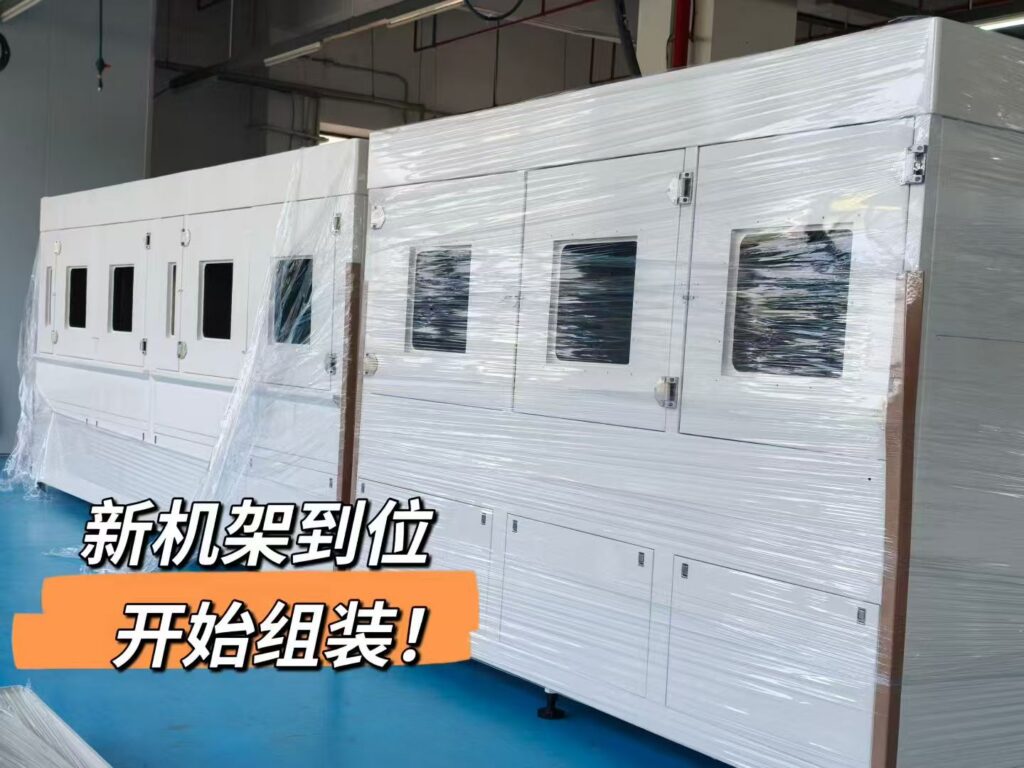
Drill Droplet Removal as a Wet Blasting Application
In a wet blasting process, abrasive media are suspended in water to form a slurry, then projected at controlled velocity onto the drill surface. That creates a gentler, more cushioned interaction than a dry-only blast stream. On fine drill geometries, especially carbide tools, that lower-impact character is important because the process must remove droplets and residues without introducing uncontrolled edge rounding.
The process is therefore best understood as a precision version of abrasive blasting rather than a heavy stock-removal method. For manufacturers already using edge honing of cutting tools in carbide-tool production, drill droplet removal often sits nearby in the same process chain because both operations rely on controlled surface conditioning instead of bulk machining.
Why Drill Surface Defects Matter
A surface droplet may look minor under low magnification, yet it can still act as a stress raiser, a chip-flow disturbance, or a weak point beneath a later coating. On small-diameter drills, even slight asymmetry can matter because the cutting action depends on balanced geometry and stable margins. If defects are left in place, the resulting tool may show inconsistent wear or erratic initial performance.
This is why drill droplet removal is usually evaluated functionally, not cosmetically. The question is not simply whether the tool looks cleaner, but whether the treated surface is more stable and better prepared for the rest of the manufacturing route.
Core Selling Points of Wet Blasting for Drill Droplet Removal
The first advantage is dust suppression. Because water carries the abrasive, the process produces far less airborne particulate than dry blasting, which helps both visibility and environmental control. The second is finish uniformity: the water film cushions particle impact and can produce a more even surface response on narrow drill features.
The third advantage is lower risk of abrasive embedding on sensitive surfaces, especially when the correct media type and process window are used. The fourth is process repeatability, particularly when the equipment maintains slurry concentration, pressure stability, nozzle condition, and programmed motion rather than relying on manual technique alone.
Where It Fits in the Drill Manufacturing Sequence
Drill droplet removal can appear after grinding, after heat-related steps, after laser processing, or before coating. In some factories, it is combined conceptually with micro-deburring and edge conditioning; in others, it is treated as a dedicated pre-inspection or pre-coating step. When the next stage is coating, the logic closely resembles broader coating pretreatment wet blasting practice: the substrate must be clean, uniform, and mechanically stable before a functional surface layer is added.
How Does drill droplet removal Work
Drill droplet removal works by driving a controlled slurry of water and abrasive against the drill surface so that weakly adhered particles, solidified droplets, burr-like protrusions, and smeared residues are selectively broken away. The process is effective because it combines several controls at once: media size, slurry concentration, blasting pressure, nozzle angle, stand-off distance, exposure time, and part motion. On drills, those controls matter more than headline pressure because the target features are small and the allowable geometry change is limited.
Slurry Preparation and Media Suspension
The cycle starts with a slurry tank in which water and abrasive are mixed into a stable suspension. The media may be selected for hardness, shape, particle size distribution, and wear rate depending on drill material and the defect to be removed. A fine, consistent slurry supports gentle, repeatable conditioning, while a coarser or more concentrated mix raises removal intensity.
Uniform suspension is crucial. If the abrasive settles, the process becomes inconsistent across time and across workpieces. For drill droplet removal, that inconsistency can mean one batch is under-treated while the next shows unnecessary edge change.
Compressed Air Acceleration and Nozzle Delivery
The slurry is pumped toward the blasting nozzle, where compressed air accelerates it into a focused jet. The air stream does not work alone; instead, it amplifies the kinetic energy of the slurry, allowing the abrasive particles to strike the tool surface at the required intensity. By changing nozzle size, pressure, angle, or stand-off, the process can be tuned toward cleaning, burr removal, or light edge refinement.
On drills, nozzle orientation matters because flutes, margins, and point geometry do not present the same surface to the blast stream. Effective process design therefore considers not just whether the drill is blasted, but how each functional zone sees the slurry.
Interaction With Drill Geometry
When the slurry impacts the drill, the water phase reduces dust and moderates the abrasive action, while the particles abrade away weak protrusions and residual contamination. On carbide drills, that often means removing minor droplet-like residue without aggressive stock removal. On tougher defect clusters, multiple passes or controlled exposure from different angles may be needed.
For fluted tools, the process frequently benefits from rotation or indexed positioning so that hidden surfaces are not shadowed. This is one reason automated handling and servo motion can improve consistency compared with purely manual blasting, especially on small-diameter drills with narrow tolerance windows.
Closed-Loop Recovery and Sedimentation
After impact, the used slurry drains back through the recovery circuit carrying removed fines, abrasive fragments, and sludge. If that contaminated slurry were allowed to circulate indefinitely, the process would become less predictable. A proper wet blasting system therefore recovers, settles, and manages waste so that the usable slurry remains within a known operating condition.
In precision tool finishing, sedimentation and waste handling are not secondary utilities; they are part of process control. Clean recirculation supports stable removal behavior, while dirty or overloaded slurry can reduce visibility, alter finish quality, and weaken repeatability.
Mist Management and Chamber Environment
Wet blasting sharply reduces dust, but it still creates mist. Enclosure design, air extraction, and visibility through the viewing area all affect practical process control. Operators need to verify nozzle targeting, fixture loading, and slurry behavior, especially when processing mixed tool sizes.
Good mist management also supports maintenance and housekeeping. In production areas adjacent to grinding, inspection, or coating, a cleaner blasting environment helps reduce cross-contamination between process stages.
Pressure Feedback and Recipe-Based Control
For production-grade drill droplet removal, stable pressure is more valuable than high pressure. Pressure drift changes impact energy, which changes removal rate and potentially changes edge form. That is why advanced systems use recipe management and PID closed-loop pressure control to keep the process window stable throughout the cycle.
In drill finishing, the smallest surface defect can become the earliest failure point if it survives into service.
| Process Parameter | Typical Range or Practice | Why It Matters |
|---|---|---|
| Working pressure | Typically about 0.10-0.45 MPa, depending on drill size and material | Sets impact energy and defect-removal intensity |
| Slurry concentration | Usually low-to-medium solids loading, controlled by recipe | Influences consistency, finish, and aggressiveness |
| Abrasive particle size | Fine grades are common for drill margins and cutting edges | Limits over-rounding while targeting droplets |
| Air flow and nozzle condition | Checked routinely as part of preventive maintenance | Nozzle wear changes the real blast pattern |
| Stand-off distance | Fixed or programmed for repeatability | Keeps removal behavior uniform across batches |
| Media consumption rate | Depends on media breakdown, contamination, and cycle load | Affects operating cost and process stability |
| Control system | PLC/HMI recipe control with monitored pressure is typical | Supports repeatable tool-to-tool processing |
drill droplet removal vs Dry Blasting vs Other Methods
Drill droplet removal can be carried out with several finishing technologies, but each one leaves a different surface condition and has different process-control limits. Wet blasting is usually chosen when the manufacturer wants to remove small defects while preserving precise geometry and minimizing dust. Dry blasting, mechanical brushing, vibratory finishing, and shot peening all have legitimate roles, but they are not interchangeable.
Wet Blasting vs Dry Blasting for Precision Drill Finishing
Dry blasting can remove defects quickly, but it typically generates far more airborne dust and can be harder to moderate on delicate edges. On drill geometries where flute surfaces, margins, and point features must remain tightly controlled, that harsher interaction can be a disadvantage. The broader abrasive blasting terminology overview is useful context, but drill droplet removal usually requires a narrower, more precision-focused process window.
Wet blasting adds a water phase that suppresses dust, cushions particle impact, and often produces a more even finish. That is why it is frequently favored for carbide drills, pre-coating tool blanks, and other components where a controlled surface state matters more than aggressive removal speed.
Other Competing Methods
Mechanical brushing can be effective for accessible external burrs, but it struggles with complex flute geometry and does not always treat all functional surfaces evenly. Vibratory finishing works well for high-volume bulk smoothing, yet it offers less directional control and may not suit drills that need targeted treatment on specific zones.
Shot peening is a different process family aimed primarily at residual-stress enhancement rather than defect removal. Although it may improve fatigue behavior on some parts, it is not generally the first-choice method when the main task is removing micro-droplets from cutting-tool geometry; that distinction is reflected in the broader shot peening standards landscape used in industrial finishing.
| Evaluation Dimension | Wet Blasting | Dry Blasting | Shot Peening | Vibratory / Brush Methods |
|---|---|---|---|---|
| Main purpose | Precision cleaning and defect removal | Aggressive cleaning or roughening | Residual-stress introduction | Bulk deburring or contact smoothing |
| Airborne dust | Low | High unless extraction is extensive | Moderate in enclosed cells | Low to moderate |
| Control on drill edges | High when fixtured and programmed | Moderate | Limited for this task | Moderate, often less selective |
| Finish uniformity | Fine and even is typical | Often rougher or more directional | Peened texture | Broader, less targeted smoothing |
| Suitability for micro-droplets | Strong | Selective | Indirect | Selective |
| Risk of over-processing | Lower when pressure and media are controlled | Higher on delicate features | Depends on intensity | Depends on media contact pattern |
| Environmental handling | Slurry and sludge management | Heavy dust collection burden | Dry media containment | Compound and media management |
Key Specifications to Evaluate Before Buying
Choosing equipment for drill droplet removal starts with the tool family, not the cabinet size. A shop processing small carbide micro-drills needs a different control strategy from one treating larger steel drills or mixed cutting-tool blanks. Before comparing machine prices, buyers should define the droplet morphology, the allowable geometry change, the desired surface finish, and whether the process must also perform deburring or pre-coating conditioning.
Pressure Stability Matters More Than Peak Pressure
Vendors often advertise available pressure range, but the more important question is whether the machine can hold a stable low-to-medium blasting window. Fine drills are sensitive to over-processing, so repeatability at modest pressure matters more than headline power. Buyers should ask how the system measures blasting pressure, how it compensates for drift, and whether the settings are saved by recipe.
Precision Motion, Tool Rotation, and Fixture Design
Drill droplet removal is rarely just a cabinet-and-nozzle issue. Flute access, point exposure, rotation control, and part indexing all affect final consistency. When the process window is tight, servo X/Y/Z 0.02 mm accuracy is meaningful only if the fixture keeps every drill in the same orientation and the nozzle path is matched to the actual tool geometry.
Throughput, Changeover, and Real Production Capacity
Nominal cycle time can be misleading if loading, unloading, and recipe change consume too much time. High-mix plants should focus on changeover efficiency, while dedicated drill lines may prioritize automatic loading, in-process consistency, and minimal operator intervention. In either case, buyers should distinguish between theoretical throughput and qualified throughput, meaning parts that leave the cell within the accepted finish window.
Slurry Management, Mist Control, and Waste Handling
A stable slurry loop is fundamental for precision drill finishing. Buyers should review tank design, agitation method, sedimentation logic, sludge discharge, nozzle wear monitoring, and access for cleaning. Mist collection is equally important because poor visibility and wet residue around the chamber can raise setup errors and maintenance downtime.
HMI, Traceability, Utilities, and Safety
Recipe storage, operator permissions, alarm history, maintenance prompts, and batch traceability are increasingly important where coated cutting tools are produced under controlled quality systems. Manufacturers aligning finishing operations with an ISO 9001 quality management standard typically expect the blasting cell to document settings and support repeatable process governance. Utilities should also be confirmed early, including air quality, water management, power supply, floor drainage, and service access around the machine.
Safety review should cover door interlocks, emergency stops, enclosure sealing, splash containment, and maintenance isolation points. For wet blasting in particular, safe handling of slurry, sludge, and electrical systems in a moist environment should be treated as a design criterion, not an afterthought.
Applications Across Industries
Although the phrase drill droplet removal points directly to cutting tools, the underlying process logic applies more broadly wherever small adhered defects, recast particles, or micro-burrs must be removed from precise surfaces. That is why the same wet blasting technology family also appears in toolmaking, precision machining, additive manufacturing, consumer electronics finishing, and pre-coating lines. The application changes, but the operational goal stays consistent: remove unstable residue without sacrificing dimensional intent.
Drill and Cutting Tool Production
The most direct application is in drill manufacturing, especially carbide drills and high-value coated tools. Here, droplet removal supports cleaner edge formation, better coating support, and a lower risk of localized weak points at the margin or cutting lip. In many factories, it is logically adjacent to burr removing of metal parts because both operations target unwanted micro-features that should not survive into service.
Related Industrial Surface-Treatment Uses
Comparable process principles are used to prepare inserts, end mills, dies, wear parts, and additively manufactured components. In these cases the “droplet” may instead be a recast particle, adhered spatter, scale fragment, or unstable surface nodule, but the removal strategy remains similar. Wet blasting is therefore valued not only for one named defect, but for its ability to condition precision surfaces in a controlled and repeatable way.
| Application Type | Target Industry | Workpiece Example | Process Benefit |
|---|---|---|---|
| Drill droplet removal | Cutting tool manufacturing | Solid carbide drills and micro-drills | Removes weak residues while preserving geometry |
| Edge honing before coating | Tooling and carbide processing | Inserts, end mills, step drills | Stabilizes edges and supports coating consistency |
| Fine deburring | Precision machining and stamping | Small metal parts and miniature features | Eliminates burrs before assembly or coating |
| Recast particle cleanup | AM and advanced manufacturing | 3D-printed metal parts | Removes adhered particles from critical surfaces |
| Scale and residue removal | Forging and bar processing | Heat-affected rods and forged details | Cleans the surface for later finishing |
| Peening-related surface prep | Mechanical engineering | Wear parts and functional metal components | Standardizes the incoming surface before stress treatment |
| Glass or brittle-material frosting | Glass processing | Technical glass components | Creates a uniform matte surface |
| 3C finishing and smoothing | Electronics hardware | Precision housings and small metal shells | Improves cosmetic consistency and touch quality |
Equipment Selection Guide
Equipment selection for drill droplet removal depends on three variables: part size, process sensitivity, and production mode. A prototype toolmaker may value flexibility above all else, whereas a large batch producer may need stable cycle time, automated handling, and limited operator dependence. The correct machine is therefore the one that matches the validated process window to the production environment.
R&D and Process Development Cells
During development, engineers often test more than one abrasive size, pressure band, or nozzle angle. A flexible robot-type wet blasting unit for R&D is useful in that phase because it accommodates small sample lots, frequent recipe changes, and geometry-specific trials without assuming a fixed production layout.
Standard Cabinets and High-Throughput Configurations
Once the process is qualified, many manufacturers shift toward production-focused equipment. A single-chamber wet blasting cabinet fits stable batch work on drills and other compact parts, while a double-chamber wet blasting system can improve utilization where loading time would otherwise interrupt the blast cycle. For one-by-one traceable processing of premium tools, some plants also prefer a single-piece wet blasting machine.
| Configuration / Model Tier | Target Production Scale | Workpiece Size Range | Precision Level | Recommended Applications |
|---|---|---|---|---|
| 1. Bench development unit | Lab trials and coupon testing | Very small samples | Moderate | Early feasibility checks |
| 2. Flexible robot R&D cell | Pilot work and mixed geometries | Small precision tools | High | Process development for drills and cutters |
| 3. Manual high-mix cabinet | Small-batch production | Small to medium tools | Moderate | Frequent recipe changes |
| 4. Standard single-chamber cabinet | Routine batch output | Small drills and tool blanks | High | Stable drill droplet removal |
| 5. Single-piece traceable machine | Medium-volume discrete parts | Individual high-value tools | High | One-by-one controlled processing |
| 6. Servo multi-axis precision cell | Complex geometries | Fluted drills and shaped cutters | Very high | Directional treatment on functional zones |
| 7. Double-chamber production cell | Higher-volume repetitive work | Recurrent drill families | High | Improved utilization with parallel handling |
| 8. Integrated custom finishing line | Dedicated industrial programs | Application-specific ranges | High to very high | Linked deburring, pretreatment, and finishing |
Cost, Lead Time and ROI Considerations
The cost of a drill droplet removal system is driven less by the tank and cabinet than by the process-control package around them. A simple machine may remove visible residue, but precision drill finishing often demands controlled pressure, stable slurry concentration, accurate fixtures, predictable nozzle paths, and disciplined waste handling. Those items tend to separate low-entry equipment from production-grade systems.
Automation level is one of the biggest price drivers. Manual blasting has a lower entry cost, but it can increase variability and labor dependence when treating fine drill geometries. Servo axes, rotational fixtures, tool indexing, recipe storage, and automatic sedimentation raise capital cost while reducing operator-to-operator variation.
Lead time typically follows the same logic. Standard cabinets and lightly configured production machines usually fall into shorter typical lead-time bands, while customized cells require more engineering for fixtures, nozzle motion, validation trials, and acceptance criteria. The more application-specific the drill geometry, the more likely the project will include a development phase before final configuration is frozen.
ROI is best evaluated around cost per qualified tool rather than machine price alone. A wet blasting cell can create savings by replacing manual handwork, reducing inspection failure caused by residual droplets, lowering scrap from coating-related defects, and improving process stability between grinding and final finishing. In carbide-tool production, the economic benefit often comes from consistency as much as from labor reduction.
Consumables also matter to long-term economics. Abrasive replenishment, nozzle wear, seals, pumps, sludge handling, mist-control maintenance, and fixture upkeep all affect operating cost. A lower-priced machine can become expensive if it drifts out of control frequently or requires repeated manual adjustment to stay within the qualified process window.
Why Choose DassiAuto — Our Company
DassiAuto Intelligent Equipment Co., Ltd is a Chinese manufacturer established in 2012 and focused on wet blasting technology for industrial surface treatment. According to the company information provided for this article and reflected in the about DassiAuto company profile, it is a national high-tech enterprise operating under ISO 9001 quality management, with invention patents, utility model patents, and software copyrights covering blasting equipment and control systems. Its wet blasting lineup includes eight equipment configurations for R&D, batch production, and application-specific tasks, with engineering features that include PID closed-loop slurry pressure control, servo-driven X/Y/Z linkage with 0.02 mm control accuracy, HMI recipe management with hierarchical permission control, automatic waste-sand sedimentation with one-click discharge, and dust-collection systems that reduce water mist. The same company context identifies customer references including Wecan, Ruian, Huareal, Metcera, OKE, YG, Kelite, and XTC, and describes a full-cycle service model spanning sample testing, planning, design, manufacturing, installation, commissioning, training, after-sales support, spare parts, abrasive resupply, and process optimization.
FAQ
Q1. What should a buyer provide when requesting a quote for drill droplet removal equipment?
The most useful inputs are drill drawings, material grade, diameter range, current upstream process, defect photos, target throughput, and whether the tools will be coated afterward. Information about acceptable edge change and finish requirements is also important because it determines how aggressively the blasting recipe can be set.
Q2. Is sample testing necessary before purchasing a drill droplet removal system?
In most cases, yes. Sample testing helps confirm whether the selected abrasive, pressure window, nozzle angle, and fixture concept can remove droplets without unacceptable geometry change, especially on carbide micro-drills and complex point forms.
Q3. Can one machine process different drill sizes and also other cutting tools?
Often it can, provided the machine supports validated recipe storage, appropriate fixturing, and a stable slurry-control system. The more diverse the tool mix, the more important it becomes to separate process windows for each family rather than relying on one general setting.
Q4. What are the typical installation and commissioning considerations?
Buyers should review floor space, air supply, drainage, electrical requirements, mist handling, operator access, and maintenance clearance before shipment. Commissioning usually includes mechanical setup, slurry preparation, parameter validation, fixture adjustment, and operator training on both process control and daily maintenance.
Q5. Which consumables and spare parts are most important in ongoing operation?
Abrasive media, nozzles, hoses, pumps, seals, slurry-handling parts, and mist-control components are the main recurring items. In precision drill droplet removal, any part that changes blast pattern or effective pressure should be monitored proactively because wear can directly affect process consistency.
Q6. How should after-sales support be evaluated for this kind of finishing process?
After-sales capability should be judged by how well it sustains the validated process, not only by emergency repair availability. The most valuable support usually includes spare-parts planning, abrasive resupply, troubleshooting, recipe optimization when drill geometry changes, and retraining when new tool families are introduced.