
Quick Answer
Metal parts cleaning by wet blasting is the right choice when a factory needs repeatable surface preparation, lower airborne dust, and a more uniform finish than many dry or manual methods can provide. In this process, abrasive media is suspended in water, accelerated by compressed air, and applied under controlled pressure and motion. That makes it suitable for removing oxides, light burrs, residues, heat tint, and surface contaminants from precision metal parts while preserving geometry and supporting downstream coating, assembly, or inspection.
| Core Factor | Typical Conclusion |
|---|---|
| Process type | Wet blasting / slurry blasting with automated nozzle or part motion |
| Pressure behavior | Typically low-to-medium blasting pressure with closed-loop control |
| Finish outcome | Uniform technical finish with controlled cleaning intensity |
| Dust condition | Low airborne dust because abrasive is carried in water |
| Main applications | Cleaning, deburring, pretreatment, edge blending, AM post-processing |
| Lead-time band | Typical lead time depends on cabinet size, automation scope, and fixtures |
What Is metal parts cleaning
Metal parts cleaning is the controlled removal of contaminants, residues, oxide layers, light scale, machining films, handling marks, burr remnants, and surface discoloration from fabricated or machined metallic components. In industrial practice, cleaning is not a single-purpose activity. It is often the gateway step that determines whether a part can move reliably into coating, bonding, welding, measurement, assembly, or final shipment.
Within the broader surface-treatment field, metal parts cleaning can be done by solvent washing, aqueous spray systems, ultrasonic cleaning, brushing, dry blasting, vibratory finishing, chemical pickling, and wet blasting. Wet blasting belongs to the abrasive-blasting family, but it operates with a slurry of water and abrasive rather than a dry high-velocity media stream. That difference changes the cleaning mechanism, the dust profile, the surface texture, and the range of parts that can be treated without cosmetic damage.
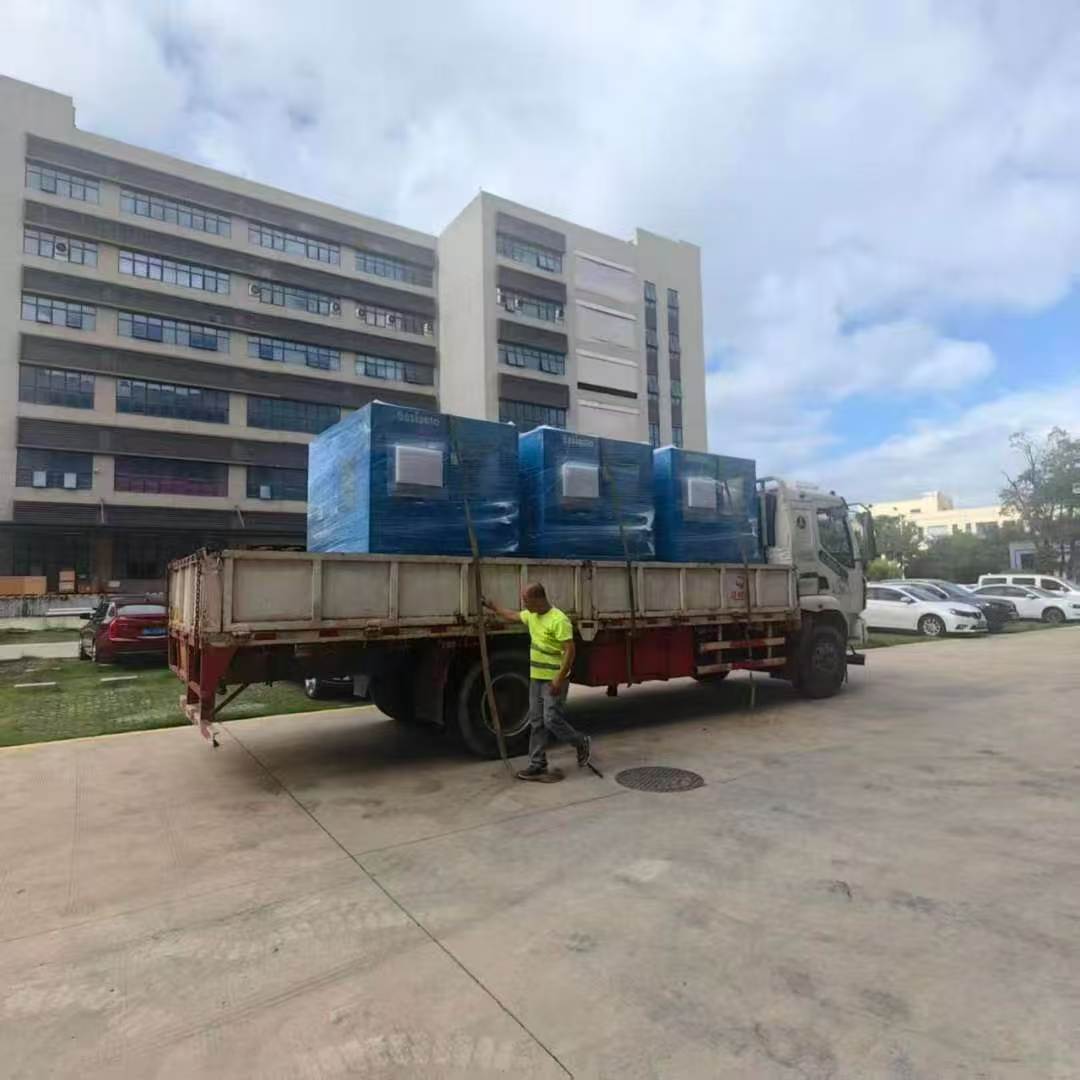
Where wet blasting fits in metal parts cleaning
Wet blasting is particularly useful when the part must be cleaned and surface-conditioned at the same time. It can remove light contamination and oxide while also equalizing finish, softening sharp micro-edges, and preparing the substrate for downstream treatment. In many factories, that combination makes wet blasting more versatile than washing alone and less aggressive than dry blasting.
This matters because not every “dirty” part is actually oily or greasy. Many components are functionally clean in a chemical sense but still carry laser discoloration, minor forging scale, machining smears, powdery residues, or visual inconsistencies that affect performance or inspection. Wet blasting addresses those surface states by controlled micro-erosion rather than by chemistry alone.
Technical definition within abrasive surface treatment
In technical terms, wet blasting metal parts cleaning uses fine abrasive particles suspended in water to form a recirculating slurry. That slurry is delivered to a blasting gun, accelerated by compressed air, and projected onto the workpiece under controlled stand-off distance, angle, and traverse speed. The water phase cushions impact, suppresses dust, and helps create a more even surface effect.
Basic process terminology aligns with abrasive blasting terminology, but industrial wet blasting is more process-driven than the generic blasting label suggests. It is often selected for cleaning tasks where the factory also cares about finish uniformity, selective material removal, and stable edge condition.
Core selling points of wet blasting for metal parts cleaning
One major advantage is low-dust cleaning. Because the abrasive is carried in water, the process suppresses a large share of the airborne particulate that accompanies dry abrasive systems. That can improve visibility inside the cabinet and reduce housekeeping around the machine.
Another is uniform finish quality. Wet blasting tends to produce a finer and more consistent surface than harsher dry-impact cleaning, especially on parts with visible faces or mixed surface conditions. This is useful on components that need both technical cleanliness and a controlled visual result.
A third is process repeatability. When blasting pressure, slurry concentration, nozzle angle, and traverse path are controlled, the machine can repeat the same cleaning effect across large batches. That is important in production environments where downstream adhesion, inspection, or assembly depends on consistent upstream surface condition.
The best industrial cleaning process removes contamination without adding uncontrolled texture, distortion, or rework.
What metal parts cleaning should achieve in production
Effective metal parts cleaning should not be judged only by whether the part looks brighter. A useful process removes the surface condition that interferes with the next manufacturing step. That may mean taking off light scale before machining, cleaning oxide before coating, reducing loose AM residues, or equalizing a surface before cosmetic inspection.
Just as importantly, the process should avoid creating secondary problems. If the cleaning method embeds media, roughens a sealing surface, rounds a critical edge, or produces unstable lot-to-lot appearance, it may solve one issue while creating several more. This is why wet blasting is often chosen for parts that need controlled cleaning rather than purely aggressive stripping.
How Does metal parts cleaning Work
Metal parts cleaning by wet blasting works through a combination of slurry preparation, compressed-air acceleration, part exposure control, and closed-loop recovery. Each subsystem influences the actual cleaning result. If one variable drifts, the process may still remove contamination, but it may do so with inconsistent surface texture, uneven coverage, or higher operating cost.
Slurry system: water and abrasive in suspension
The process starts in the slurry tank, where water and abrasive media are mixed to a controlled ratio. Agitation and circulation keep the abrasive suspended so the blasting gun receives a stable media load throughout the cycle. If concentration drops too low, cleaning becomes slower and less consistent. If it rises too high, the process may become too aggressive for finish-sensitive parts and can increase wear on pumps and nozzles.
Media selection depends on the type of contamination and the tolerance of the part surface. Fine media is typically used when the cleaning task includes visible-surface refinement or precise residue removal. Medium media is more common when the process must remove tougher oxide, light scale, or persistent surface films.
Compressed-air acceleration path
At the blasting gun, compressed air accelerates the slurry through the nozzle and directs it toward the workpiece. The water phase acts both as a carrier and as a cushion, changing how the particles strike the part. Instead of a harsh dry impact, the abrasive reaches the surface through a moderated stream that cleans by controlled micro-erosion.
Nozzle angle and stand-off distance are critical. A near-normal angle often increases local cleaning intensity, while an oblique angle can be better for surface blending, heat-tint cleanup, or edge-adjacent contamination removal. Automated systems maintain these variables far more consistently than manual hand blasting.
Motion control and part presentation
In a production machine, either the nozzle moves, the part moves, or both move in a programmed relationship. Motion can be managed through servo X/Y/Z axes, indexed fixtures, turntables, robots, or dedicated loading systems. The appropriate configuration depends on whether the parts are flat, contoured, cylindrical, delicate, or mixed in geometry.
This is important because cleaning quality is never just about impact energy. It is also about exposure distribution over the real part geometry. DassiAuto’s published work in burr removing of metal parts illustrates how blasting paths can be used selectively rather than treating every surface identically.
Closed-loop recovery and sedimentation
After impact, the slurry drains into the recovery section and re-enters the circulation loop. In that loop, removed metal fines, broken abrasive, and sludge must be separated so they do not destabilize the process. If contaminants accumulate unchecked, the cleaning effect drifts and the slurry becomes less predictable from one batch to the next.
Production-oriented systems therefore use sedimentation and simplified waste-sand discharge to keep the loop stable. This reduces manual cleanup and helps maintain a usable abrasive fraction for longer periods. Recovery efficiency has direct effects on media cost, downtime, and consistency over long runs.
Dust collection, mist control, and chamber environment
Wet blasting minimizes dry dust, but it still generates water mist and suspended slurry droplets inside the cabinet. Effective mist reduction, extraction balance, splash control, and window management are therefore essential. If visibility falls quickly, operators lose process confidence and cleaning throughput suffers.
A well-managed chamber also reduces floor contamination and maintenance burden around the machine. That matters when the cleaning line is placed near precision machining, inspection, or coating operations where cleanliness and predictable housekeeping are part of the total process value.
PID pressure control and HMI recipe management
Stable blasting pressure is central to cleaning repeatability. Small pressure changes can alter how much oxide is removed, how much finish is changed, and how long a part must remain in the chamber. Industrial systems therefore benefit from closed-loop regulation rather than simple manual setting.
With PID closed-loop pressure control, the system continuously corrects toward the target blasting condition despite normal disturbances such as nozzle wear, slurry-state variation, or upstream air fluctuation. Recipe-based HMI control then stores validated parameters for each part family, supporting disciplined operation within frameworks such as the ISO 9001 quality management standard.
| Process Parameter | Typical Range or Practice | Why It Matters |
|---|---|---|
| Working pressure | Typically low to medium, adjusted to contamination type and substrate sensitivity | Controls cleaning intensity and surface-change rate |
| Slurry concentration | Maintained as a stable water-to-abrasive ratio by weight or volume | Affects removal rate, finish consistency, and pump load |
| Abrasive particle size | Fine to medium PSD, selected for cleaning vs. refinement balance | Determines how aggressively scale, tint, or residue is removed |
| Air flow and nozzle size | Matched to cabinet volume, gun design, and coverage width | Influences pattern stability and exposure efficiency |
| Stand-off distance | Fixed by recipe for each workpiece family | Changes local impact density and repeatability |
| Nozzle angle | Normal or oblique depending on contamination and geometry | Helps target cleaning without over-processing nearby areas |
| Media consumption | Depends on fracture rate, contamination, and recovery efficiency | Drives consumable cost and maintenance intervals |
| Control system | PID regulation, HMI recipes, alarms, recovery monitoring | Supports stable automated cleaning across production lots |
metal parts cleaning vs Dry Blasting vs Other Methods
Metal parts cleaning is often evaluated against dry blasting, shot peening, and vibratory finishing because all four processes can visibly change a metal surface. The right choice depends on whether the priority is aggressive cleaning, controlled finish refinement, fatigue treatment, or bulk smoothing. In most plants, the question is not which method is universally better, but which one solves the contamination problem without creating a downstream quality problem.
| Evaluation Factor | Wet Blasting | Dry Blasting | Shot Peening | Vibratory Finishing |
|---|---|---|---|---|
| Airborne dust | Low because the abrasive is water-borne | High unless dust extraction is very robust | Moderate in enclosed systems | Low airborne dust, but wet compounds and sludge are common |
| Surface finish control | Fine and even; good for visible or precision parts | More aggressive texture and easier over-roughening | Not primarily intended for cosmetic cleaning | Good on bulk lots, but part contact can mark surfaces |
| Media embedding risk | Lower on many finish-sensitive substrates | Higher risk on some soft or ductile materials | Depends on media and objective | Usually low, but process is not highly selective |
| Cleaning selectivity | Good with controlled paths and fixtures | Good targeting, but less forgiving on finish-sensitive surfaces | Not mainly a cleaning process | Low selectivity because all exposed surfaces are processed together |
| Repeatability | High with closed-loop pressure and recipes | Good, but more sensitive to dust and nozzle drift | High when peening parameters are specified | Good for bulk processing, weaker for local critical surfaces |
| Environmental handling | Requires slurry recovery and sediment discharge | Requires dry media containment and dust collection | Requires peening media management | Requires wastewater or compound disposal management |
| Best-fit role | Precision cleaning, pretreatment, light deburring, finish equalization | Heavy cleaning, stripping, roughening | Residual-stress treatment rather than cleaning | Batch smoothing and general edge softening |
| Operating profile | Balanced when the recovery loop is efficient | Simpler dry hardware, but higher cleanup burden | Specialized process economics | Efficient for tolerant small parts in volume |
Dry blasting remains useful where the main need is aggressive scale removal, coating removal, or heavy roughening. For finish-sensitive parts, however, it can be easier to introduce harsh texture, inconsistent appearance, or unnecessary cleanup burden. Wet blasting is often preferred when cleaning must be combined with surface refinement and lower dust generation.
Shot peening enters the comparison because it also uses propelled media, but its intent is different. It is mainly used to develop beneficial compressive stress and improve fatigue performance rather than to clean parts as a primary objective, as described in ASTM shot peening guidance.
Vibratory finishing is efficient for many small components when all surfaces can tolerate similar exposure. Its limitation is selectivity. If a plant needs to clean a visible face without changing a critical fit surface too much, or if the part geometry is complex, automated wet blasting is usually easier to control.
Key Specifications to Evaluate Before Buying
Buying a metal parts cleaning system by cabinet size alone is a common mistake. The correct starting point is the contamination state of the part: oxide, scale, heat tint, machining smear, loose AM residue, minor burr, or mixed-condition surfaces. Each condition responds differently to abrasive size, pressure, nozzle angle, and dwell time.
Cleaning intensity and pressure window
A useful machine is not the one with the highest pressure ceiling. It is the one that can hold a stable operating band where the target surface condition is removed without damaging the part. For precision cleaning, low-to-medium pressure stability is often more valuable than maximum force.
Motion-axis precision and coverage logic
Where contamination is localized or geometry is complex, motion control matters as much as pressure. Plants should evaluate whether the machine uses manual presentation, indexed fixtures, servo axes, rotary motion, or robotic loading. Uniform cleaning depends on how consistently the system exposes all required surfaces.
Throughput and actual cycle time
Cycle time should include loading, clamping, draining, cleaning, inspection checks, recipe recall, and unloading. A machine with a fast blast step can still underperform if fixture handling is awkward or chamber recovery delays the next cycle. Procurement should focus on good parts per hour, not just nozzle-on seconds.
Footprint, utilities, and plant integration
Compressed air, electrical power, water supply, drainage, maintenance access, and sludge handling all matter. The equipment may fit the floor space but still be a poor installation choice if filters, pumps, or sediment discharge points are difficult to service within the plant layout.
HMI recipe control and permissions
Recipe storage is essential when one cleaning line handles multiple part families. The HMI should allow validated settings to be recalled quickly while restricting unauthorized process changes. That reduces setup variation between shifts and supports stable lot-to-lot cleaning quality.
Mist control and waste-sand handling
Wet blasting systems require practical mist management and sediment handling. Buyers should assess viewing-window cleanliness, chamber extraction balance, sludge removal method, and the effort required to restore the machine after contamination events. These maintenance details strongly influence real uptime.
Safety and maintainability
Interlocks, emergency stops, enclosure sealing, ergonomic loading height, and utility isolation should be reviewed early. Maintainability is equally important. If nozzle changes, tank cleaning, or pump servicing are difficult, the line may not deliver the expected production value even if its surface result is technically sound.
Applications Across Industries
Metal parts cleaning has value across sectors because almost every metalworking process leaves behind some condition that must be removed or controlled before the next step. The actual contaminant may vary, but the production logic is similar: clean the part enough to improve performance without over-processing the surface.
| Application Type | Target Industry | Workpiece Example | Process Benefit |
|---|---|---|---|
| Edge honing of cutting tools | Tooling and carbide manufacturing | Inserts, drills, end mills | Cleans and stabilizes edge condition before final use |
| Burr removing of metal parts | Precision machining, stamping, fabrication | Housings, brackets, clips, valve bodies | Removes sharp residue and leaves a cleaner technical surface |
| Scale removal from forgings or bars | Forging and primary metal processing | Forged fittings, steel bars, heat-treated parts | Removes oxide and prepares the surface for later machining or inspection |
| Pretreatment before coating | Automotive, hardware, appliance fabrication | Welded assemblies, enclosures, sheet parts | Improves substrate consistency before paint or phosphating |
| Post-processing of AM parts | Additive manufacturing | Printed brackets, manifolds, support-contact zones | Reduces loose residues and smooths rough surface peaks |
| Peening of metal parts | Mechanical component production | Springs, gears, selected fatigue-sensitive parts | Adds controlled surface impact where peening is part of the route |
| Glass frosting | Decorative and mixed-material products | Panels, covers, composite assemblies | Produces a controlled matte finish |
| 3C device finishing | Consumer electronics supply chain | Frames, shells, cosmetic metal components | Creates clean, even visible surfaces with refined smoothness |
In fabricated and coated metal products, cleaning is often inseparable from pretreatment. A part that still carries oxide, loose residue, or sharp edge remnants may develop poor edge coverage or localized coating defects later in the line. For that reason, coating pretreatment wet blasting is relevant wherever cleaning quality directly affects downstream finish quality.
In cutting-tool manufacturing, the difference between cleaning and edge preparation can also be small. Surface residue, micro-burrs, and inconsistent edge condition may all influence tool performance. That is why some manufacturers evaluate cleaning together with edge honing of cutting tools when defining the final route.
Additive manufacturing presents another strong use case because printed metal parts often have complex surfaces that are difficult to wash clean uniformly. Wet blasting can help remove partially fused particles and equalize roughness without the heavy dry-dust burden of conventional blasting. Validation remains important, especially for thin walls and intricate internal-adjacent features.
Equipment Selection Guide
Choosing the correct metal parts cleaning configuration starts with three practical questions: how many parts must be processed per shift, how sensitive is the required finish, and how difficult is the geometry to expose uniformly. The answers usually determine whether a standard cabinet is enough or whether a more specialized configuration is justified.
| Configuration / Model Tier | Target Production Scale | Workpiece Size Range | Precision Level | Recommended Applications |
|---|---|---|---|---|
| R&D lab-scale robot cell | Trials, sample testing, process development | Small to medium complex parts | High | New-part validation, recipe development, contamination studies |
| Single-piece wet blasting machine | Low to medium volume | Small to medium individual parts | Medium to high | Visible parts, fragile components, careful one-by-one cleaning |
| Standard single-chamber batch cabinet | Routine batch production | Small to medium repeat parts | Medium | General metal parts cleaning and surface equalization |
| Double-chamber production system | Medium to high throughput | Small to medium repeat parts | Medium | Overlapped loading and blasting for improved utilization |
| Servo multi-axis precision system | Precision-focused production | Small complex geometries | Very high | Critical surfaces, localized contamination, finish-sensitive work |
| Complex-shape dedicated system | Engineered production cells | Medium complex parts | High | Recessed, contoured, and multi-angle components |
| Plate-shaped parts machine | Flat and panel-like work | Medium to large flat parts | Medium to high | Sheet parts, covers, decorative faces, scanning coverage |
| Round-rod or bar-stock line | Semi-continuous linear processing | Long cylindrical parts | Medium | Bar descaling, circumferential cleaning, rod conditioning |
For new applications, an R&D-oriented machine is often the best starting point because media choice, nozzle angle, and traverse path can be adjusted quickly before a final production route is fixed. In that context, the RB-6 robot-type wet blasting equipment aligns with sample development and process validation rather than maximum throughput.
For steady production, the correct architecture depends on loading logic. A single-piece system suits delicate or cosmetic parts that benefit from one-by-one handling, while a batch cabinet is typically more economical for repeat families with established process windows. A double-chamber layout becomes attractive when reducing idle time between cycles matters more than minimizing floor space.
Configuration should also match physical part presentation. Flat parts need scanning coverage, complex housings need multi-angle access, and long round stock needs circumferential exposure. In other words, metal parts cleaning equipment should be selected by process route and geometry, not by outer cabinet size alone.
Cost, Lead Time and ROI Considerations
The cost of a metal parts cleaning system depends more on engineering scope than on exterior dimensions. Automation level, number of axes, slurry-circulation design, recovery section, HMI functions, fixturing, and mist control all influence both capital cost and long-term operating behavior. Two machines that look similar on paper may have very different stability and maintenance profiles.
Main price drivers
The first driver is the cleanliness requirement itself. A line that only removes visible oxide or loose residue is different from one that must preserve cosmetic surfaces and maintain tight finish consistency. The second driver is handling logic: manual loading, indexed tooling, servo motion, and robotic presentation each place the machine in a different cost category.
Abrasive management also matters. Media type, wear rate, recyclability, contamination sensitivity, and compatibility with the target finish all influence total cost of ownership. Lower-cost media does not always produce lower operating cost if it increases nozzle wear or destabilizes cleaning quality.
Typical lead-time structure
Standard machines usually have the shortest lead times, while customized cells require longer schedules because they involve sample testing, fixture design, motion development, and acceptance-criteria definition. Buyers should distinguish carefully between the lead time for a standard platform and the lead time for a process-validated system.
Commissioning should also be treated as part of the project rather than as an afterthought. A machine can be mechanically complete yet still require on-site tuning of recipes, part presentation, and slurry behavior before stable production begins. That is especially true for finish-sensitive or contamination-critical parts.
ROI logic for metal parts cleaning
Labor savings are often the first reason plants consider automation, but they are rarely the only one. A stable cleaning process can reduce rework, lower scrap, improve coating adhesion, reduce assembly interference, and shorten inspection disputes caused by inconsistent surface condition. In many plants, those secondary gains create as much value as the direct labor reduction.
Cleaning can also protect downstream process capability. A part that enters coating, bonding, or assembly with uncontrolled residue may cause defects far from the original cleaning cell. When automation stabilizes the cleaning result, it often improves the whole production chain rather than only the immediate surface-treatment step.
Why manual comparisons are often incomplete
Manual cleaning appears inexpensive when judged only by direct operator time. Hidden costs are usually spread across different departments: finish inconsistency, missed residue, ergonomic strain, re-cleaning, inspection delays, part damage, and downstream quality escapes. Those costs are real, even when they are not obvious in the first quotation comparison.
A more realistic ROI model therefore compares total process performance: good parts per hour, first-pass yield, consumables, maintenance intervals, operator involvement, downtime, and downstream defect reduction. That wider view usually gives a more accurate picture of whether automated metal parts cleaning is justified.
Why Choose DassiAuto — Our Company
DassiAuto Intelligent Equipment Co., Ltd is a Chinese manufacturer established in 2012 and focused on wet blasting technology for industrial surface treatment. According to its published about DassiAuto information, it is a national high-tech enterprise operating under ISO 9001 quality management and holds invention patents, utility model patents, and software copyrights related to blasting equipment and control systems.
Within the scope relevant to metal parts cleaning, the company states that it covers planning, design, manufacturing, sales, and application development across the full surface-treatment equipment value chain. Its documented engineering features include PID closed-loop blasting pressure control, servo X/Y/Z linkage with 0.02 mm control accuracy, HMI recipe management with hierarchical permission control, automatic waste-sand sedimentation with one-click discharge, and dust-collection systems intended to reduce water mist.
The published company context also identifies eight wet blasting equipment configurations spanning R&D, batch production, and application-specific processing, along with four matched TR-series abrasive grades selected by material, shape, particle size, hardness, and cost target. Listed customer references include Wecan Cutting Tools, Ruian Carbide Tools, Huareal, Metcera, OKE, YG, Kelite, and XTC.
Its stated service model includes sample testing and application development, planning and design, manufacturing and ISO 9001-based quality control, installation, commissioning, training, after-sales support, spare parts, abrasive resupply, and process optimization. Presented factually, that means DassiAuto positions itself not only as a machine builder but as a supplier organized around full-cycle implementation of wet blasting processes.
FAQ
Q1. Can metal parts cleaning be validated with sample parts before ordering equipment?
Yes. Sample testing is commonly used to confirm contamination removal, finish effect, cycle time, and fixture suitability before the final machine scope is frozen. It is especially important when the part mix includes different alloys, surface states, or cosmetic standards.
Q2. Is metal parts cleaning by wet blasting suitable for high-mix, low-volume production?
It can be, provided the machine supports fast recipe changeover and practical fixturing. High-mix lines benefit most when operators can recall validated settings instead of manually rebuilding the process for every part family.
Q3. What utilities should buyers review before installation?
Compressed air, electrical supply, water handling, drainage, floor space, and maintenance access should all be checked early. Buyers should also review mist control, sludge discharge, and ergonomic loading conditions so the machine fits the real production environment.
Q4. How much operator training does a metal parts cleaning line usually require?
Training typically covers recipe selection, part loading, slurry maintenance, nozzle inspection, chamber cleaning, and basic troubleshooting. Maintenance personnel should also understand wear parts, sediment management, and recovery-system service intervals.
Q5. Which consumables and spare parts matter most in long-term operation?
Typical planning items include abrasive media, nozzles, filters, seals, pump wear components, and liners in the slurry path. Buyers should also ask how media condition is monitored and how often contaminated sediment must be removed to keep the cleaning result stable.
Q6. When does automated metal parts cleaning usually deliver the fastest ROI?
ROI is usually fastest when manual cleaning is labor-intensive, inconsistent, or tied to high-value parts with strict downstream quality requirements. The business case strengthens when unstable cleaning is already causing coating defects, inspection delays, scrap, rework, or assembly problems.