
Quick Answer
Pretreatment of cutting tools before coating is usually worth it when the goal is stable coating adhesion, lower edge fragility, and more consistent tool life. In wet blasting, a water-abrasive slurry is propelled by compressed air to clean, micro-texture, and condition the tool surface without the dust burden typical of dry methods. For carbide inserts, drills, and end mills, the process helps remove grinding residue, smooth weak edge defects, and create a repeatable substrate for PVD or CVD coating.
| Core Factor | Typical Conclusion |
|---|---|
| Process type | Wet blasting / slurry blasting pretreatment |
| Pressure band | Typically low-to-medium pressure for controlled surface conditioning |
| Main quality target | Clean substrate, uniform micro-texture, and stable coating support |
| Dust behavior | Low airborne dust compared with dry blasting |
| Typical applications | Carbide inserts, drills, end mills, pre-coating edge preparation |
| Lead-time pattern | Standard batch systems are typically shorter than custom automated cells |
What Is pretreatment of cutting tools before coating
Pretreatment of cutting tools before coating is the controlled surface-conditioning stage performed after grinding and before the coating process. Its purpose is to prepare the substrate so the coating sees a clean, uniform, and mechanically suitable surface rather than a layer contaminated by grinding swarf, oils, oxide traces, burr remnants, and edge defects. In cutting-tool production, that distinction matters because coating quality is heavily influenced by the condition of the underlying carbide or high-speed steel.
Within the broader surface-treatment field, this step belongs to the abrasive-finishing and wet blasting family. A slurry of water and fine abrasive media is used to clean and micro-condition the surface in a way that is more controlled than rough cleaning and less aggressive than bulk stock removal. The process is related to [abrasive blasting methods], but the objective here is highly specific: coating-oriented substrate preparation rather than general descaling or cosmetic finishing.
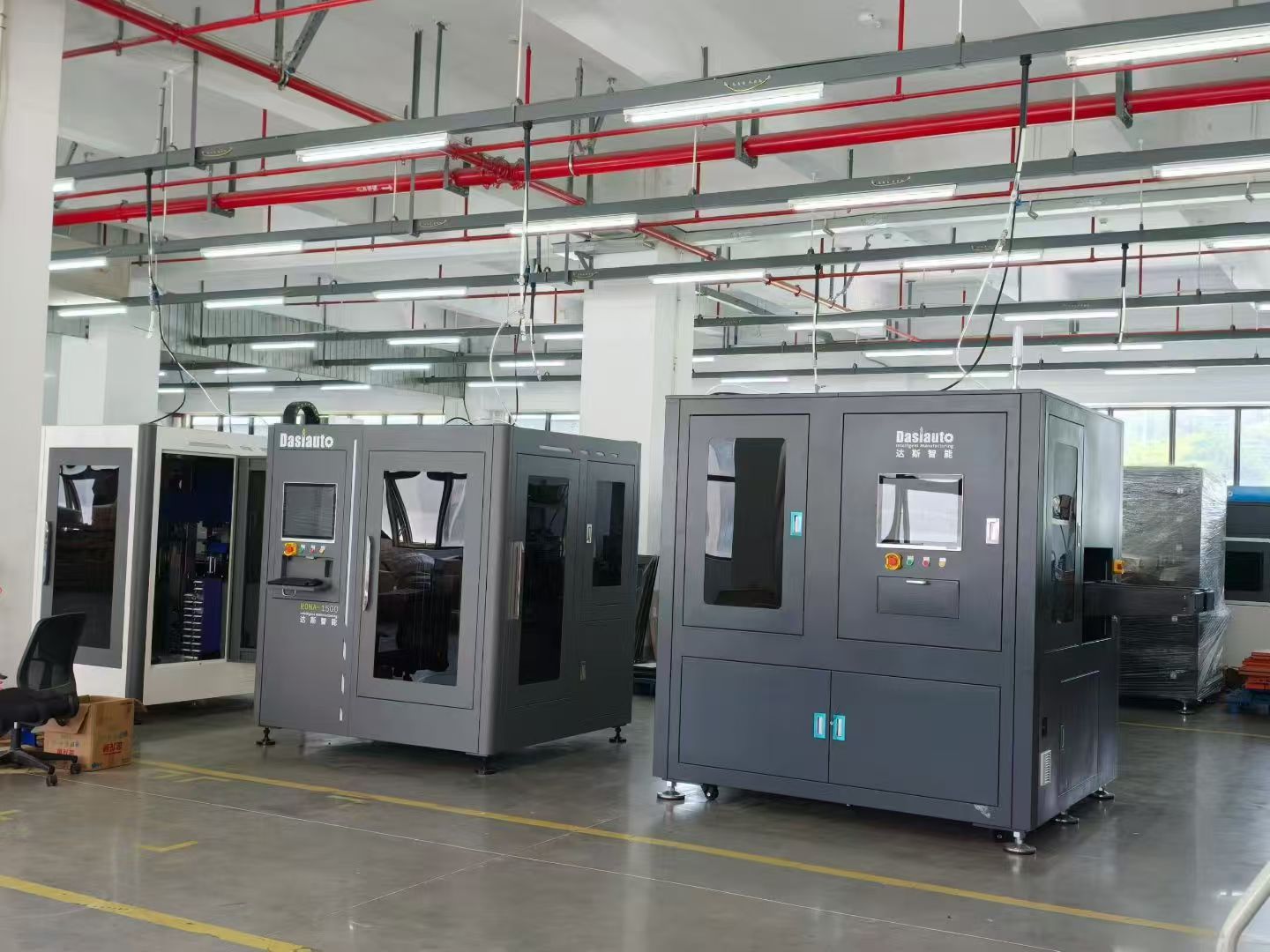
Pretreatment of Cutting Tools Before Coating as a Process Family
In practice, pretreatment can include several overlapping goals. One is removal of grinding debris and residual contamination from the rake face, flank face, chipbreaker, and edge zone. Another is edge preparation, where the very sharp or locally damaged ground edge is converted into a more stable micro-geometry before coating.
That is why pre-coating conditioning often overlaps with controlled edge honing. In many carbide-tool plants, the process route combines cleaning, burr removal, and edge stabilization in one wet blasting step, particularly where cutting-tool edge preparation is already part of the product specification.
Why the Coating Stage Depends on Surface Preparation
A coating layer does not correct a poor substrate. If the surface contains embedded contamination, grinding burn effects, loose fragments, or an edge that is too sharp and weak, the deposited layer may reproduce those defects rather than fix them. That can show up later as edge chipping, localized coating failure, unpredictable wear bands, or inconsistent life between nominally identical tools.
Pretreatment therefore acts as a stabilizing operation between tool manufacture and coating deposition. It reduces variability at the exact point where the coating must bond to, and work with, the tool substrate.
Core Selling Points of Wet Blasting Surface Treatment
Wet blasting is widely chosen for this task because the water phase suppresses airborne dust and supports fine, cushioned particle impact. The process can produce a more even matte surface, lower the risk of unwanted media impregnation on sensitive surfaces, and improve repeatability when pressure and slurry concentration are controlled. For production teams seeking predictable results rather than maximum aggressiveness, wet blasting surface treatment is often easier to standardize than open-ended manual finishing.
Another important point is process integration. Pretreatment of cutting tools before coating is not just a cleaning step, and not just an edge-honing step. It is a controlled preparation stage that connects grinding quality, coating consistency, and final cutting performance into a single production logic.
How Does pretreatment of cutting tools before coating Work
Pretreatment of cutting tools before coating works by exposing the tool to a carefully regulated stream of water-borne abrasive particles. The slurry cleans and micro-conditions the surface while compressed air provides the energy needed for controlled impact. Because the action is distributed across many fine particle strikes rather than one heavy cutting pass, the process can remove weak surface features and prepare the substrate with relatively fine control.
Slurry Preparation and Abrasive Suspension
The process begins in the slurry tank, where water and abrasive are mixed into a stable suspension. Maintaining consistency here is essential because changes in concentration alter the effective removal rate, surface texture, and edge response. If the abrasive settles, breaks down excessively, or becomes overloaded with fines, the same nominal cycle can produce different outcomes from one batch to the next.
Media selection is matched to tool material, geometry, coating route, and target finish. Fine media are usually preferred for coating pretreatment because they allow more gradual, controlled interaction with the substrate and edge zone. Coarser media may raise removal intensity, but they can widen the process window and make delicate edge control harder to maintain.
Compressed Air Path and Surface Impact
Once the slurry is stable, compressed air accelerates it through a nozzle toward the tool. The nozzle diameter, stand-off distance, angle of attack, and traverse pattern determine whether the process emphasizes general cleaning, edge preparation, or localized treatment of specific faces. Even small changes in angle can shift the effect from the tool edge to the flank or rake surface.
This is why fixture quality is central to repeatability. A nominally good recipe will still drift if the tool is not presented to the nozzle in a consistent way. In coating pretreatment, the requirement is not simply “enough blasting” but the same blasting effect on every critical surface.
Closed-Loop Recovery and Sedimentation
After impact, the slurry drains back into the machine and re-enters a recirculation loop. In that loop, the system must deal with abrasive wear, carbide fines, detached residues, and sludge. If those by-products remain uncontrolled, the slurry gradually changes its effective cutting behavior, which weakens process stability.
Automatic sedimentation and controlled waste discharge therefore serve a quality function as well as a maintenance function. By removing accumulated fines and degraded media, the system helps preserve a narrower and more repeatable operating range.
Mist Control and Pressure Regulation
Wet blasting sharply reduces the dust issues associated with dry blasting, but it still requires chamber extraction, enclosure sealing, and effective handling of water mist. Visibility inside the cabinet, operator comfort, and machine cleanliness all depend on those support systems working properly. Good mist control also helps prevent slurry escape and keeps inspection areas cleaner.
Pressure control is equally important. In pre-coating tool treatment, the aim is generally stable energy delivery rather than maximum force. PID closed-loop pressure control helps keep blasting intensity consistent despite normal fluctuations in air supply or load, which is especially valuable in multi-shift production.
In cutting-tool pretreatment, the best process is usually the one that removes variability, not the one that removes the most material.
| Process Parameter | Typical Range or Practice | Why It Matters |
|---|---|---|
| Working pressure | Typically about 0.15-0.45 MPa for precision pretreatment | Controls cleaning intensity and edge interaction |
| Slurry concentration | Usually maintained in a controlled low-to-medium solids band | Affects removal stability and surface uniformity |
| Abrasive particle size | Fine grades are commonly selected for coated-tool pretreatment | Influences texture, edge rounding tendency, and finish |
| Air flow and nozzle state | Managed through nozzle size, wear condition, and recipe setting | Determines impact energy and process repeatability |
| Media consumption | Varies with breakdown rate, contamination load, and sludge removal | Influences cost and consistency over time |
| Control system | PLC/HMI recipes with timed cycles and regulated pressure | Supports repeatable batch-to-batch results |
pretreatment of cutting tools before coating vs Dry Blasting vs Other Methods
Pretreatment of cutting tools before coating is often compared with dry blasting, shot peening, brushing, vibratory finishing, and drag finishing. These methods all change the surface or edge condition, but they do not produce the same substrate state or the same level of process control. The most suitable method depends on whether the manufacturer prioritizes fine edge conditioning, coating adhesion support, low dust, broad-area smoothing, or the lowest equipment complexity.
Wet Blasting Versus Dry Blasting for Coating Preparation
Wet blasting is often favored when pre-coating consistency matters more than aggressive removal. The water phase cushions particle impact, suppresses dust, and supports a more even micro-texture on the tool surface. That combination is useful for carbide tools because the process can clean and condition the edge zone without the harsher working environment often associated with dry media blasting.
Dry blasting still has valid industrial uses, especially where a rougher and more aggressive treatment is acceptable. But for pre-coating treatment of precision cutting tools, it can be harder to balance cleanliness, fine edge control, and operator environment in one process window.
Where Shot Peening and Vibratory Finishing Fit
Shot peening is mainly a fatigue-oriented surface treatment rather than a precision pre-coating process for tool edges. Industry terminology and classifications are described in [ASTM shot peening terminology], but the intended outcome differs from the substrate cleaning and micro-conditioning needed before coating deposition. Vibratory and drag finishing, by contrast, can be effective for batch smoothing or deburring, yet they often act more broadly over the whole tool surface and may offer less directional control at the edge.
For that reason, many plants use wet blasting when they need a repeatable pre-coating surface state with tightly managed edge influence. Other methods may still be used elsewhere in the process chain, but not always as a direct substitute.
| Evaluation Dimension | Wet Blasting Pretreatment | Dry Blasting | Shot Peening | Vibratory / Drag Finishing |
|---|---|---|---|---|
| Main purpose | Surface cleaning, micro-texturing, and edge-zone conditioning | General blasting and rougher cleaning | Residual-stress and fatigue-oriented treatment | Whole-part smoothing and deburring |
| Dust generation | Low relative to dry blasting | High unless extraction is extensive | Moderate in enclosed systems | Low airborne dust, though media and compound handling are required |
| Surface finish control | Fine, even matte finish is typical | Rougher finish is more common | Functional peened texture | Broad smoothing effect |
| Media embedding risk | Lower on many sensitive surfaces due to water film | Higher on some substrates | Depends on media and material | Different mechanism; not directly comparable |
| Repeatability for edge zone | High with stable fixturing and pressure control | Moderate | Limited for precision edge shaping | Moderate, often less directional |
| Environmental handling | Slurry, mist, and sludge management | Large dust-collection burden | Dry media containment and recovery | Media, compound, and wastewater management |
Key Specifications to Evaluate Before Buying
The first buying question should be process-related rather than machine-related: what exactly must the pretreatment do before coating? Buyers should define the tool substrate, the post-grinding condition, the target edge state, the coating type, and the acceptance criteria for cleanliness and surface uniformity. Without that groundwork, it is difficult to compare equipment in a meaningful way.
Pressure Window and Process Stability
For pre-coating treatment, absolute maximum pressure is less important than a stable usable pressure window. A machine that can reach a very high value but cannot hold a narrow operating band consistently is not ideal for precision cutting tools. Stable pressure is what keeps cleaning intensity and edge influence predictable from batch to batch.
Motion Accuracy and Tool Presentation
The second key issue is motion and fixturing. Standard insert batches may only require reliable repeat positioning in a chamber, while drills, end mills, and special tools often need indexed presentation or servo-guided nozzle movement. In these cases, servo X/Y/Z control becomes part of the process capability, not just a convenience feature.
Tool presentation should also be evaluated as a system, including fixture repeatability, clamping consistency, and how nozzle wear affects the blast footprint. A good control specification on paper cannot compensate for weak mechanical repeatability at the point of impact.
Throughput, Changeover, and Recipe Management
Throughput should be assessed using the full cycle, not just blasting time. Loading, unloading, inspection, slurry checks, nozzle maintenance, and recipe changes all affect real productivity. This matters especially when one machine must handle several tool families with different pre-coating requirements.
Recipe control is critical in that environment. A useful HMI should store validated programs, support permission levels, track alarms, and make unauthorized parameter drift less likely. Plants running multiple shifts usually benefit far more from disciplined recipe management than from marginal increases in raw blasting capacity.
Utilities, Footprint, and Maintenance Access
Compressed air quality, electrical requirements, drainage, water management, and floor layout all affect the success of installation. Wet blasting systems reduce dust but still need mist extraction, sealed chambers, and practical access for pump and nozzle maintenance. Service access should be reviewed early, especially in tool rooms where floor space is limited.
Waste Handling and Safety Features
Pretreatment of cutting tools before coating generates fines, worn media, and sludge that gradually change process behavior. Automatic waste-sand sedimentation therefore matters because it helps maintain a more stable slurry condition while reducing manual cleanup effort. Buyers should also confirm interlocks, emergency stops, guarded access, and maintenance procedures that fit their plant safety rules.
Applications Across Industries
Although pretreatment of cutting tools before coating is a specialized application, the same wet blasting principles are used across several industrial sectors. A system designed for pre-coating conditioning can often support deburring, light descaling, additive manufacturing cleanup, and cosmetic finishing when the abrasive grade and fixturing are changed. That flexibility is one reason wet blasting is often deployed as a platform technology rather than a single-task machine.
In coating-related work, the process is commonly used to prepare metal surfaces for painting, conversion treatment, or other finishing steps. Broader industrial use cases are similar to the logic described in [coating pretreatment wet blasting], where the focus is on creating a cleaner and more uniform substrate before the next process stage. For facilities that also serve fabricated parts or metal components, this overlap can improve equipment utilization.
The same principle applies outside toolmaking. Surface conditioning ahead of finishing is a widespread requirement in precision manufacturing, and many best practices are aligned with [industrial coating preparation guidance] used in corrosion protection and surface-preparation programs, even though cutting tools operate in a different performance environment.
| Application Type | Target Industry | Workpiece Example | Process Benefit |
|---|---|---|---|
| Edge and pre-coating conditioning of cutting tools | Carbide tool manufacturing | Inserts, drills, end mills, reamers | Clean substrate and more stable coating support |
| Burr removal | Precision metal parts | Stamped parts, machined components, sintered pieces | Selective deburring with controlled surface impact |
| Scale removal | Steel and forging production | Bars, forgings, heat-treated parts | Oxide removal before machining or coating |
| Pretreatment before coating | Industrial finishing and fabrication | Metal parts before paint or conversion coating | Improved surface cleanliness and adhesion consistency |
| AM post-processing | Additive manufacturing | 3D-printed metal components | Surface refinement and loose-powder cleanup |
| Peening of metal parts | Mechanical component production | Springs, gears, fatigue-sensitive parts | Functional surface conditioning |
| Glass frosting | Architectural and specialty glass | Panels, decorative glass, functional glass parts | Uniform matte appearance |
| 3C device finishing | Consumer electronics supply chain | Frames, housings, device covers | Fine smoothing and cosmetic consistency |
Equipment Selection Guide
The correct equipment format depends on whether the project is still in development or already in regular production. Early-stage programs often need freedom to test different abrasive grades, tool orientations, and exposure times. Mature programs usually value consistent fixturing, locked recipes, and predictable throughput over maximum flexibility.
R&D and Sample Validation
During R&D, the most important goal is not output but recipe validation. Engineers may need to compare several edge conditions, coating routes, and substrates before freezing the process. A flexible robot-type R&D blasting cell is well suited to that stage because it supports sample testing and variable presentation more naturally than a fixed production layout.
Batch Production and Standardized Flow
Once the process is validated, standardized chambers usually make more sense. For many insert and small-tool programs, a single-chamber production cabinet provides a practical balance of throughput, repeatability, and manageable changeover. Higher-volume lines may then move toward double-chamber or more automated configurations when loading becomes the main bottleneck.
Choosing Among Eight Common Configurations
The matrix below summarizes the typical logic behind wet blasting configurations used for pre-coating cutting-tool treatment and adjacent applications. It should be read as a selection guide rather than as a fixed specification sheet, since fixturing, motion strategy, and abrasive choice strongly affect the final result.
| Configuration / Model Tier | Target Production Scale | Workpiece Size Range | Precision Level | Recommended Applications |
|---|---|---|---|---|
| 1. Bench development unit | Lab feasibility and abrasive screening | Small tools and test coupons | Moderate | Early process proofing |
| 2. Flexible R&D robot cell | Pilot validation and sample processing | Small precision tools | High | Mixed geometries and angle trials |
| 3. Manual flexible cabinet | Small-batch, high-mix production | Small tools and special parts | Moderate | Frequent changeovers |
| 4. Standard single-chamber batch system | Routine production batches | Small to medium tool families | High | Stable recipe-based pretreatment |
| 5. Single-piece process machine | Medium-volume discrete flow | Individual high-value tools | High | Tight traceability and cycle control |
| 6. Servo multi-axis precision cell | Advanced precision production | Complex tool geometries | Very high | Directional treatment of difficult surfaces |
| 7. Double-chamber utilization system | Higher-throughput batch output | Repetitive tool programs | High | Parallel loading and improved utilization |
| 8. Custom integrated finishing line | Dedicated industrial workflow | Application-specific range | High to very high | In-line pretreatment before downstream finishing |
Cost, Lead Time and ROI Considerations
Equipment cost in this field is driven more by control depth than by enclosure size alone. A basic wet blasting cabinet may handle simple cleaning, but a pre-coating cutting-tool system often needs better pressure regulation, more precise fixturing, more advanced motion options, higher recipe discipline, and more robust slurry management. Those features affect capital cost, but they also determine whether the process can be held inside a narrow quality window.
Lead time usually follows the degree of customization. Standard chamber machines are typically faster to supply than servo cells or highly application-specific lines that require trials, fixture design, and process verification. It is therefore better to describe delivery bands as typical rather than fixed, especially where the project begins with sample testing.
ROI should be framed in several layers. The first is labor and handling efficiency: replacing manual cleaning, manual edge touch-up, or inconsistent pre-coating preparation with a documented process. The second is quality stability: fewer coating failures linked to poor substrate condition, less rework, and better repeatability between shifts.
A third layer is performance at the cutting edge. Pre-coating surface control often works together with edge preparation to reduce random failure and improve coating support, which can contribute to tool life uplift when the complete tool design is validated around that condition. Even where the absolute life gain varies by application, greater consistency can be valuable because it improves confidence in production machining.
The fourth layer is scrap prevention. When toolmakers can separate grinding issues, pretreatment issues, and coating issues more clearly, root-cause analysis becomes faster and more reliable. That reduction in diagnostic uncertainty may not appear directly in a simple payback formula, but it often matters in high-value carbide production.
Recurring costs also need realistic review. Abrasive consumption, nozzle wear, pump parts, mist control, sludge handling, and cleaning time all contribute to the actual cost per tool or per batch. A lower initial purchase price does not always lead to a lower operating cost if the machine is difficult to keep stable.
Why Choose DassiAuto — Our Company
DassiAuto Intelligent Equipment Co., Ltd is a Chinese manufacturer established in 2012 and focused on wet blasting technology for industrial surface treatment. According to the provided company context, it is a national high-tech enterprise operating under the ISO 9001 quality management standard, with invention patents, utility model patents, and software copyrights related to blasting equipment and control systems. Its lineup covers eight wet blasting configurations for R&D, batch production, and application-specific manufacturing, with engineering features that include PID closed-loop slurry pressure control, servo-driven X/Y/Z linkage with 0.02 mm control accuracy, HMI recipe management with hierarchical permission control, automatic waste-sand sedimentation with one-click discharge, and dust-collection systems that reduce water mist. The same source context identifies customers including Wecan Cutting Tools, Ruian Carbide Tools, Huareal, Metcera, OKE, YG, Kelite, and XTC, and describes a full-cycle service model covering sample testing, planning, design, manufacturing, installation, commissioning, training, after-sales support, spare parts, and abrasive resupply.
FAQ
Q1. Is sample testing necessary for pretreatment of cutting tools before coating?
In most cases, yes. Sample testing confirms whether the selected abrasive, pressure range, fixture method, and cycle time can deliver the required surface condition and edge response before the process is locked for production.
Q2. Can one machine handle different tool types such as inserts, drills, and end mills?
It can, provided the machine has appropriate fixturing, recipe management, and enough flexibility in nozzle angle or motion control. Mixed production is common, but repeatability depends on how well each tool family is presented to the blast stream.
Q3. What process data should a buyer prepare before asking for a quotation?
The most useful inputs are tool drawings, substrate grade, post-grinding condition, target edge state, coating route, expected output, and any known failure modes such as weak adhesion or early chipping. Those details make it easier to judge whether the application needs a standard chamber, a flexible R&D platform, or a higher-precision automated cell.
Q4. How long does installation and commissioning usually take?
The timeline depends on how standardized the machine is and how much application validation is still required. A straightforward batch machine is usually faster to commission than a customized multi-axis system that needs recipe development, fixture tuning, and acceptance trials on several tool types.
Q5. What consumables and spare parts matter most in this process?
The main recurring items are abrasive media, nozzles, hoses, seals, pump wear parts, cabinet protection parts, and sludge-handling components. In precision pretreatment, consumables that affect blast pattern, slurry condition, and pressure stability deserve the closest monitoring.
Q6. How should after-sales support be evaluated for a pre-coating tool-treatment project?
After-sales support should be assessed in terms of process continuity, not only machine repair. The most useful support usually includes spare parts planning, abrasive resupply, operator retraining when products change, and assistance with revalidating recipes after tooling, substrate, or coating updates.