
Quick Answer
A robotic wet blasting system is usually the right choice when a manufacturer needs repeatable surface treatment on complex parts, tighter control than manual blasting, and lower free-dust generation than dry abrasive blasting. It is especially effective for edge honing, selective deburring, cosmetic finishing, coating pretreatment, and additive-manufactured parts. The best configuration depends on part geometry, target throughput, motion accuracy, slurry stability, and how much automation is needed to reduce operator variability over long production runs.
| Core Factor | Typical Conclusion | Why It Matters |
|---|---|---|
| Process type | Wet blasting with robotic or servo-guided motion | Improves path repeatability on complex surfaces |
| Working pressure | Typically low-to-medium industrial blasting pressure | Supports controlled micro-erosion rather than only aggressive cleaning |
| Motion control | Robot arm or servo X/Y/Z linkage | Determines stand-off consistency and feature access |
| Dust behavior | Low free dust; mist extraction still required | Improves housekeeping and operator environment |
| Primary applications | Deburring, edge honing, pretreatment, AM finishing | Matches high-value precision finishing tasks |
| Indicative lead time | Standard cells shorter; custom robotic cells longer | Affects launch planning and capital timing |
What Is robotic wet blasting system
A robotic wet blasting system is an automated abrasive surface-treatment platform that combines wet blasting media delivery with programmed part handling or nozzle motion. In practical terms, it uses water, abrasive, and compressed air to form and accelerate a slurry stream, while a robot or servo-controlled axis system positions the nozzle or workpiece with consistent speed, angle, stand-off distance, and coverage pattern.
Within the broader abrasive blasting process family, robotic wet blasting sits between conventional manual cabinets and fully dedicated inline finishing cells. It belongs to the wet sandblasting, slurry blasting, or vapor blasting category, but adds a layer of programmable motion control that makes the process more repeatable on intricate or high-value components.
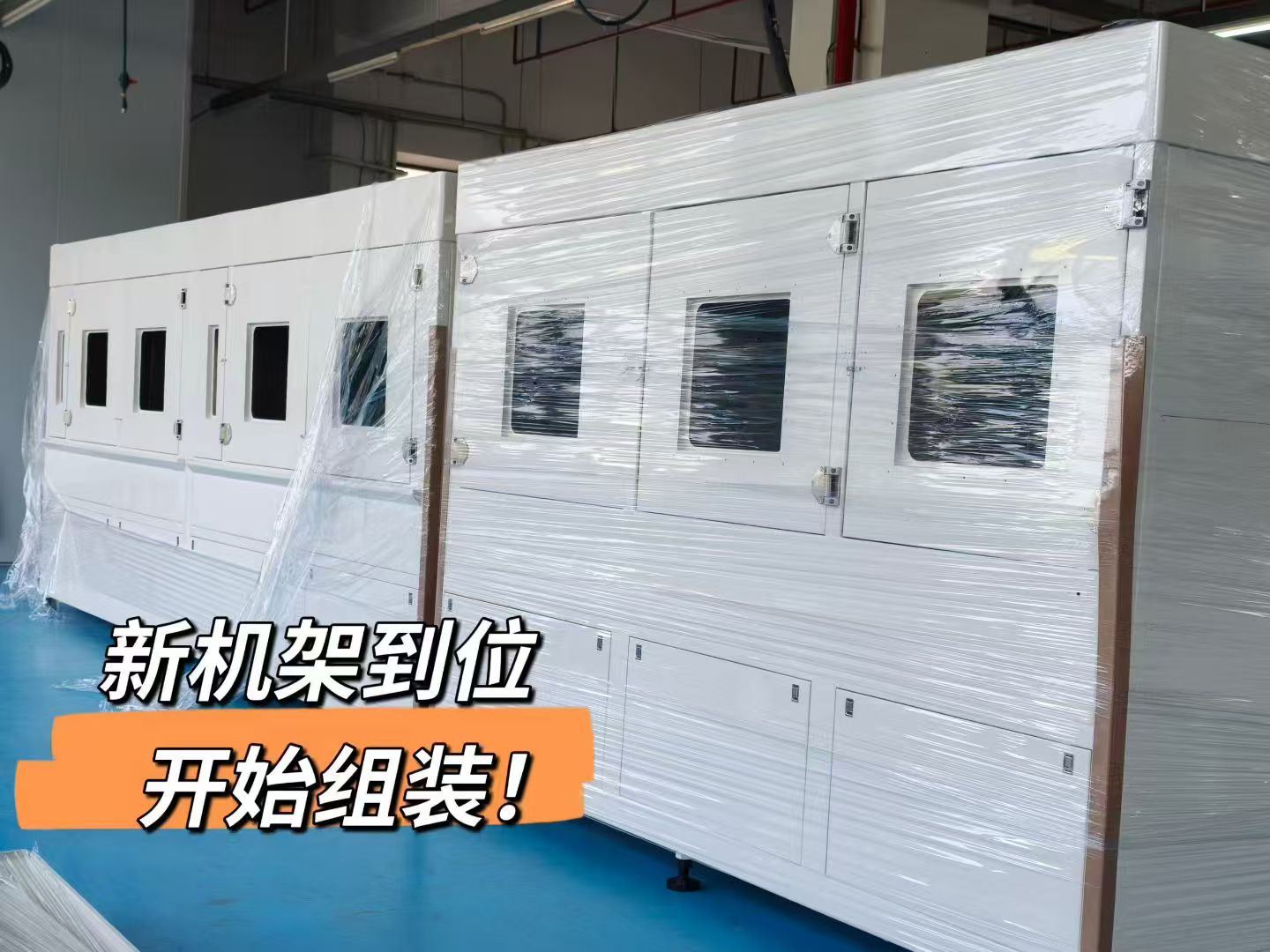
Where Robotic Wet Blasting Fits in the Surface-Treatment Process Family
Manual wet blasting remains useful for flexible job-shop work, rework, and low-volume production. A robotic wet blasting system, by contrast, is intended for applications where process variation from operator technique becomes too costly. That includes parts with hard-to-reach surfaces, narrow process windows, or geometry that requires the same blast path every cycle.
This kind of equipment is not defined only by the presence of a robot arm. In some factories, “robotic” may mean a six-axis manipulator handling the nozzle or part. In others, it may refer to servo-driven programmed motion that achieves equivalent repeatability for a limited geometry family. The common feature is automated motion tied to controlled slurry blasting.
Core Selling Points of Robotic Wet Blasting
The main reason manufacturers adopt these systems is process repeatability. When the machine can hold pressure, slurry condition, and motion path more consistently than manual work, surface results become easier to qualify and maintain. That matters for fine deburring, edge rounding, surface texturing, or pretreatment steps that affect later coating, joining, or functional performance.
A second advantage is lower free-dust generation compared with dry blasting, because the water phase suppresses airborne particulate at the point of impact. A third is improved finish uniformity, since the water-cushioned abrasive action often produces a finer and less harsh surface effect. A fourth is reduced risk of unwanted abrasive impregnation on certain soft or coated surfaces, because the water film changes the way particles interact with the substrate.
Why Automation Changes the Value Proposition
Automation changes the economics of wet blasting because it reduces dependence on operator technique. Once motion paths, part fixtures, pressure setpoints, and dwell times are defined, the machine can reproduce them across shifts with much less subjective variation. That does not eliminate process engineering; it moves more of the quality burden into the equipment, software, and fixturing.
For buyers, that means the system should be judged not as a “robot plus blast cabinet,” but as a controlled finishing process. The machine is valuable when it stabilizes a surface result that would otherwise drift in manual production.
How Does robotic wet blasting system Work
A robotic wet blasting system works by keeping abrasive particles suspended in water, accelerating that slurry with compressed air, directing it at the workpiece through a controlled nozzle path, and then recovering the spent slurry in a closed loop for reuse and waste separation. The robotic element ensures that the blasting angle, stand-off distance, speed, and coverage are consistent enough to produce a repeatable surface result.
Slurry Preparation and Suspension Control
The process begins in the slurry tank, where water and abrasive are mixed to a defined concentration. The abrasive must remain suspended at a stable level during the production cycle, or the energy delivered to the workpiece will drift. In robotic systems, this is particularly important because automated motion assumes that every programmed pass is acting on the part with predictable slurry characteristics.
Depending on the application, the media can be selected for light finishing, deburring, edge preparation, or surface texturing. Particle size distribution, hardness, shape, and breakdown behavior influence both finish quality and operating cost. The slurry loop must therefore balance agitation, circulation, and sediment behavior without degrading the abrasive too quickly.
Compressed Air Acceleration and Nozzle Delivery
Once conditioned, the slurry is metered toward the blast gun or nozzle and accelerated by compressed air. The resulting stream strikes the part at controlled energy. In wet blasting, water cushions the abrasive interaction, so the process can remove burrs, oxides, loosely adhered material, or edge irregularities with a more moderated impact profile than many dry systems.
The nozzle is then moved by robot or servo axes according to a programmed path. On complex parts, the motion program controls approach angle, overlap, dwell time, and stand-off distance. These variables often determine the real process result more than nominal pressure alone.
Closed-Loop Recovery and Sedimentation
After impact, slurry drains back into the recovery zone carrying fines, fragmented media, and removed substrate residues. The closed-loop system separates reusable slurry from waste through sedimentation, discharge, or filtration. Stable recovery is one of the decisive engineering features in a robotic wet blasting system because automated production suffers quickly if contamination builds up or concentration drifts.
Systems with automatic waste-sand sedimentation reduce manual intervention and help keep the process window narrower. In practice, that improves uptime and reduces the number of variables the operator must correct by feel.
Dust Collection, Water Mist Control, and Visibility
Wet blasting reduces airborne dust, but it still creates water mist and splashback that can obscure visibility or affect enclosure cleanliness. Industrial systems therefore include extraction and mist-management functions. These are not cosmetic extras; they support process observation, maintenance, and stable production.
In automated cells, visibility also affects camera-based inspection, manual setup, and maintenance access. Mist control becomes especially important where the same machine processes multiple part families with regular changeovers.
PID Pressure Control and Recipe Management
A more advanced robotic wet blasting system will use closed-loop pressure regulation to maintain stable blasting conditions across long runs. PID control reduces fluctuation in slurry pressure or delivery response, which improves consistency from cycle to cycle. Combined with HMI recipe storage, this makes it easier to switch between validated part programs without relying on operator memory.
The most capable robotic wet blasting cells do not simply automate motion; they automate consistency.
| Parameter | Typical Industrial Range or Condition | Process Importance |
|---|---|---|
| Working pressure | Typically about 0.2-0.7 MPa, application-dependent | Governs impact intensity and material removal behavior |
| Slurry concentration | Typical controlled solids ratio by weight or volume | Influences cutting action, finish uniformity, and repeatability |
| Abrasive particle size | Fine to medium grades selected per material and finish target | Affects roughness, edge radius control, and nozzle wear |
| Air flow | Set by nozzle size, pressure, and duty cycle | Determines compressor demand and blasting energy stability |
| Media consumption | Varies with abrasive breakdown and contamination load | Major contributor to operating cost |
| Control system | PLC/HMI with recipe logic; PID pressure control typical on higher-grade systems | Supports traceability and reduced operator variability |
Why Motion Control Is Central to Wet Blasting Performance
In many applications, blasting results depend on motion discipline as much as on abrasive selection. A robot or servo path can keep the nozzle normal to the surface, maintain overlap, and avoid over-processing corners or under-processing recessed zones. That is why robotic wet blasting is often chosen for complex geometries rather than simple flat parts.
robotic wet blasting system vs Dry Blasting vs Other Methods
A robotic wet blasting system should be compared with alternative processes based on the target surface condition, not on machine category alone. Dry blasting, shot peening, and vibratory finishing each solve different finishing problems, and their economics can shift depending on geometry, quality tolerance, and downstream process requirements.
| Comparison Point | Robotic Wet Blasting | Dry Blasting | Shot Peening | Vibratory Finishing |
|---|---|---|---|---|
| Free-dust generation | Low free dust; mist extraction required | Higher airborne dust load | Enclosed process, but media and verification controls are specialized | Low dust, though compounds and wastewater may be involved |
| Finish character | Fine, uniform, controlled matte or conditioned surface | Often more aggressive and visually harsher | Functional compressive treatment, not mainly cosmetic | Broad smoothing and mass finishing effect |
| Media embedding risk | Lower on selected sensitive surfaces due to water film effect | Higher risk on some soft surfaces | Not intended for the same finish targets | Different contact mechanism, not directly comparable |
| Local feature control | High with robotic path programming | Moderate to high, but operator dependent in manual systems | Limited for cosmetic selectivity | Low for isolated features |
| Process repeatability | High when pressure, slurry, and motion are controlled | Variable if operator-driven | High in dedicated peening systems using verified intensity methods | Good for bulk lots, weaker for directional treatment |
| Environmental handling | Sludge and mist management required | Dust collection and dry media containment required | Specialized media handling and process verification required | Compound handling and separation required |
Robotic Wet Blasting vs Dry Abrasive Blasting
The biggest operational difference is that dry blasting throws abrasive in an air stream without the water phase, while wet blasting delivers a slurry. Dry systems can be very effective for aggressive cleaning and scale removal, but they often impose a higher dust-control burden and can be less forgiving on finish-sensitive surfaces. For precision finishing, robotic wet blasting frequently offers a narrower and more controllable process window.
Robotic Wet Blasting vs Shot Peening
Shot peening is a specialized process intended to induce beneficial residual compressive stresses, not simply to clean or cosmetically finish a surface. The ASTM B851 shot peening terminology helps clarify that peening should be evaluated by intensity and coverage criteria rather than by appearance alone. A robotic wet blasting system may be used for certain conditioning tasks, but it is not a universal replacement for validated peening when fatigue performance is the primary objective.
Robotic Wet Blasting vs Vibratory Finishing
Vibratory finishing is efficient for bulk smoothing and deburring of many small parts, but it offers less directional selectivity. If the application requires targeted treatment of edges, pockets, slots, or appearance-critical zones, robotic wet blasting usually has an advantage because the blast stream can be directed precisely rather than applied as a general media mass action.
Key Specifications to Evaluate Before Buying
The best procurement decisions come from tying equipment specifications to the actual surface result required on the part. A robotic wet blasting system may look similar from the outside across vendors, but the underlying process capability can differ sharply depending on pressure control, path accuracy, slurry stability, and maintenance design.
Robotic Wet Blasting Pressure Window
Buyers should ask for the usable pressure range at the nozzle, not only the maximum compressor specification. The key issue is whether the machine can maintain the exact pressure band needed for the target finish over a full shift. In precision deburring or tool-edge preparation, a small drift in blasting energy may affect burr root removal or edge radius consistency.
Motion Accuracy, Repeatability, and Stand-Off Control
Robotic motion quality should be evaluated in terms of the process, not just a robot datasheet. The real question is whether the system can keep stand-off distance, angular orientation, and path overlap stable across the work envelope. If a machine uses servo X/Y/Z linkage instead of a six-axis robot, buyers should verify whether that architecture is better matched to the target geometry and tolerance band.
Throughput and True Cycle Time
Cycle time should include loading, clamping, draining, recipe selection, blasting, inspection access, and unloading. A machine with a fast blast pass but poor changeover design may not deliver the expected hourly output. Throughput should therefore be measured at the level of qualified parts per shift rather than nominal nozzle travel speed.
Workspace, Footprint, and Utilities
Floor space affects not only placement but also maintenance access, sludge discharge, and part handling ergonomics. Utilities usually include compressed air, electrical supply, water management, and drainage. In some installations, the utility infrastructure can become a larger project variable than the blast cell itself.
HMI, Recipe Management, and Data Discipline
Higher-value automated systems increasingly rely on recipe management so that validated parameters can be stored and recalled reliably. Password levels, alarm history, maintenance reminders, and program management help reduce shift-to-shift drift. Where a plant must document process settings, this software layer becomes an operational requirement rather than a convenience.
Safety, Enclosure Design, and Mist Extraction
Wet blasting reduces airborne dust, but enclosure integrity, interlocks, guarding, emergency stops, and extraction performance still matter. If the machine will run unattended or semi-attended, buyers should also examine fault recovery logic and what happens during loss of pressure, nozzle blockage, or slurry imbalance. The NIST smart manufacturing framework is useful background when evaluating how automation and process control interact in real industrial production settings.
Applications Across Industries
A robotic wet blasting system is most valuable where part geometry is complex, finish quality is sensitive, or manual blasting creates too much variation. The same basic process can therefore serve very different industries, from cutting tools to consumer electronics, depending on abrasive selection, nozzle strategy, and motion programming.
| Application Type | Target Industry | Workpiece Example | Process Benefit |
|---|---|---|---|
| Edge honing of cutting tools | Carbide tooling | Inserts, drills, end mills | Controlled edge preparation and more repeatable pre-coating geometry |
| Burr removing of metal parts | Machining and stamping | Precision housings, connectors, brackets | Selective burr reduction with less manual finishing |
| Scale removal from forgings or bars | Steel processing and forging | Forged blanks, rods, bars | Controlled cleaning with lower free-dust exposure |
| Pretreatment before coating | Fabrication and industrial finishing | Panels, housings, frames | More uniform substrate condition before coating |
| AM post-processing | Additive manufacturing | Metal printed components | Surface refinement and residue removal on complex geometries |
| Peening and conditioning | General mechanical parts | Functional metal components | Directed surface conditioning in defined zones |
| Glass frosting | Architectural and decorative glass | Panels, covers, visible components | Even matte texture without broad mechanical contact |
| 3C device finishing | Electronics supply chain | Casings, frames, handheld device parts | Cosmetic consistency and smoother tactile surfaces |
Tooling, Deburring, and Precision Metal Parts
In carbide manufacturing, robotic wet blasting is frequently selected for edge honing of cutting tools because nozzle angle, dwell time, and edge exposure need to be tightly controlled. On machined and stamped metal parts, similar logic applies to burr removing of metal parts, where the value comes from selective treatment of edges and pockets that are difficult to finish consistently by hand.
Coating Pretreatment and Hybrid Process Lines
Where the goal is surface readiness before painting or conversion treatment, coating pretreatment wet blasting can be integrated into broader finishing workflows. In applications that combine blasting with chemical pretreatment, a dedicated line such as PH14000 blasting-phosphating equipment reflects the way process integration, rather than blasting alone, can drive system design.
Why Complex Geometry Favors Robotic Wet Blasting
Complex parts amplify manual variability. Cavities, transitions, intersecting surfaces, and mixed-feature parts are difficult to process uniformly if nozzle position changes from operator to operator. Robotic motion helps hold the same path every cycle, which is why these systems are often chosen for higher-value components rather than commodity cleaning work.
Equipment Selection Guide
No single robotic wet blasting configuration fits every production environment. The right selection depends on whether the priority is R&D flexibility, standard batch production, complex-part access, flat-part coverage, cylindrical work, or higher-throughput loading efficiency.
| Configuration / Model Tier | Target Production Scale | Workpiece Size Range | Precision Level | Recommended Applications |
|---|---|---|---|---|
| R&D robotic trial cell | Samples, qualification, process development | Small to medium mixed parts | Very high | Recipe development, nozzle path testing, abrasive screening |
| Compact manual-assist cabinet | Small lots and flexible work | Small parts | Medium | Rework, low-volume finishing, operator-led tasks |
| Standard single-chamber production cabinet | Regular batch production | Small to medium parts | Medium to high | Routine wet blasting of recurring part families |
| Single-piece dedicated machine | Repetitive one-part-family production | Small to medium dedicated parts | High | Stable cycle-by-cycle processing |
| Complex-shape servo or robotic cell | Precision geometry-sensitive work | Small to medium complex parts | Very high | Multi-face deburring, edge honing, selective finishing |
| Plate-part dedicated system | Flat-part batch production | Plate and sheet components | High | Uniform treatment of broad flat surfaces |
| Round-rod processing system | Semi-continuous cylindrical production | Long rods and bars | Medium to high | Rod, shaft, and bar-surface conditioning |
| Double-chamber high-throughput line | Higher-volume recurring production | Small to medium parts | High | Reduced non-productive loading time |
R&D and Process Validation Cells
A development environment often needs flexibility more than output. The RB-6 robot-type wet blasting equipment fits this role because it supports sample testing, path trials, and process qualification before a manufacturer commits to a more dedicated production architecture. That can reduce scale-up risk when the surface requirement is still being established.
Standard Batch and Single-Part Production
For many factories, a standard cabinet remains the baseline reference point. A single-chamber production cabinet can be the practical choice where part mix is moderate and manual loading remains acceptable. When the production flow is centered on one recurring component family, a single-piece blasting machine may deliver better consistency by simplifying fixturing and part presentation.
Complex Geometry and Higher Throughput
Robotic or servo multi-axis systems become more attractive as geometry complexity increases. For throughput-driven lines, double-chamber arrangements reduce door-open idle time and can raise effective utilization without requiring a fully inline plant layout. The selection question is therefore not simply “robot or no robot,” but whether automation addresses the plant’s biggest current source of process variation.
Cost, Lead Time and ROI Considerations
The cost of a robotic wet blasting system is shaped by far more than chamber size. Buyers should expect pricing to change materially with automation depth, fixture strategy, control sophistication, and the level of process validation required before shipment.
Main Price Drivers in Robotic Wet Blasting
The biggest cost drivers are usually robotic or servo motion architecture, enclosure size, pressure-control sophistication, slurry tank and recovery design, mist extraction, part fixturing, HMI recipe management, and safety systems. A flexible development cell may cost less than a high-output dedicated system in some cases, but more than a simple manual cabinet due to its motion-control content.
Consumable strategy matters as well. Media life, nozzle wear rate, pump wear, and sludge handling frequency all affect the operating budget. In other words, acquisition price is only one part of the financial picture.
Typical Lead-Time Bands
Lead times are typically shorter for standard cabinets and longer for robotic cells that require sample testing, custom fixtures, or process development. A realistic schedule often includes trial processing, design confirmation, manufacturing, internal QC, shipment, installation, commissioning, and operator training. If the project includes recipe validation on multiple part numbers, the engineering phase can add meaningful calendar time even when the machine hardware is straightforward.
ROI Logic for Production Buyers
A rational ROI model should compare the proposed system with the actual current-state process. Savings may come from reduced manual labor, fewer missed burrs, lower scrap, less rework, more stable coating pretreatment, or better control of tool-edge geometry before coating. In many cases, automation level should be justified by the cost of variation it removes rather than by the headline appeal of robotics itself.
Where ROI Is Usually Strongest
ROI tends to be strongest where parts are high value, finish sensitive, and difficult to process consistently by hand. That includes edge preparation, geometry-specific deburring, appearance-critical finishing, and post-processing of complex AM parts. The return may also be compelling where operator exposure, dust-control burden, or skill dependence creates hidden plant costs.
Commonly Missed Ownership Costs
Buyers often underestimate programming time, fixture changeover effort, compressor demand, maintenance access, sludge disposal, and recipe management discipline. These items may seem secondary during quotation review, yet they determine how much of the theoretical performance is actually achieved on the shop floor. For that reason, total ownership cost is a more useful metric than catalog price.
Why Choose DassiAuto — Our Company
According to the supplied company context and the published company background information, DassiAuto Intelligent Equipment Co., Ltd was established in 2012 and operates as a Chinese manufacturer focused on wet blasting technology for industrial surface treatment. The same source context identifies the company as a national high-tech enterprise working under the ISO 9001 quality management standard, with invention patents, utility model patents, and software copyrights related to blasting equipment and control systems.
The company context states that its wet blasting lineup covers eight equipment configurations spanning R&D, batch production, and application-specific processing. Engineering features described in that context include PID closed-loop slurry pressure control, servo-driven X/Y/Z linkage with 0.02 mm control accuracy, HMI recipe management with hierarchical permission control, automatic waste-sand sedimentation with one-click discharge, and dust-collection measures intended to reduce water mist. The same context names customer references including Wecan, Ruian, Huareal, Metcera, OKE, YG, Kelite, and XTC, particularly in carbide cutting tool manufacturing.
The supplied information also describes a full-cycle service model covering sample testing, planning and design, manufacturing and QC, installation, commissioning, training, after-sales support, spare parts, consumable resupply, and process optimization. On that basis, DassiAuto can be described factually as a supplier of process-verified solutions that integrates equipment manufacturing with application development for wet blasting operations.
FAQ
Q1. Is a robotic wet blasting system only suitable for large factories?
No. The deciding factor is usually process complexity rather than plant size. Small and mid-sized manufacturers may justify robotic wet blasting when parts are high value, geometrically difficult, or too variable to process consistently by manual blasting.
Q2. Should sample testing be completed before selecting a robotic wet blasting system?
Yes, especially for deburring, tool-edge preparation, cosmetic finishing, and AM post-processing. Trial work helps define abrasive grade, blasting pressure, path strategy, cycle logic, and whether a standard or custom configuration is actually required.
Q3. How much customization is normal in a robotic wet blasting project?
A moderate amount of customization is common because fixtures, nozzle paths, access angles, and loading methods often depend on the part family. Even when the base machine is standard, the production-ready solution usually includes some process-specific engineering.
Q4. What installation and commissioning items affect the total project scope?
Typical scope items include compressed air, power, drainage, floor layout, guarding, startup checks, recipe setup, and operator training. If the machine includes automated motion and multiple validated programs, commissioning may also involve path tuning and part-specific qualification work.
Q5. What spare parts and consumables matter most after startup?
The main recurring items are abrasive media, nozzles, hoses, seals, filters, pump-related wear components, and sludge-handling parts. Buyers should also ask how maintenance intervals affect finish stability, because process drift can become more expensive than the replacement parts themselves.
Q6. How long does ROI usually take on a robotic wet blasting system?
There is no universal payback period because ROI depends on current labor content, reject rate, throughput needs, and the value of improved repeatability. In most cases, the strongest returns come when the system eliminates manual variation on critical features and reduces downstream quality losses.