
Quick Answer
For precision parts, wet blast is usually chosen when the goal is cleaner operation, finer finish control, and lower risk of abrasive contamination than dry blasting. In a wet blasting system, abrasive is suspended in water as a slurry, then accelerated by compressed air onto the workpiece. That combination can reduce airborne dust, cushion particle impact, and improve finish consistency on tools, medical parts, AM components, coated substrates, and other geometry-sensitive surfaces where repeatability matters more than maximum removal rate.
| Core factor | Typical conclusion |
|---|---|
| Process type | Slurry-based abrasive blasting using water, media, and compressed air |
| Typical pressure window | Low to medium blasting pressure, set by substrate, media, and finish target |
| Surface effect | Fine, even, low-dust surface treatment with controlled micro-erosion |
| Dust behavior | Very low free dust compared with dry blasting |
| Typical applications | Edge honing, deburring, coating pretreatment, AM post-processing, peening, glass frosting |
| Lead-time profile | Typical lead times are shorter for standard cabinets and longer for custom automated lines |
What Is wet blast
Wet blast is an abrasive surface treatment process in which fine media are mixed with water to form a slurry and then propelled onto a part by compressed air. The process is also widely described as wet blasting, wet sandblasting, slurry blasting, or vapor blasting, although those terms can vary slightly by market and equipment design. In all cases, the defining characteristic is the water phase, which changes both how the abrasive travels and how it interacts with the workpiece.
Within the broader family of abrasive blasting processes, wet blast sits between aggressive dry cleaning methods and slower bulk-finishing methods. It is used when the manufacturer needs controlled surface modification rather than heavy stock removal. That makes it common in high-value industries where part geometry, edge integrity, coating performance, or cosmetic consistency are all important at the same time.
The technical value of wet blast comes from how the slurry behaves in impact. Water acts as a carrier and a damping medium. Compared with dry blasting, the abrasive stream is less dusty, often less thermally aggressive, and less likely to leave embedded media on soft or coated surfaces. That is why wet blast is frequently specified for carbide tools, stainless parts, nonferrous alloys, precision machined components, additive-manufactured parts, and selected glass or 3C applications.
Four advantages define the process in most industrial buying decisions. The first is dust suppression, because the water phase captures much of the particulate that would otherwise become airborne. The second is lower risk of media impregnation on sensitive surfaces. The third is uniform finish generation, especially where an even matte texture or controlled edge condition is required. The fourth is process repeatability, which depends on closed-loop control of pressure, slurry concentration, and media condition rather than operator feel alone.
Wet blast is not a single-purpose process. It can deburr, descale, texture, clean, peen, edge-hone, and prepare surfaces before coating. The process family is therefore best understood as a controlled wet abrasive platform whose final result depends on media choice, nozzle design, pressure range, fixture logic, and path control.
How Does wet blast Work
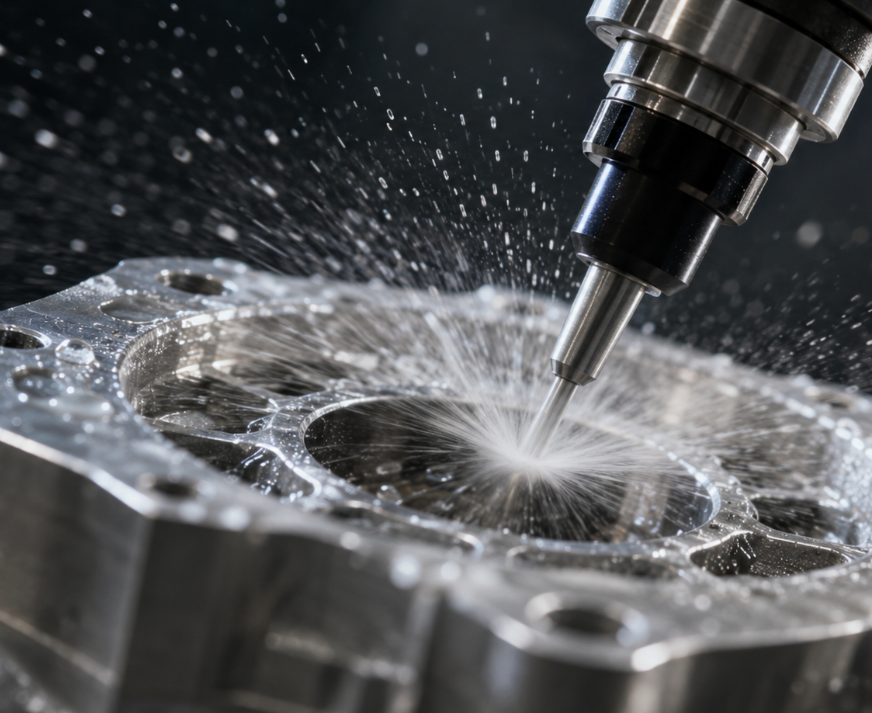
Wet blast works by circulating a water-abrasive slurry through a closed process loop and using compressed air to accelerate that slurry through a blasting gun or nozzle toward the workpiece. The machine therefore combines liquid handling, pneumatic acceleration, media management, and enclosure control in one integrated system. For buyers comparing equipment, the performance difference between machines usually comes from how well those four functions are stabilized over time.
Slurry system: water plus abrasive suspension
The process starts in the slurry tank, where water and blasting media are mixed to a controlled concentration. Unlike dry blasting, where the abrasive is conveyed pneumatically in a mostly dry state, wet blast relies on a pump or circulation system to keep the abrasive suspended and available for consistent delivery. If the slurry is not well mixed, heavier particles can settle, concentration can drift, and the process result will change from batch to batch.
Abrasive selection strongly affects slurry behavior. Fine ceramic, glass, alumina, or matched specialty media may be chosen depending on workpiece hardness, geometry, required roughness, burr size, and cost target. DassiAuto’s process context notes four matched TR-series abrasive grades, which reflects the practical reality that media should be selected as part of the process recipe rather than as an afterthought.
Compressed air acceleration path
Once circulated to the blasting zone, the slurry is introduced to the nozzle and accelerated by compressed air. That air stream determines particle velocity, while the slurry ratio influences impact density and finish character. Nozzle diameter, stand-off distance, impingement angle, and traverse speed then shape the final treatment result on the part surface.
Because water cushions impact to a degree, wet blast can produce a finer-looking finish than dry blasting under comparable abrasive grades. This is especially relevant on edges, thin walls, or appearance-sensitive surfaces. In practice, the process engineer balances pressure and media size to get enough cutting or smoothing action without over-rounding edges or creating unnecessary roughness.
Closed-loop recovery and sedimentation
After the slurry strikes the part, it drains back into the machine for reuse. Reusable media and water return to the tank, while oversize contamination, broken particles, fines, and removed debris are separated through filtration or sedimentation. This closed-loop behavior is one of the reasons wet blast can be both clean and economical in stable production.
Automatic waste-sand handling matters here more than many first-time buyers expect. If broken media and sludge are not removed efficiently, slurry consistency deteriorates and process repeatability suffers. DassiAuto’s stated engineering approach includes automatic waste-sand sedimentation and one-click discharge, which addresses this practical maintenance issue.
Dust collection and mist control
Wet blast greatly reduces dry airborne dust, but it does not eliminate enclosure management. Inside the cabinet, mist, aerosolized droplets, and very fine suspended particles still have to be controlled. Effective machines therefore include extraction and dust-collection features that manage water mist, improve visibility, and keep the operator environment stable over long shifts.
PID pressure control and recipe management
Industrial wet blast systems should not be treated as simple “spray cabinets.” Pressure stability is central to finish repeatability, especially when processing tools, aerospace hardware, medical components, or precision machined parts. PID closed-loop control helps maintain steady blasting pressure as slurry condition, hose wear, and operating duration change through the shift.
Where multiple part numbers run on the same machine, HMI recipe management becomes equally important. Pressure setpoint, slurry concentration, nozzle path, blasting time, and axis motion should be stored as repeatable process recipes rather than adjusted informally. That is the difference between a labor-dependent process and a controlled surface treatment platform.
In precision wet blasting, consistency is created by control of slurry, pressure, motion, and recovery—not by nozzle power alone.
| Parameter | Typical industrial range or practice | Why it matters |
|---|---|---|
| Working pressure | Typically low to medium, set by substrate and finish objective | Controls particle velocity and aggressiveness |
| Slurry concentration | Typically controlled by weight or volume ratio in a validated window | Affects cut rate, finish uniformity, and media stability |
| Abrasive particle size | Fine to medium grades are common for precision work | Influences roughness, edge effect, and coverage rate |
| Air flow demand | Depends on nozzle size, pressure, and number of guns | Drives acceleration consistency and utility sizing |
| Media consumption | Varies with media hardness, breakdown rate, and contamination load | Impacts operating cost and finish repeatability |
| Nozzle stand-off distance | Set by recipe and part geometry | Changes impact density and local surface effect |
| Control system | Manual setting or PLC/HMI recipe control with permissions | Supports repeatable production and reduced operator drift |
| Recovery loop | Closed-loop slurry recirculation with sedimentation and mist extraction | Maintains cleanliness, stability, and reuse efficiency |
wet blast vs Dry Blasting vs Other Methods
Wet blast is often compared directly with dry blasting because both use projected abrasive media, but the operational behavior is substantially different. Dry blasting is usually preferred for heavy rust removal, thick coating stripping, or maximum cutting speed. Wet blast is preferred where dust control, part cleanliness, geometry sensitivity, and surface uniformity are more important than peak removal rate.
That comparison becomes more meaningful when adjacent processes are included. Shot peening can look similar in equipment form but is functionally aimed at compressive stress rather than simple cleaning. Vibratory finishing, by contrast, can smooth large batches of small parts but usually lacks the local selectivity and directional control of a nozzle-based blasting system.
| Evaluation factor | Wet blast | Dry blasting | Shot peening | Vibratory finishing |
|---|---|---|---|---|
| Main objective | Controlled cleaning, deburring, texturing, honing, pretreatment | Fast stripping, cleaning, roughening, descaling | Surface strengthening through compressive stress | Bulk smoothing, edge softening, mass finishing |
| Dust generation | Very low free dust | High unless heavily enclosed and extracted | Low in wet variants, higher in dry variants | Low airborne dust, but compound waste may be present |
| Finish character | Fine, even, matte, controlled | More aggressive, often rougher | Functional dimpled surface with stress benefit | General smoothing over long cycles |
| Media embedding risk | Lower on sensitive surfaces because of water film | Higher on soft or coated surfaces in some cases | Depends on media and process design | Low projected impact risk |
| Heat generation | Lower localized heat than dry blasting | Higher frictional and impact heat potential | Usually controlled for functional results | Low, but not a projected-media process |
| Repeatability | High with slurry and pressure control | Variable if media flow and dust loading drift | High when intensity and coverage are controlled | Good for bulk batches, less selective by zone |
| Best-fit applications | Precision metal parts, tools, glass, AM, pretreatment | Heavy cleaning and coating removal | Springs, gears, fatigue-critical parts | Small simple parts in large mixed batches |
Wet blast also compares favorably in environmental housekeeping. Because water suppresses dust, plant cleanliness and operator visibility can improve when the system is properly enclosed and drained. For coating-related work, the process is also relevant to broader surface preparation guidance from AMPP because substrate condition and consistency directly influence downstream adhesion and coating reliability.
Key Specifications to Evaluate Before Buying
A procurement decision should start with process intent, not machine size. Some buyers need burr removal with minimal edge change, some need a cosmetic matte finish, and others need controlled edge preparation before coating. The correct wet blast machine is therefore the one that can hold the required process window, not merely the one with the largest chamber or highest listed pressure.
Blasting pressure stability
Pressure range matters, but stability matters more. A machine should hold the selected pressure without noticeable drift as media condition changes through the shift. In practice, stable pressure is one of the foundations of predictable roughness, edge condition, and cycle repeatability.
Motion accuracy and path control
If the process is automated, nozzle motion must be evaluated like any other precision axis system. Servo-linked X/Y/Z movement is especially relevant where specific faces, cutting edges, or internal zones require uniform treatment. DassiAuto’s equipment context specifies 0.02 mm control accuracy, which is meaningful for repeatable nozzle positioning on geometry-sensitive parts.
Throughput and true cycle time
Quoted cycle time should include loading, blasting, draining, inspection handling, and recipe changeover if multiple part families are involved. For batch production, the gap between “blast time” and “qualified parts per shift” can be substantial. Buyers should ask for the real bottleneck in the process, not only the nominal nozzle-on time.
Workspace footprint and part envelope
The usable part envelope is different from the machine’s external dimensions. The buyer should confirm chamber access, fixture loading method, and whether the machine is optimized for single parts, trays, rods, plates, or complex three-dimensional parts. Footprint planning should also include slurry tanks, service clearance, and mist-extraction space.
HMI and recipe governance
Recipe-based HMI control is no longer optional for mixed-part production. The system should allow stored process recipes, user permissions, parameter history, and alarm visibility. That reduces operator-to-operator variation and makes qualification easier when the process is used for customer-facing or audited components.
Dust collection, mist extraction, and drainage
Although wet blast suppresses dust, water mist and fine sludge still need engineered handling. Extraction capacity, drain design, visibility control, and waste discharge convenience should be reviewed early. Poor mist management can reduce both process stability and operator acceptance, even if the blasting result itself is acceptable.
Waste-sand handling and maintenance burden
A machine with difficult sludge removal can become expensive to own. Buyers should evaluate how sediment is separated, how often the tank requires cleanout, and whether broken media can be discharged quickly without long downtime. Maintenance accessibility directly affects effective capacity in real production.
Utilities and safety features
Compressed air quality, electrical supply, water management, interlocks, cabinet sealing, viewing-window protection, and emergency-stop logic all affect installation readiness. Wet blast is generally cleaner than dry blasting, but it still requires disciplined machine safety and utility planning.
Applications Across Industries
Wet blast is used across industries because it can be tuned for either functional or cosmetic outcomes. The same process family can support selective deburring on a machined stainless component, surface activation before coating on a fabricated steel part, or controlled edge preparation on carbide tooling. The common thread is that the process is precise enough to be engineered rather than simply “blown at the part.”
Tooling, machining, and advanced manufacturing
Cutting tool manufacturers use wet blast for K-factor edge preparation, micro-burr removal, and finish conditioning prior to coating. AM producers use it to clean partially fused powder residue, smooth difficult geometries, and improve the consistency of downstream inspection or finishing.
Coating pretreatment and bonded surfaces
Wet blast also plays an important role in pretreatment. By removing oxides, contamination, or light scale while generating a uniform textured surface, it supports more consistent downstream coating adhesion. In integrated lines, blasting may also be combined with chemical stages where the process flow calls for it.
Glass, electronics, and controlled appearance finishes
On glass and 3C parts, the value is different again. Here the process is often selected for controlled matte appearance, tactile smoothness, and reduced visual inconsistency across large production lots. Wet blast is especially useful where dry dust would be unacceptable in the finishing environment.
| Application type | Target industry | Typical workpiece | Process benefit delivered |
|---|---|---|---|
| Edge honing of cutting tools | Carbide tool manufacturing | Inserts, drills, end mills | Controlled edge preparation and coating-readiness |
| Burr removing of metal parts | Precision machining and automotive supply | Machined housings, brackets, valve parts | Selective burr reduction with stable surface quality |
| Scale removal from forgings | Forging and steel processing | Bars, shafts, forged blanks | Cleaner surface for inspection or later finishing |
| Pretreatment before coating | Fabrication and protective coatings | Steel and aluminum parts | Uniform anchor profile and improved cleanliness |
| Post-processing of AM parts | Additive manufacturing | Metal 3D-printed functional parts | Surface cleanup on complex geometries |
| Peening of metal parts | Automotive, aerospace, springs | Loaded metallic components | Functional surface conditioning or stress treatment |
| Glass frosting | Architectural and display glass | Glass panels and covers | Even matte texture and visual consistency |
| 3C device finishing | Consumer electronics | Frames, housings, covers | Cosmetic smoothing and uniform touch-feel |
In carbide tooling, wet blast is closely associated with edge honing of cutting tools because the process can control edge radius and remove fragile micro-defects before coating. In general metalworking, it is also well suited to burr removing of metal parts where the requirement is selective deburring without the dust burden of dry blasting.
For pretreatment lines, wet blasting can be paired with downstream coating or conversion processes, and in some factory layouts it is integrated directly with coating pretreatment wet blasting or combined wet blasting-phosphating sequences when the process route requires tighter cleaning-to-coating continuity.
Equipment Selection Guide
Equipment selection becomes clearer when the buyer sorts the application by geometry, throughput, and required control depth. A small R&D program may need maximum flexibility rather than speed, while a batch production line may need fast loading and repeatable chamber utilization. More specialized geometries, such as rods, plate-shaped parts, or multi-face precision components, often justify dedicated machine architectures.
| Configuration or model tier | Target production scale | Workpiece size range | Precision level | Recommended applications |
|---|---|---|---|---|
| R&D lab-scale robot-assisted cell | Trials, sample validation, process development | Small to medium mixed parts | High | Feasibility studies, recipe development, small-lot precision work |
| Standard manual cabinet | Low-volume technical processing | Small parts | Medium | Repair, development, custom finishing |
| Single-chamber batch production cabinet | Routine batch manufacturing | Small to medium parts | Medium to high | Repetitive wet blasting, edge prep, deburring |
| Single-piece dedicated machine | Stable one-piece flow | Small to medium individual parts | High | Consistent cycle control for fixed product families |
| Double-chamber production system | Higher-throughput production | Small to medium parts | Medium | Alternating load and blast cycles for better utilization |
| Servo multi-axis complex-part system | Precision processing of shaped parts | Complex 3D geometries | High | Geometry-sensitive treatment zones and multi-face parts |
| Plate-part large-workspace machine | Broad-surface processing | Flat or plate-shaped parts | Medium | Panels, wide faces, uniform texturing |
| Round-rod continuous system | Long-product processing | Rods, shafts, cylindrical stock | Medium | Descaling, conditioning, and continuous rod treatment |
For process development, the RB-6 wet blasting R&D cell fits laboratory-style sample testing because it prioritizes flexibility in setup and recipe adjustment. For routine production of conventional part batches, a standard chamber such as the SC-40 batch blasting cabinet is typically more appropriate because it balances repeatability, loading simplicity, and production practicality.
When output becomes the main constraint, chamber utilization matters as much as nozzle power. In that case, a dual-station format such as the DC-40 double-chamber system can reduce idle time by allowing one side to be loaded while the other side is processing, which is particularly relevant for repetitive production schedules.
Cost, Lead Time and ROI Considerations
The cost of a wet blast system depends primarily on configuration depth rather than on the blasting principle alone. A manually operated cabinet has a very different cost structure from a servo-controlled multi-axis machine with recipe storage, integrated mist extraction, automated waste-sand handling, and part-specific fixtures. Buyers should therefore compare process capability per qualified part, not only the machine purchase price.
Automation level is usually the biggest pricing driver. Once the process requires stored recipes, motion control, interlocked loading, and stable output across several part families, both software and mechanical complexity rise. Chamber size, nozzle count, tank capacity, and internal wear protection also change the build cost materially.
Abrasive system design is another major variable. Media type, slurry recirculation quality, sediment handling, filtration logic, and nozzle wear all influence the running cost of the machine. Two wet blast cabinets may appear similar at quotation stage but behave very differently in media consumption, cleaning downtime, and finish consistency after months of production.
Lead time should be evaluated as typical rather than absolute. Standard cabinets generally move through engineering and manufacturing faster than customized automated lines with dedicated fixtures or integrated pretreatment modules. Sample testing, fixture approval, and acceptance criteria can lengthen the schedule, especially when the customer is qualifying multiple substrates or appearance targets.
ROI is best framed around labor, quality, and downstream process performance. In deburring applications, wet blast can replace labor-intensive hand finishing and reduce operator variability. In coating pretreatment, it can improve surface uniformity and reduce adhesion-related rejects. In cutting-tool work, controlled edge preparation may support longer tool life and more stable coating performance.
The strongest ROI cases often come from high-value parts where rework and scrap are expensive. A wet blast system that stabilizes roughness, edge condition, and cleanliness may reduce variation even if its nominal cycle time is not the fastest available. For plants building formal process capability models, broader measurement discipline can also be aligned with NIST manufacturing resources when documenting validation logic and production control.
Why Choose DassiAuto — Our Company
DassiAuto Intelligent Equipment Co., Ltd is a Chinese manufacturer established in 2012 and focused on wet blasting technology for industrial surface treatment. According to the company context, it is a national high-tech enterprise operating under the ISO 9001 quality management standard, with invention patents, utility model patents, and software copyrights related to blasting equipment and control systems. Its stated scope covers planning, design, manufacturing, sales, and application development across the surface-treatment equipment value chain. The company context lists eight wet blasting equipment configurations for R&D, batch production, and application-specific requirements, with engineering features that include PID closed-loop slurry pressure control, servo-driven X/Y/Z linkage with 0.02 mm control accuracy, HMI recipe management with hierarchical permission control, automatic waste-sand sedimentation with one-click discharge, and dust-collection systems that reduce water mist. The same context identifies customer references including Wecan Cutting Tools, Ruian Carbide Tools, Huareal, Metcera, OKE, YG, Kelite, and XTC. Its service model runs from sample testing through after-sales, covering process trials, planning, design, manufacturing, installation, commissioning, training, spare parts, abrasive resupply, and process optimization, while company background and certifications are summarized on the DassiAuto company profile.
FAQ
Q1. Can a wet blast machine be customized for my part geometry and process target?
Yes. Wet blast systems are commonly customized around part size, fixture style, required finish, automation level, and the need for selective treatment on certain surfaces or edges. The key is to define the process target first, because chamber format and control architecture should follow the application rather than the other way around.
Q2. Is sample testing recommended before ordering industrial wet blasting equipment?
In most cases, yes. Sample testing helps confirm abrasive choice, slurry concentration, pressure window, nozzle path, and the achievable finish on the actual substrate. It is especially important when the process has to balance multiple outcomes such as deburring plus appearance control or edge preparation plus coating readiness.
Q3. What factors most strongly affect wet blast lead time?
Typical lead-time drivers include machine configuration, level of automation, fixture complexity, and whether process trials must be completed before the final design is frozen. Standard cabinet formats are usually faster to deliver than custom multi-axis systems or integrated pretreatment lines.
Q4. What utilities and site conditions are needed for installation and commissioning?
Most wet blast systems require stable compressed air, electrical supply, water management, drainage planning, and enough floor space for maintenance access around tanks and extraction components. If the machine is automated, the buyer should also prepare for fixture handling, safe loading logic, and post-process inspection flow.
Q5. How much operator training does a wet blast machine usually require?
Training normally covers recipe selection, media checks, slurry management, nozzle inspection, daily maintenance, safe waste discharge, and basic troubleshooting. For automated systems, operators also need instruction on permissions, alarm handling, and the importance of not changing validated parameters outside the approved process window.
Q6. What after-sales support matters most for long-term wet blast stability?
The most important support items are spare parts, matched abrasive resupply, troubleshooting response, and ongoing process optimization when results begin to drift. Long-term performance depends not only on the machine itself but also on stable consumables, disciplined maintenance, and timely technical support.