
Quick Answer
For most industrial buyers, wet blasting cabinet price is justified not by the cabinet alone but by the process stability, finish quality, dust behavior, and labor reduction it can deliver over time. A lower-priced unit may be suitable for occasional manual work, while a higher-spec wet blasting cabinet usually makes sense when the application requires repeatable deburring, edge honing, coating pretreatment, or cosmetic finishing with controlled slurry circulation, pressure stability, and reliable waste handling.
| Core Factor | Typical Conclusion | Why It Affects Price |
|---|---|---|
| Process type | Wet blasting / slurry blasting / vapor blasting | Requires slurry circulation, enclosure sealing, and recovery systems |
| Pressure range | Typical working range about 0.2-0.7 MPa | Higher control quality usually raises equipment cost |
| Precision level | Manual cabinet to servo multi-axis system | Automation and motion accuracy change capital cost significantly |
| Main applications | Deburring, edge honing, pretreatment, AM post-processing, cosmetic finishing | Application complexity drives configuration depth |
| Dust and mist control | Lower free dust than dry blasting; mist extraction still needed | Extraction, visibility control, and drainage affect build cost |
| Typical lead-time band | Standard cabinets usually shorter than custom cells | More customization usually means higher engineering cost |
What Is wet blasting cabinet price
Wet blasting cabinet price is the market cost of acquiring a cabinet-based wet blasting system, including the mechanical enclosure, slurry circulation components, blasting gun or nozzles, recovery loop, control system, and supporting safety or mist-control features. In practice, the term is used broadly by buyers searching for the likely investment needed for a wet sandblasting, slurry blasting, or vapor blasting solution within the industrial surface-treatment sector.
A wet blasting cabinet belongs to the broader abrasive blasting process family, but it differs from dry blasting because abrasive is carried in water rather than projected in a dry stream. That shift changes the machine architecture. Instead of emphasizing only dust capture and dry-media recovery, a wet cabinet must manage slurry concentration, sediment, drainage, pump wear, and visibility inside the chamber.
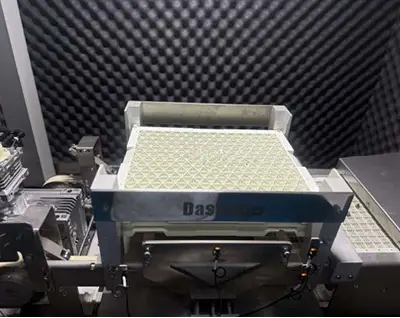
Wet Blasting Cabinet Price Is Not Just a Box Cost
Buyers often assume cabinet price is determined mainly by chamber size. In reality, the price reflects a combination of process capability and build complexity. Two cabinets of similar dimensions may differ materially in cost if one has manual pressure adjustment, basic recirculation, and simple sludge cleanout, while the other includes PID pressure regulation, recipe control, servo motion, and automated sediment discharge.
That is why comparing quoted prices without comparing the process scope can be misleading. A low-priced wet cabinet may be adequate for occasional parts cleaning, but not for controlled edge preparation, repeatable deburring, or precision cosmetic finishing.
How Wet Blasting Fits the Surface-Treatment Family
Within the surface-treatment sequence, wet blasting is often used after machining or forming and before coating, assembly, or final inspection. It may clean scale, remove burrs, condition edges, reduce visual variability, or prepare a surface for downstream finishing. The cabinet configuration is especially common for batch work, sample validation, medium-throughput production, and part families that need enclosed manual or semi-automated handling.
Because of that process role, the phrase wet blasting cabinet price should be interpreted as the investment required for a specific finishing outcome, not simply the cost of a machine shell. The buyer is purchasing a controlled abrasive process platform.
Core Selling Points That Influence Cabinet Value
The most relevant value drivers are usually dust suppression, more uniform finishing behavior on selected substrates, reduced risk of harsh dry-media impact on sensitive surfaces, and better control over repeatable surface treatment. Water in the blasting stream suppresses free airborne dust and cushions abrasive impact, which can help produce a finer and more even finish on many applications.
Another core point is repeatability. If slurry concentration, blasting pressure, nozzle path, and waste handling remain stable, wet blasting can deliver more consistent results than ad hoc manual finishing routes. That process control is often what separates an inexpensive cabinet from a production-grade machine.
How Does wet blasting cabinet price Work
Although price is a commercial term, buyers searching “how does wet blasting cabinet price work” are usually asking what machine functions they are actually paying for. In a wet blasting cabinet, cost is tied directly to the engineering needed to mix abrasive and water into a stable slurry, accelerate that slurry with compressed air, recover and recirculate it through a closed loop, and maintain visibility and process consistency during production.
Slurry Preparation and Suspension
The process starts in a reservoir or slurry tank where water and abrasive media are mixed. To work correctly, the abrasive must remain suspended at a usable concentration rather than settling rapidly at the bottom of the tank. That means pump selection, agitation behavior, tank geometry, and return flow design all influence performance.
A budget cabinet may circulate slurry adequately for short runs but lose consistency over longer cycles. A higher-value system tends to keep concentration more stable, which matters when the finish window is narrow.
Compressed Air and Nozzle Acceleration
From the tank, slurry moves through hoses toward the blast gun or nozzle. Compressed air accelerates the slurry stream toward the workpiece, where abrasive particles perform controlled micro-erosion. The finish result depends on pressure, nozzle diameter, stand-off distance, impact angle, abrasive type, and exposure time.
Machines with more stable air delivery and better nozzle-path control typically command higher prices because they reduce variation. That matters especially in carbide tools, precision machined parts, and cosmetic surfaces where a small process shift can create visible or functional differences.
Closed-Loop Recovery and Sediment Management
After impact, the used slurry falls into the sump, where removed burrs, fines, broken media, and sludge re-enter the recovery loop. Better wet blasting cabinets manage this return stream efficiently, separating usable slurry from waste contaminants and simplifying sediment removal.
This part of the machine strongly influences total cost of ownership. If cleanout is difficult, sediment accumulates quickly, or abrasive breakdown is not controlled, maintenance labor rises and finish consistency falls even if the original capital price was low.
Mist Extraction, Drainage, and Operator Visibility
Wet blasting is widely valued because it suppresses dust, but the cabinet still generates water mist and suspended contaminants. Good cabinets therefore include mist extraction, drainage logic, and internal visibility measures so operators can monitor the workpiece and the process. Clear viewing conditions improve setup accuracy, part inspection, and cycle control.
Control Logic and Pressure Regulation
In more advanced systems, the cabinet uses PLC or HMI-based controls to store recipes and regulate process conditions. Pressure regulation is particularly important because blasting intensity can drift as nozzles wear or utilities fluctuate. Machines with tighter control architecture generally cost more, but they also reduce process drift in repeated production.
The meaningful part of wet blasting cabinet price is the cost of keeping slurry, pressure, visibility, and waste handling stable at the same time.
| Parameter | Typical Industrial Condition | Why Buyers Should Check It |
|---|---|---|
| Working pressure | Typically about 0.2-0.7 MPa | Sets the basic removal rate and finish aggressiveness |
| Slurry concentration | Typically controlled within a defined solids range by weight or volume | Affects finish uniformity and process stability |
| Abrasive particle size | Fine to medium PSD selected by material and finish target | Influences roughness, edge effect, and nozzle wear |
| Air consumption | Depends on nozzle size, pressure, duty cycle, and number of guns | Determines compressor capacity and utility cost |
| Media consumption rate | Varies with media breakdown, contamination, and recovery efficiency | Strong contributor to operating cost |
| Control system | Manual valves to PLC/HMI with PID-assisted logic | Higher control sophistication usually improves consistency |
Why Working Principle Changes Price
Price rises when the cabinet is expected to behave like a stable production asset rather than a simple manual station. Buyers are paying for consistency under load: steady slurry, predictable pressure, manageable waste, acceptable visibility, and a machine layout that can hold those conditions over time. That is the real mechanism behind wet blasting cabinet pricing.
Wet Blasting vs Dry Blasting vs Other Methods
Price evaluation is more meaningful when wet blasting is compared with alternative finishing methods. A cabinet that appears expensive against a simple dry-blast enclosure may still be cost-effective if it reduces rework, lowers free dust, improves edge quality, or replaces manual finishing steps. The right comparison is therefore process-to-process, not machine-to-machine.
| Comparison Point | Wet Blasting | Dry Blasting | Shot Peening | Vibratory Finishing |
|---|---|---|---|---|
| Free airborne dust | Low free dust; mist extraction still required | Higher dust generation and heavier dry collection needs | Enclosed process, but media handling still important | Usually low airborne dust; wet compounds and residue still require management |
| Finish character | Fine, cushioned, uniform matte or controlled conditioning | More aggressive and often rougher | Functional impact treatment, not mainly cosmetic finishing | Bulk smoothing across many exposed surfaces |
| Media embedding risk | Generally lower on selected sensitive surfaces | Higher risk on some soft or delicate materials | Depends on media and intensity target | Usually not the main concern |
| Selectivity | High with nozzle control and fixtures | Moderate to high, but often more operator-dependent | Coverage-focused rather than selective deburring | Limited for targeted local features |
| Repeatability potential | High when slurry and pressure are controlled | Moderate to high depending on feed stability | High in dedicated systems | High for large lots of similar parts |
| Environmental handling | Slurry management, drainage, and mist extraction | Dust collection and dry spent-media handling | Media containment and intensity verification | Media separation, compound management, and drying considerations |
Wet Blasting vs Dry Blasting on Cabinet Economics
Dry blasting cabinets are often structurally simpler, so entry cost can be lower. However, they may require more aggressive dust collection, may be less suitable for sensitive finishes, and can introduce more variability in applications where cushioned impact is beneficial. For buyers dealing with burr control, cosmetic uniformity, or precision surfaces, wet blasting sometimes offsets the higher cabinet price through lower downstream correction work.
Wet Blasting vs Shot Peening
Shot peening should not be treated as a direct substitute simply because both methods use projected media. Its purpose is typically functional stress treatment rather than deburring or visual refinement, which is reflected in shot peening process terminology. If the production goal is edge preparation or fine finishing, peening is often the wrong benchmark.
Wet Blasting vs Vibratory Finishing
Vibratory systems can be economical for large batches of similar parts, particularly where broad smoothing is enough and localized control is unnecessary. But when one face, one bore entrance, or one cutting edge needs targeted treatment, wet blasting can justify a higher cabinet price by delivering better selectivity and less collateral finish change.
Key Specifications to Evaluate Before Buying
A wet blasting cabinet should be evaluated as a process platform, not just an enclosure with a gun. The most reliable price comparison comes from matching technical specifications to the actual finish requirement and expected production load.
Blasting Pressure and Stability Window
Pressure range should be reviewed together with pressure stability. A quoted maximum value says little about whether the machine can hold a useful process window on real parts. Precision deburring and edge honing usually need tighter control than general cleaning, so buyers should ask how pressure is regulated and monitored during the shift.
Slurry Management and Recovery Design
Slurry concentration control is one of the most important hidden differentiators between low-cost and high-value cabinets. Ask how the system maintains suspension, how contaminants are removed, and how often the operator must stop for sediment cleaning. Stable slurry behavior reduces variation, while poor recovery design creates maintenance cost and part inconsistency.
Motion Accuracy and Nozzle Path Control
If the application requires geometry-dependent treatment, motion control becomes a major buying criterion. Fixed manual nozzles are acceptable for many jobs, but servo-driven X/Y/Z motion is often justified when the edge radius, stand-off distance, or local coverage pattern must remain tightly controlled across batches.
Throughput, Load Method, and Changeover
A cabinet that performs well on one demonstration part may be inefficient in mixed production. Evaluate cycle time together with loading method, fixture complexity, drain-back time, visual inspection access, and recipe changeover. In real operations, productivity is shaped by the whole handling loop, not only by blast time.
Footprint, Utilities, and Service Access
External dimensions alone do not show whether the machine fits the plant. Buyers should check compressed air demand, electrical supply, drainage arrangement, maintenance access around pumps and tanks, and view-window replacement accessibility. Serviceability affects long-term uptime and should be treated as a financial criterion.
HMI, Permissions, and Safety Interlocks
Recipe storage, permission levels, alarms, and maintenance prompts become more important as more shifts and more part numbers use the same cabinet. Safety should cover door interlocks, emergency stops, splash containment, visibility protection, and clear cleanout procedures. These are not optional extras when the cabinet is expected to run as a production tool.
Applications Across Industries
Wet blasting cabinets are used across a wide range of sectors because they can be tuned by abrasive selection, slurry concentration, pressure level, nozzle geometry, and fixturing strategy. Price varies by application because each application places different demands on precision, throughput, automation, and recovery design.
| Application Type | Target Industry | Workpiece Example | Process Benefit |
|---|---|---|---|
| Edge honing of cutting tools | Carbide tooling and metal-cutting supply | Inserts, drills, end mills | Controlled edge preparation and more stable coating-ready geometry |
| Burr removing of metal parts | Precision machining, stamping, fabricated components | Housings, brackets, connectors | Reduced manual deburring and more consistent edge condition |
| Scale removal from forgings or bars | Forging and steel processing | Forged blanks, rods, bar stock | Oxide removal with lower free dust than dry blasting |
| Pretreatment before coating | Appliance, transport, fabricated metal | Panels, housings, welded parts | Cleaner substrate and improved downstream coating consistency |
| AM post-processing | Additive manufacturing | Metal printed components | Surface refinement and loose-powder residue reduction |
| Peening and conditioning | Functional component manufacturing | Mechanical parts, wear components | Controlled surface impact treatment |
| Glass frosting | Architectural or decorative glass | Covers, panels, display pieces | Uniform matte decorative finish |
| 3C device finishing | Consumer electronics supply chain | Frames, shells, exterior covers | Cosmetic consistency and improved touch feel |
Cutting Tools and Precision Edge Control
Cutting-tool manufacturers often justify a higher wet blasting cabinet price when the machine can hold a repeatable edge-preparation window. In cutting tool edge preparation, the value comes from controlled K-factor development, coating readiness, and reduced variability between batches.
Deburring and Burr-Sensitive Machined Parts
Selective deburring is another common driver of cabinet investment. A process designed for metal part deburring can replace labor-intensive hand finishing on recurring burr locations, especially where manual methods create uneven quality or bottlenecks.
Coating Pretreatment and Combined Surface Routes
Wet blasting also has value before painting or related downstream finishing. In surface prep before coating, the cabinet or integrated line is judged by how well it supports cleanliness, adhesion consistency, and reduced rework rather than by appearance alone. Surface-preparation practices for protective coatings are widely framed by AMPP coating preparation guidance.
AM Parts, Forgings, Glass, and 3C Products
Additive-manufactured parts often need a controlled finishing step to refine rough external texture without overly blunt geometry loss. Forgings and bars prioritize oxide removal and productivity, while glass and electronics housings prioritize visual uniformity. The same wet blasting principle applies, but the cabinet specification and therefore the price can differ sharply.
Equipment Selection Guide
The best way to interpret wet blasting cabinet price is to map it to equipment format. Different cabinet and cell configurations serve different production scales, part geometries, and control requirements, so comparing them as if they were interchangeable leads to poor budget decisions.
| Configuration / Model Tier | Target Production Scale | Workpiece Size Range | Precision Level | Recommended Applications |
|---|---|---|---|---|
| R&D robot-assisted system | Sample trials and low-volume development | Small to medium mixed parts | High | Process proving, abrasive trials, fixture validation |
| Compact manual cabinet | Small-lot production | Small parts | Medium | Occasional deburring, visual finishing, job-shop work |
| Standard single-chamber batch cabinet | Routine batch manufacturing | Small to medium parts | Medium to high | Repeatable batch finishing and controlled cabinet work |
| Dedicated single-piece machine | Repeated one-part-family production | Small to medium dedicated parts | High | Stable orientation and part-by-part blasting |
| Servo multi-axis precision cell | Precision production | Small to medium complex shapes | Very high | Edge honing, selective deburring, geometry-driven finishing |
| Plate-part dedicated machine | Medium-volume production | Flat or plate-shaped parts | High | Uniform treatment of panel-like workpieces |
| Round-rod process machine | Semi-continuous production | Long cylindrical parts | Medium to high | Bar, rod, and cylindrical surface treatment |
| Double-chamber production system | Higher-throughput manufacturing | Small to medium production parts | High | Reduced idle loading time and more continuous workflow |
R&D and Process Development Configurations
When the application is not yet fully defined, an R&D platform can be more economical than buying a full production cabinet too early. A flexible robot-type R&D wet blasting system helps validate abrasive grade, nozzle angle, and path logic before capital is committed to a dedicated line.
Standard Cabinet Formats for Batch Work
For many industrial buyers, the price benchmark starts with the standard batch cabinet. A single-chamber wet blasting cabinet is often the reference point because it balances enclosure simplicity, process capability, and floor-space efficiency for repeated batch production.
Higher-Output and Dedicated Geometry Machines
As throughput rises, chamber architecture changes. Double-chamber systems reduce loading dead time, dedicated single-piece machines improve consistency for one stable part family, and geometry-specific machines for plates or rods prevent overpaying for unnecessary flexibility. In this stage of evaluation, the goal is to choose the simplest format that still meets finish quality and takt needs.
Cost, Lead Time and ROI Considerations
Wet blasting cabinet price should be analyzed in three layers: capital cost, operating cost, and process-result value. A cabinet that is cheap to purchase but difficult to keep stable may become expensive in labor, scrap, abrasive use, and downtime. A more capable cabinet may cost more initially yet perform better over the life of the process.
Main Price Drivers in Wet Blasting Equipment
The primary cost drivers are cabinet size, slurry system design, pump and hose durability, blasting-gun count, automation level, control platform, visibility hardware, mist extraction, and sediment discharge design. Material selection in wear areas also matters because wet abrasive circuits punish under-specified components.
Motion and control add another major layer. Manual cabinets are structurally simpler, but once servo motion, multi-axis paths, or recipe management are introduced, engineering time and component cost increase. That does not automatically make the machine overpriced; it simply means the capital cost reflects a more controlled production function.
Typical Lead-Time Bands
Standard wet blasting cabinets usually have shorter lead times than customized automated cells or integrated pretreatment lines. Typical schedules include application review, sample validation, technical confirmation, machine build, factory testing, shipment, installation, and commissioning. If custom fixtures, software logic, or plant-specific utility integration are required, the timeline usually extends.
ROI Logic for Procurement Teams
ROI is normally justified through measurable operational changes: less manual deburring labor, fewer coating rejects, improved tool-edge consistency, reduced rework, lower scrap, and more stable cosmetic output. In many cases, the real gain is not faster blasting alone but a more predictable process that reduces the need for downstream correction.
Operating Cost and Lifecycle Economics
Consumables and wear parts should be reviewed carefully. Abrasive replacement, pump wear, hoses, nozzles, seals, window protection, sludge removal, and utility use all contribute to lifecycle cost. Buyers evaluating total cost of ownership should compare service intervals and maintainability, not just the purchase quotation.
Why Price Without Process Validation Can Be Misleading
A wet blasting cabinet quote has limited value unless the process assumptions are known. If the abrasive grade, nozzle arrangement, pressure band, and loading concept are not yet proven, the quoted machine may later require fixture redesign or utility changes. That is why sample testing and application validation often improve both purchasing accuracy and ROI confidence.
Why Choose DassiAuto — Our Company
DassiAuto Intelligent Equipment Co., Ltd is a Chinese manufacturer established in 2012 and focused on wet blasting technology for industrial surface treatment. According to its published company profile, it operates as a national high-tech enterprise under the ISO 9001 quality management standard and holds invention patents, utility model patents, and software copyrights related to blasting equipment and control systems.
Based on the supplied company context, DassiAuto covers planning, design, manufacturing, sales, and application development across the wet blasting equipment value chain. Its stated engineering features include PID closed-loop slurry pressure control, servo-driven X/Y/Z linkage with 0.02 mm control accuracy, HMI recipe management with hierarchical permission control, automatic waste-sand sedimentation with one-click discharge, and dust-collection systems intended to reduce water mist. The same source context lists eight equipment configurations and four matched abrasive grades in its TR series.
The provided company information also identifies customer references including Wecan Cutting Tools, Ruian Carbide Tools, Huareal, Metcera, OKE, YG, Kelite, and XTC. Its service model is described as a full-cycle route covering sample testing, planning and design, manufacturing and quality control, installation, commissioning, training, after-sales support, spare parts, abrasive resupply, and process optimization. In sourcing terms, that positions DassiAuto as a process-oriented wet blasting supplier rather than a cabinet fabricator only.
FAQ
Q1. Why do quotations for wet blasting cabinet price vary so much between suppliers?
The quoted price usually reflects more than cabinet size. Differences in slurry-circulation design, control system sophistication, waste-sand handling, automation level, wear-resistant components, and application engineering can change both the capital cost and the long-term operating cost significantly.
Q2. Should I send sample parts before asking for a final wet blasting cabinet price?
Yes, sample parts are usually the fastest way to narrow the correct machine scope. They help determine abrasive grade, pressure range, nozzle angle, cycle logic, and whether a standard cabinet is sufficient or a more specialized configuration is needed.
Q3. Is a lower wet blasting cabinet price always better for ROI?
Not necessarily. A lower purchase price can be offset by higher labor input, unstable finishing results, more downtime for cleanout, or faster wear of pumps and nozzles. ROI is stronger when the cabinet can hold the process consistently and reduce rework or manual finishing time.
Q4. What utilities should I check before buying a wet blasting cabinet?
Compressed air capacity, electrical supply, drainage, water management, and floor-space access should all be checked early. Some installations also require attention to mist extraction routing, maintenance clearance, and sludge-disposal procedures before commissioning.
Q5. Can wet blasting cabinet price include installation, training, and after-sales support?
It can, but buyers should confirm exactly what is included in the proposal. Some quotations cover only the machine, while others include commissioning, operator training, spare-parts packages, and process startup support. Clear scope definition prevents later cost surprises.
Q6. How can I request an accurate wet blasting cabinet price for my application?
Provide part material, dimensions, current surface condition, target finish, production volume, and whether the goal is deburring, edge honing, pretreatment, or cosmetic finishing. It also helps to state utility limits and cycle-time expectations so the supplier can match the cabinet format to the real process instead of quoting a generic machine.